
Identify visitors and ad clickers
Reveal turns anonymous site traffic into identified buyers by name, company, and title so teams can see who is engaging on the site and in ads.

Vector is a contact-level advertising platform for B2B teams that identifies real people behind site visits and ad interactions, then activates current audiences across major ad platforms.
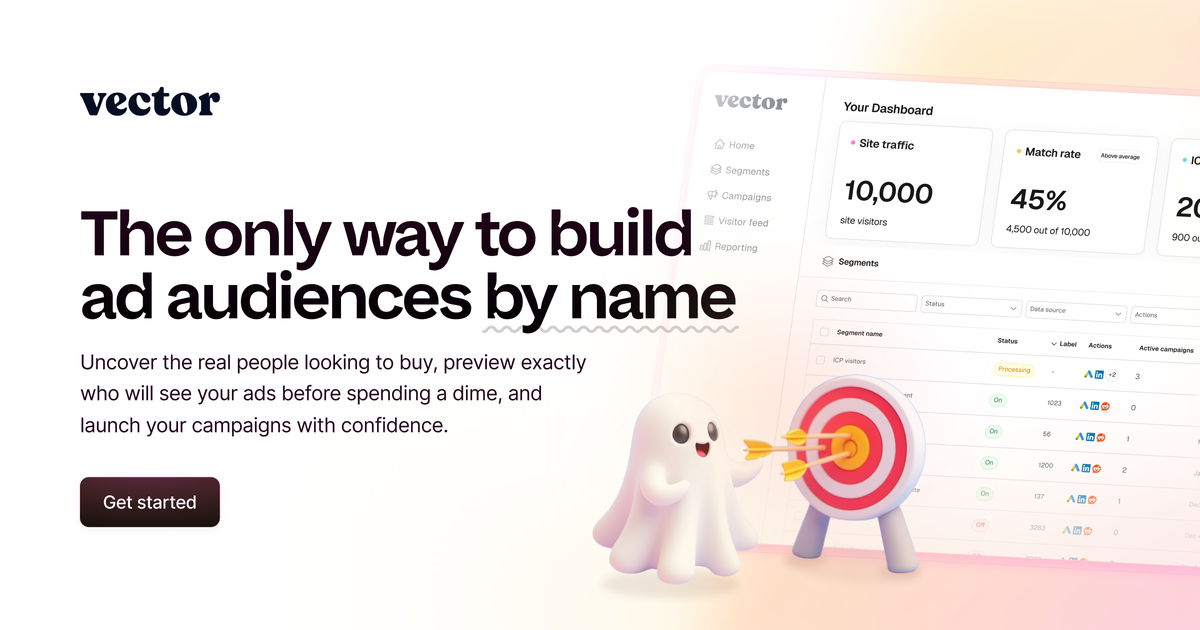
Vector is a contact-level advertising platform for B2B teams that want to identify real people behind site visits and ad interactions, then turn those signals into activated audiences. Its core workflow starts with finding engaged contacts, filtering to ICP-relevant people, and pushing those audiences into ad platforms for ongoing campaigns.
The product is organized around two main plans: Reveal, which focuses on identifying visitors and ad clickers, and Target, which adds dynamic audience building for LinkedIn, Google, Meta, Reddit, and similar channels. Vector’s pages also describe off-site research and website de-anonymization as part of the same contact-level approach, with setup and support that range from quick self-serve onboarding to more guided implementation for larger teams.
Reveal turns anonymous site traffic into identified buyers by name, company, and title so teams can see who is engaging on the site and in ads.
Target builds dynamic audiences that refresh as buyers visit pages, research competitors, or change roles, keeping campaigns tied to current buying signals.
The platform can send audiences to LinkedIn, Google, Meta, Reddit, and other major ad platforms, so activation does not stop at one channel.
Vector connects with CRM and intent data sources, and the pricing page says Reveal includes Salesforce and HubSpot sync while Target adds advanced integrations such as webhooks, custom CRM mapping, and UTM sync.
The product can reveal who clicks ads even when they do not convert, which helps teams follow up with known contacts rather than anonymous traffic.
Target includes audience performance tracking and supports CRM and intent integrations so teams can measure and maintain active audiences over time.
Use Reveal when you want to know which named contacts are already on your site or clicking ads, so your team can prioritize follow-up and understand which campaigns are attracting real people.
Use Target when buyer activity changes over time and you need audiences that refresh automatically as contacts visit pages, research competitors, or re-enter the buying journey.
Use the off-site research workflow to reach known contacts while they are reading third-party content or comparing competitors, especially for awareness and consideration-stage messaging.
Use website de-anonymization when you need to turn anonymous traffic into named contacts and route those identified visitors to Slack or CRM-based follow-up.
Use the platform when your team wants contact-based advertising across multiple ad channels, rather than static account-level or anonymous retargeting lists.
Vector’s pricing page presents Reveal as a month-to-month plan and Target as an annual plan. Reveal scales by identified visitors, while Target scales by active audiences and includes everything in Reveal.
Reveal is positioned for teams that want visibility into site visitors and ad engagement without a heavy implementation lift. Target is positioned for performance and demand generation teams that want to turn buyer signals into dynamic ad audiences.
Yes. Vector says you can upgrade from Reveal to Target at any time, and visitor or audience levels can be adjusted as needs change.
Vector says most teams are live within days. Reveal uses quick setup with live chat, email support, and a Help Center, while Target adds personalized onboarding, a Customer Solutions Manager, and a private Slack channel.
Vector identifies contacts engaging on your site, in your ads, and across the web, then matches that activity to verified contacts from your CRM and data partners so audiences stay current.