
Selfie-based avatar creation
Turn a 2D selfie into a recognizable 3D avatar using Avaturn’s generative AI workflow.

Avaturn creates realistic 3D avatars from a selfie, with customization, export, and embedding for apps, games, metaverse experiences, and campaigns.
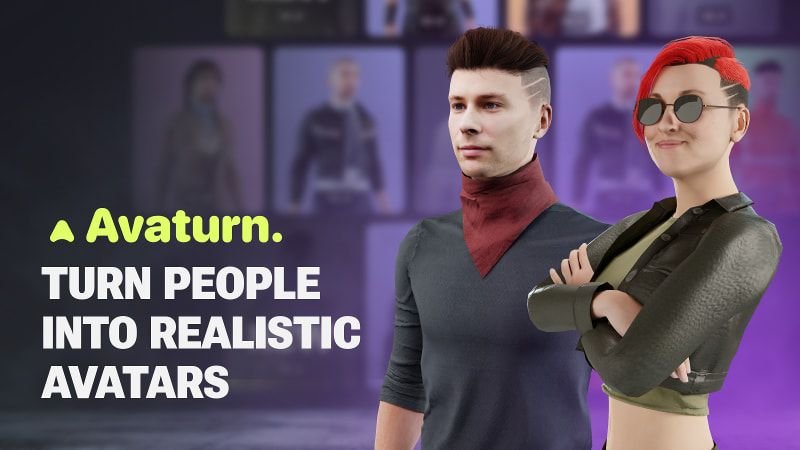
Avaturn is a realistic 3D avatar creator that turns a selfie into a customizable avatar and lets users export the result as a 3D model or integrate it into another product. The site positions it for developers, games, apps, metaverse experiences, campaigns, and agencies that want to personalize digital experiences.
The product combines avatar generation, customization, export, and plugin-based integration. The rendered pages say avatars can be personalized with body types, hairstyles, clothes, and accessories, and that the output includes animation-friendly elements such as a humanoid rig, ARKit blendshapes, and visemes.
Turn a 2D selfie into a recognizable 3D avatar using Avaturn’s generative AI workflow.
Adjust body types, hairstyles, clothes, and accessories to create a more specific look for each person.
Export avatars as 3D models for use in Blender, Unity, Unreal Engine, Maya, Cinema4D, and other 3D environments.
Provide standard humanoid body rig, ARKit blendshapes, and visemes for animation and facial movement workflows.
Embed the avatar experience as a plugin or webview inside a game, app, metaverse experience, or event flow.
Adapt the viewer with branding elements such as logos, colors, and custom garments through the developer hub.
Use Avaturn when a game or app needs each user to become a personalized in-world character at runtime, rather than selecting from generic preset avatars.
Use it for branded campaigns or agency builds where logos, colors, outfits, and other presentation details need to match a client’s visual identity.
Use it to create digital twins for presenters, users, or influencers when a team wants repeatable avatar-based content production.
Use it in metaverse, event, or video workflows where the avatar must be exported or embedded into an existing product environment.
Use it when a team needs animated avatars for talking, facial movement, or text-to-animation workflows using blendshapes and visemes.
Yes. The source says Avaturn can be integrated as a plugin, and its webview plugin can open inside a game or app, take a selfie, and return the generated 3D avatar to your environment.
Yes. The agencies page says the plugin can be integrated without coding experience, and the developer hub lets you customize the viewer, upload garments, and add your logo.
Avaturn says generated avatars are designed to be light enough to run on browsers or low-compute devices, and it can generate many avatars simultaneously for scaled usage.
The agencies page says selfies are processed in the cloud using Google Cloud and AWS, and the data can be deleted instantly on request or API request.
The source says avatars include blendshapes and visemes, so they can be animated in real time, exported to an environment, or animated manually in tools like Blender and Maya.