
Natural-language data discovery
Search for data sets, metrics, dashboards, tables, and columns using plain language instead of knowing exact technical names.

CastorDoc Catalog is a data catalog and governance product that helps teams discover, understand, and trust their data assets with natural-language search and lineage.
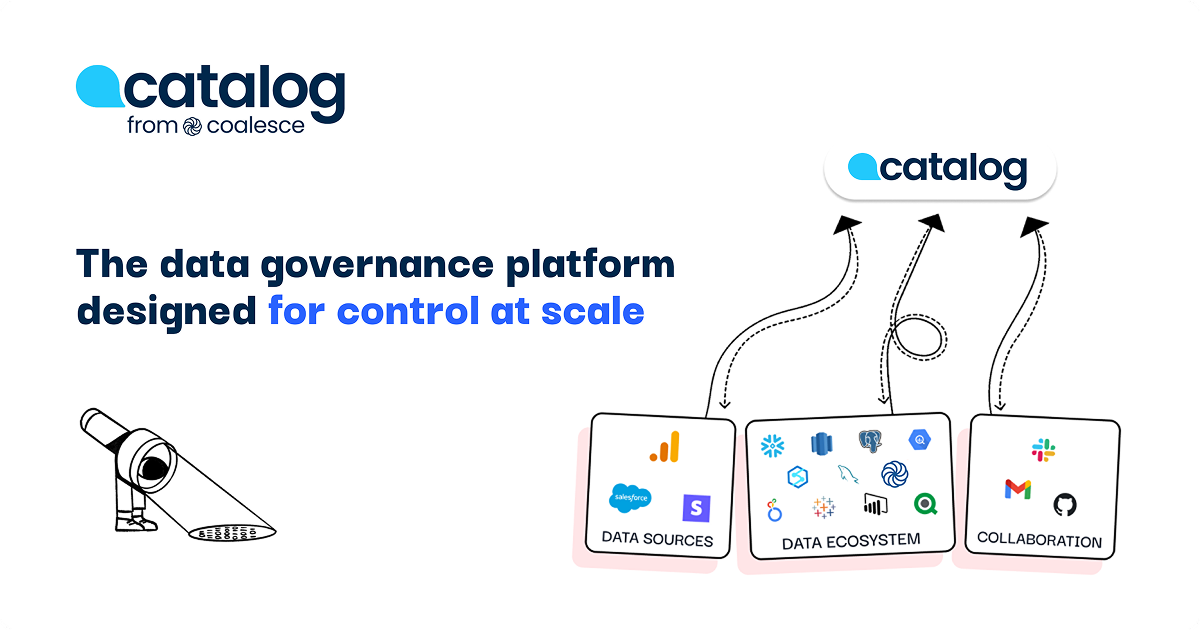
CastorDoc Catalog is a data catalog and governance product built to help teams find, understand, and use their data assets. The site describes it as an AI assistant powered by data governance, combining search, documentation, lineage, and assistance for self-service analytics.
Its core job is to make data more discoverable and easier to trust across a company’s stack. The product pages emphasize plain-language discovery, automated documentation from connected tools, column-level lineage, and controls for security, compliance, and access management.
Search for data sets, metrics, dashboards, tables, and columns using plain language instead of knowing exact technical names.
Use AI-driven trust checks to assess reliability, quality, and usage popularity so teams can judge whether an asset is fit for use.
Map the journey of data across sources, pipelines, and BI tools, including column-level lineage where available.
Automate catalog documentation by ingesting metadata from your data stack and propagating documentation across connected tools.
Convert natural-language questions into SQL to help users formulate queries and reduce manual query-writing effort.
Connect governance, collaboration, and security tools such as Slack, Gmail, Okta, and Google SSO to fit into existing workflows.
A data analyst or business user can search for the right table, metric, or dashboard using plain language, then use the discovered asset without relying on a data team for every lookup.
A data platform or governance team can centralize documentation, lineage, and trust signals so stakeholders can understand how data was produced and whether it is reliable enough to use.
An analytics team can trace column-level lineage across sources and BI tools to understand downstream impact before changing a pipeline or model.
An organization can connect existing warehouses, BI tools, transformation tools, notifications, and identity providers so the catalog fits into current workflows rather than sitting beside them.
Teams that receive frequent ad hoc questions about definitions or asset ownership can use the catalog and documentation features to reduce repetitive back-and-forth and make answers easier to find.
Catalog is a data catalog and governance product that helps teams find, understand, and use data assets across their stack. The site positions it as an AI assistant powered by data governance, with features for data discovery, documentation, lineage, and natural-language access.
The source pages show Catalog working across data warehouses and databases, data visualization tools, data quality and transformation tools, collaboration and notifications tools, and security tools. The integrations page lists examples such as Snowflake, BigQuery, Redshift, Databricks, Tableau, Power BI, dbt, Fivetran, Slack, Okta, and Google SSO.
The product is designed to ingest metadata from connected tools, automate documentation, surface lineage, and support natural-language search and SQL assistance. The site also says teams can document up to 90% of a database in seconds through propagated documentation from several tools.
The pricing page content provided does not show actual prices or plan tiers. The available pages point to request-pricing and request-demo flows instead of publishing rates.
The site targets teams that want self-service analytics without giving up control over data governance, security, and compliance. It appears best suited to data teams, governance teams, and business users who need to discover and trust data assets.