
Unified communications on one platform
Teloz combines cloud phone, SMS, video meetings, team messaging, and browser-based calling in one account so teams do not need separate systems for each channel.

Teloz is a cloud contact center and unified communications platform for business calling, messaging, video, AI call handling, and real-time reporting.
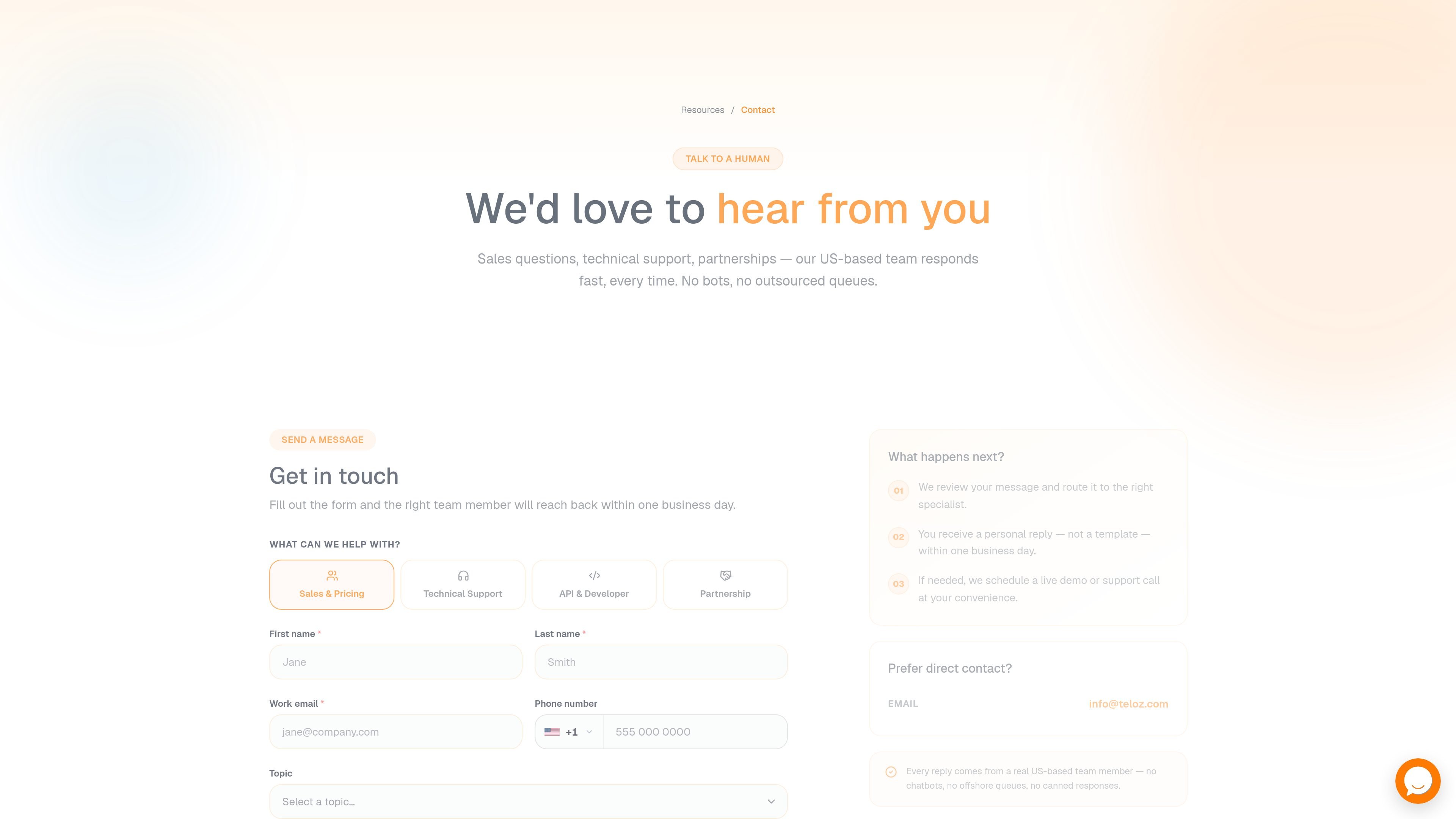
Teloz is a US-based cloud contact center and unified communications platform that brings phone service, messaging, video meetings, AI call handling, and reporting into one subscription. The site positions it as a single cloud system for teams that want business communications and contact center workflows without separate tools or on-premise hardware.
Across its product pages, Teloz emphasizes cloud phone service, an AI receptionist, omnichannel routing, and real-time dashboards. The platform is designed to answer and route calls, support team messaging and SMS, capture conversation data, and connect with common CRM and support systems such as Salesforce, HubSpot, Zoho, Pipedrive, Zendesk, and Microsoft Teams.
Teloz combines cloud phone, SMS, video meetings, team messaging, and browser-based calling in one account so teams do not need separate systems for each channel.
The platform’s AI receptionist answers inbound calls, qualifies callers, books appointments, summarizes conversations, and warm-transfers callers with context.
Omnichannel contact center tools include skills-based ACD, shared queues, supervisor dashboards, and one inbox for voice, SMS, web chat, WhatsApp, and social channels.
Real-time analytics surface live metrics such as queue volume, agent status, sentiment, and call quality telemetry so supervisors can act during a call instead of after reports are generated.
Business SMS and MMS are supported on Teloz numbers, with 10DLC and TCR handling called out on the site and threaded messaging available for teams.
The integrations layer includes native CRM and ticketing connections, click-to-call, screen pops, activity logging, and API/webhook support for workflow automation.
Support teams can route inbound voice, SMS, chat, WhatsApp, email, and social messages into one queue, then use supervisor dashboards and sentiment signals to intervene while conversations are still live.
Sales teams can use the AI receptionist to qualify callers, book meetings, and log activity back to the CRM, while click-to-call and screen pops keep reps working from the contact record.
Operations teams can replace a stitched PBX setup with cloud phone service, shared lines, queues, and business messaging across multiple locations or departments.
Supervisors can monitor wait times, agent status, queue load, and call quality in real time, then move overflow or staff before service levels drop.
Teams that rely on CRM or ticketing systems can sync call recordings, activity, and contact updates into systems such as Salesforce, HubSpot, Zoho, Pipedrive, and Zendesk.
Teloz is positioned as a cloud contact center and unified communications platform, so one subscription can cover business phone service, messaging, video, AI call handling, and reporting. The site also notes that contact center teams can use omnichannel queues and analytics on the same platform.
The pricing page shows a free 14-day trial with no credit card required, plus paid plans that can be managed monthly or annually. The site also says you can upgrade, downgrade, or cancel from the account dashboard.
Teloz says new DIDs can activate in under 10 minutes, while number port-ins typically take 3–7 or 5–10 US business days depending on the page. The contact page says the team can help with demos and support, and the pricing page says you can port existing numbers free on paid plans.
The source says Teloz includes native CRM and messaging integrations, with examples such as Salesforce, HubSpot, Zoho, Pipedrive, Zendesk, and Microsoft Teams. It also mentions click-to-call, screen pops, call recordings written back to the contact record, and open API/webhooks.
The product appears aimed at teams that need cloud phone service plus contact center workflows, especially support, sales, and operations teams. The pricing and product pages point to use cases such as inbound call routing, AI receptionist handling, omnichannel inboxes, supervision, and analytics.