
Open-source platform
Halo is built as an open-source glasses platform, with both hardware and software described as open source on the home page.

Brilliant Labs Halo is an open-source AI glasses platform with Noa, a conversational AI agent, on-device AI hardware, and software for developers.
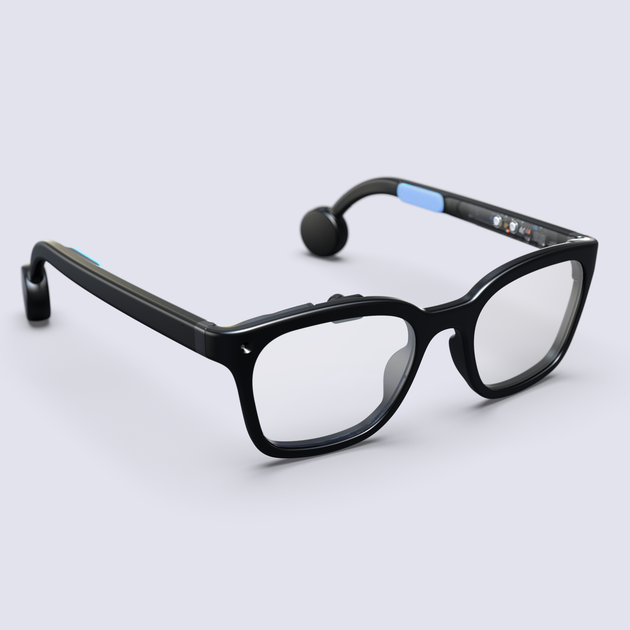
Halo is Brilliant Labs’ open-source AI glasses platform for people who want to build and use wearable computing tools. The product combines eyewear hardware, on-device AI, and companion software so users can interact with a conversational agent while looking at the world around them.
The product page describes Halo as featuring a fresh design, reimagined optics and electronics, and Noa, a private conversational AI agent with long-term memory. Brilliant Labs also highlights Miniapps, which let users build new experiences using natural language and share them through the platform.
Halo is built as an open-source glasses platform, with both hardware and software described as open source on the home page.
Noa is the built-in conversational AI agent. The product page says it can handle realtime, multimodal conversations and remember what it saw, heard, and said over time.
The eyewear uses a Color microOLED display, bone conduction speakers, optical-grade stock lenses with anti-reflective coating, and prescription and sunglass lens options.
The hardware list includes an Alif B1 processor, Cortex-M55 CPU, NPU for on-device AI, optical sensor, microphones with audio activity detection, and a 6-axis IMU with tap detection.
Halo runs on ZephyrOS with a Lua interface and connects through Bluetooth 5.3, alongside a cross-platform mobile app and cloud-based AI agent.
Brilliant Labs states Halo delivers 14-hour battery life, which is positioned for all-day use.
Developers can use Halo as a base for wearable experiments, combining the open hardware/software stack with the available SDK, Git, and docs references.
Creatives can use the glasses as a hands-free interface for generating or shaping experiences through Miniapps and natural-language interaction.
People who want an AI companion for everyday context can use Noa to talk through what they see and hear while retaining memory over time.
Users interested in sensor-rich eyewear can take advantage of the display, microphones, optical sensor, IMU, and tap detection for responsive interaction.
Halo is presented as open-source AI glasses with Noa, a conversational AI agent, plus Miniapps for building new experiences. The source does not provide setup steps, compatibility requirements, or ordering details.
The source points to ZephyrOS with a Lua interface, a cross-platform mobile app, and a cloud-based AI agent. It also shows developer resources for SDK, Git, and Docs.
Brilliant Labs says Halo supports a cross-platform mobile app and a cloud-based AI agent, and the product page also describes on-device AI hardware. The source does not enumerate third-party integrations.
The available source does not provide pricing, bundle contents, or shipping details. The pricing page at /pricing returns a 404.