
Lead search and enrichment
Searches and enriches accounts and contacts from a 650M+ graph, then uses that data to build lead lists and campaign inputs.
Gro is an autonomous revenue platform for B2B sales teams, handling prospecting, outreach, follow-up, and CRM updates. 14-day free trial.
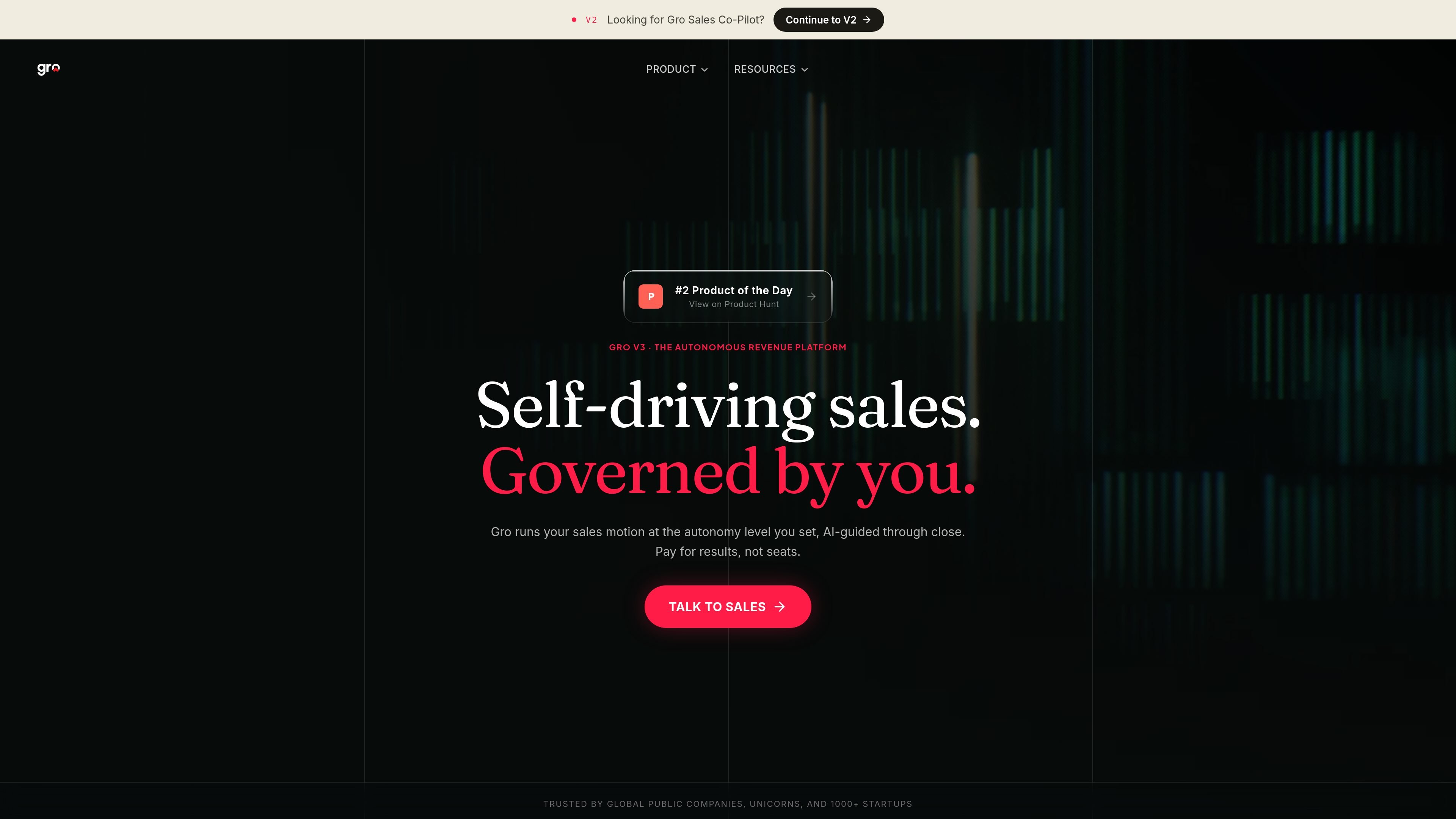
Gro is an autonomous revenue platform for B2B sales teams that want to run prospecting and outreach with a chosen level of AI control. The product is framed as “self-driving sales, governed by you,” with autonomy levels from research-only to full autopilot.
Across the site, Gro is described as a single platform for finding leads, personalizing outreach, following up, booking meetings, and updating CRM records. The pricing page shows plans for individuals, teams, and enterprise users, plus a 14-day free trial with no credit card required.
Searches and enriches accounts and contacts from a 650M+ graph, then uses that data to build lead lists and campaign inputs.
Runs multichannel outbound sequences with connection requests, follow-ups, emails, and InMails, with autonomy levels that determine how much Gro executes.
Stores leads, conversations, lifecycle stages, and touchpoints in one place so teams can track outreach without switching between tools.
Ranks leads using engagement signals, profile fit, and behavioral data so reps can focus on prospects with stronger buying intent.
Supports CRM and email workflow steps such as lead import, lead export to CSV, and HubSpot integration.
Founders and individual sellers can use the free or Solo plan to build lead lists, enrich contacts, and start outreach without managing several separate tools.
Sales teams can coordinate repetitive outreach across multiple reps while Gro handles connection requests, follow-ups, emails, and InMails within the autonomy level they set.
Teams that care about message quality can generate drafts from an agent identity built from the user’s own profile, then review copy before it is sent.
Managers can keep the pipeline organized by using the Social CRM to track conversations, lifecycle stages, and touchpoints in one place.
Outbound teams can use intent scoring and analysis to prioritize leads that show stronger engagement or fit, instead of working from raw lists alone.
Gro is an autonomous revenue platform for sales teams and individuals who want to run prospecting, outreach, follow-up, and CRM updates from one system. The product is positioned around letting users choose how much autonomy Gro has, from research-only to full autopilot.
Gro describes a five-level autonomy framework, from L1 search and prospecting where you act, to L5 full autopilot where Gro runs whole plays end-to-end. The homepage says autonomy can be set per campaign and reversed anytime.
The source says Gro helps keep messaging safe and on-brand by letting users create an agent identity from their own profile, then approve or govern actions depending on the autonomy level they choose. At lower autonomy levels, drafts can be reviewed before anything sends.
Gro’s outcomes are the results it reports back after running campaigns, including replies landed, meetings qualified, and pipeline created. The pricing page also says outcome credits are charged only when those results are delivered.
The source confirms support for CRM integrations and asks about CRMs and calendars in the FAQ, but it does not list specific vendors on the pages provided. The pricing page explicitly mentions HubSpot integration.
The homepage says teams can get started in the next hour: connect, brief the system, set an autonomy level, and launch. The pricing page also includes a 14-day free trial with no credit card required.