
Continuous external monitoring
Continuously scans underground and open sources for leaked credentials, breached identities, active sessions, lookalike domains, secrets, Telegram activity, and ransomware-related sources.

Flare is an identity-first threat intelligence platform that scans dark and clear web sources for leaked credentials, breached identities, and exposure signals.
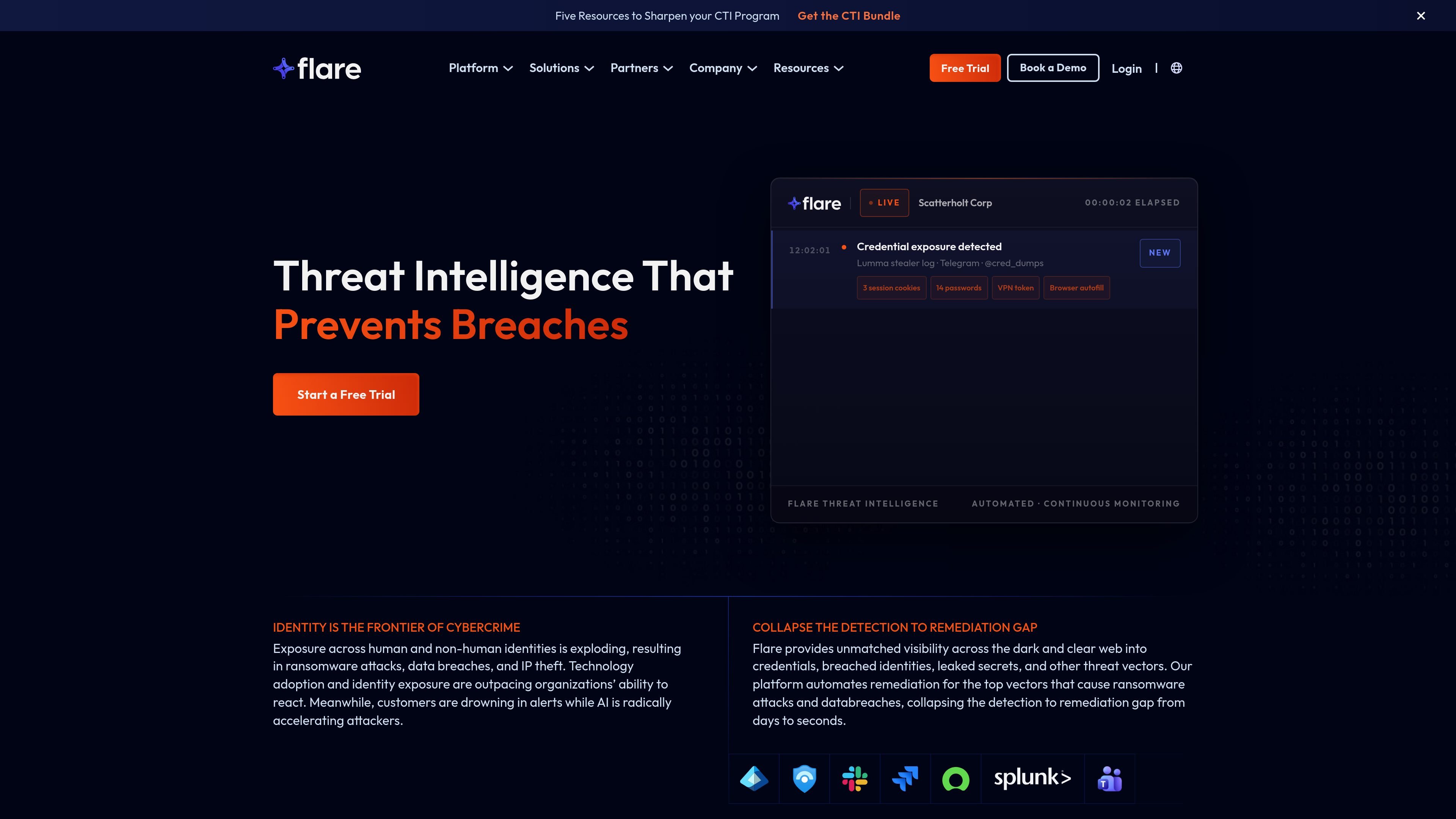
Flare is an identity-first threat intelligence platform focused on detecting external cyber threats before they become breaches. It scans dark and clear web sources for leaked credentials, breached identities, session tokens, impersonation activity, ransomware-related content, and other exposure signals, then routes that intelligence into security and identity workflows.
The platform is positioned to reduce the gap between detection and remediation by helping teams prioritize what matters and act through existing tools. The source material describes uses across enterprise account takeover prevention, customer fraud reduction, executive and brand monitoring, dark web investigation, and attack-surface exposure discovery.
Continuously scans underground and open sources for leaked credentials, breached identities, active sessions, lookalike domains, secrets, Telegram activity, and ransomware-related sources.
Uses scoring, enrichment, and historical context to help teams focus on exposures that are more likely to require action.
Connects with security and identity workflows such as SIEM, SOAR, IDP, and ticketing systems so exposures can move into existing response processes.
Supports automated remediation of identity exposure cases, including account blocks, forced resets, and domain takedowns when those actions are handled by connected systems.
Provides APIs and SDKs for product teams that want to embed threat exposure intelligence into their own platforms and AI workflows.
Surfaces structured intelligence for AI SOC and agentic workflows, including normalized data that can be consumed directly by models and automation.
Security teams can monitor stolen credentials and session tokens, then push signals into identity controls to block access before an account takeover succeeds.
Fraud and trust teams can surface compromised customer credentials earlier and feed that intelligence into downstream review or blocking workflows.
Security teams can watch for executive names, personal data, impersonation domains, and related exposure so they can act on VIP risk in one place.
Analysts can search Telegram channels, dark-web forums, and marketplaces for threat activity without leaving their existing console or workflow.
Product teams can embed Flare data into their own security, identity, or consumer protection products to add external exposure visibility.
Flare is an identity-first threat intelligence platform that scans dark and clear web sources for leaked credentials, breached identities, session tokens, lookalike domains, and related exposure data. It is designed to help security teams detect, prioritize, and remediate external threats before they escalate.
The source material shows Flare being used by security teams, SOC workflows, identity teams, and product teams embedding threat intelligence into their platforms. It is positioned for organizations that want external visibility into cybercrime activity and identity exposure.
Flare’s published workflow emphasizes continuous monitoring, automated scoring and triage, AI enrichment, and remediation through existing tools such as SIEM, SOAR, IDP, and identity workflows. The platform is also described as supporting partner integrations and embedded use cases.
The pricing page available in the collected sources is a page-not-found response, so the source set does not confirm public pricing, plan tiers, or a free trial. The homepage does reference starting a free trial and booking a demo, but no pricing details are provided.
Flare states that its partner APIs are built for embedding and that Python and Go SDKs are available for integration. The partner page also says integrations can support AI agents via structured threat intelligence and MCP.