
Ads-to-web personalization
Turn ad clicks into matching landing pages by aligning page content with the intent of a specific campaign, audience, or message.

Fibr AI is an agentic web experience platform for real-time website and landing page personalization. It helps marketing and growth teams adapt pages for ad traffic, LLM traffic, audience signals, and multi-step visitor journeys.
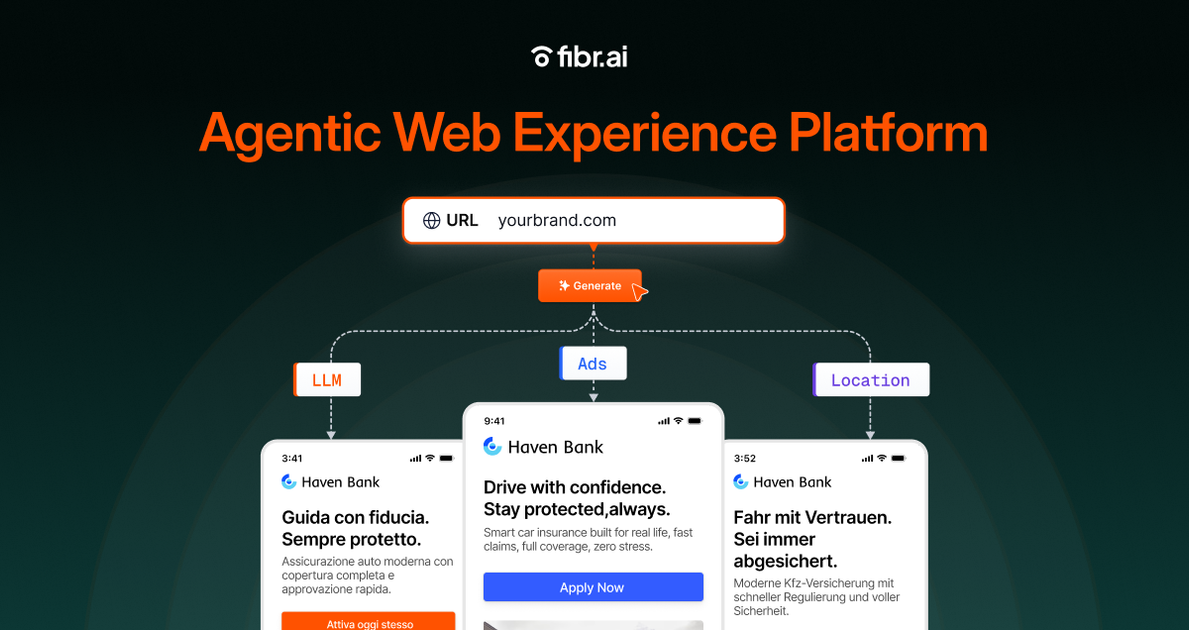
Fibr AI is an agentic web experience platform for personalizing websites and landing pages in real time. The site describes it as turning URLs into intelligent experience agents that sense intent, make decisions, and reshape themselves for each visitor.
The product combines AI agents with human oversight to support personalization, experimentation, and page creation across paid media traffic, LLM-driven traffic, audience segments, and multi-page visitor journeys. The pricing page shows plans for Starter, Agency, and Enterprise customers, with higher-touch support and integrations available on the more advanced plans.
Turn ad clicks into matching landing pages by aligning page content with the intent of a specific campaign, audience, or message.
Adapt content for visitors arriving from AI or LLM sources so the page reflects the question or intent that brought them there.
Personalize the sequence of pages a visitor sees, not just the first landing page, so the experience stays consistent across the journey.
Tailor content by audience signals such as cohort, location, device, browser, visit frequency, CDP data, and CRM data where available.
Use AI to analyze pages, generate hypotheses, create variants, monitor significance, and continue iterating on what works.
Create and manage AI landing pages with customized agentic workflows and human oversight for brand and strategy alignment.
Use Fibr to adapt post-click landing pages so they match the ad promise, campaign theme, or audience segment that drove the click.
Use Fibr to create a tailored page for visitors arriving from AI assistants or other LLM-driven sources, where the page can respond to inferred intent.
Use Fibr to keep messaging consistent as visitors move through multiple pages, reducing the disconnect between acquisition and conversion moments.
Use Fibr to serve different versions of a page by cohort or signal such as location, device, browser, visit frequency, or CRM/CDP data.
Use Fibr to automate variant creation and continuous experimentation when teams want to improve conversion rates without hand-building every page change.
Fibr positions itself as an agentic web experience platform. The source pages describe pages that sense intent, make decisions, and reshape themselves in real time for visitors, with capabilities such as ads-to-landing-page personalization, LLM-traffic personalization, journey personalization, and audience-based personalization.
The pricing page describes Fibr as available through Starter, Agency, and Enterprise plans. Enterprise is described for teams personalizing at scale, while the Agency plan is aimed at agencies and marketing affiliates; the Starter plan is for growing businesses. The source does not show public price numbers on the rendered text provided.
Fibr's pricing page lists AI Landing Page Creator, web-journey personalization, LLM-traffic personalization, customized agentic workflows, and integrations with CDP, CRM, and analytics on the Enterprise plan. The homepage and pricing page also mention integrations with third-party tools such as GA4, Google Ads, Meta Ads, and LinkedIn ads.
The pricing page groups support into onboarding and ongoing assistance, including 1-time onboarding setup, onboarding specialist help, email and chat support, and for higher-touch plans dedicated CRO experts, account support, and dedicated communication channels. The Enterprise plan also mentions white-glove assistance and 24/7 dedicated support.
The public pages point to website personalization and experimentation workflows rather than a fixed no-code template library. The strongest fit shown in the source is for teams that want to personalize landing pages, journeys, ads traffic, or LLM traffic and then iterate through AI-led experimentation.