
Fusion for app and UI creation
Fusion is the build side of the platform: it supports building apps and UIs from scratch, from Figma designs, or from an existing repository, with production-ready code that fits the team’s stack.

Builder.io is a collaborative platform for teams to build and publish software and content with AI agents, visual editing, code workflows, and shared source of truth.
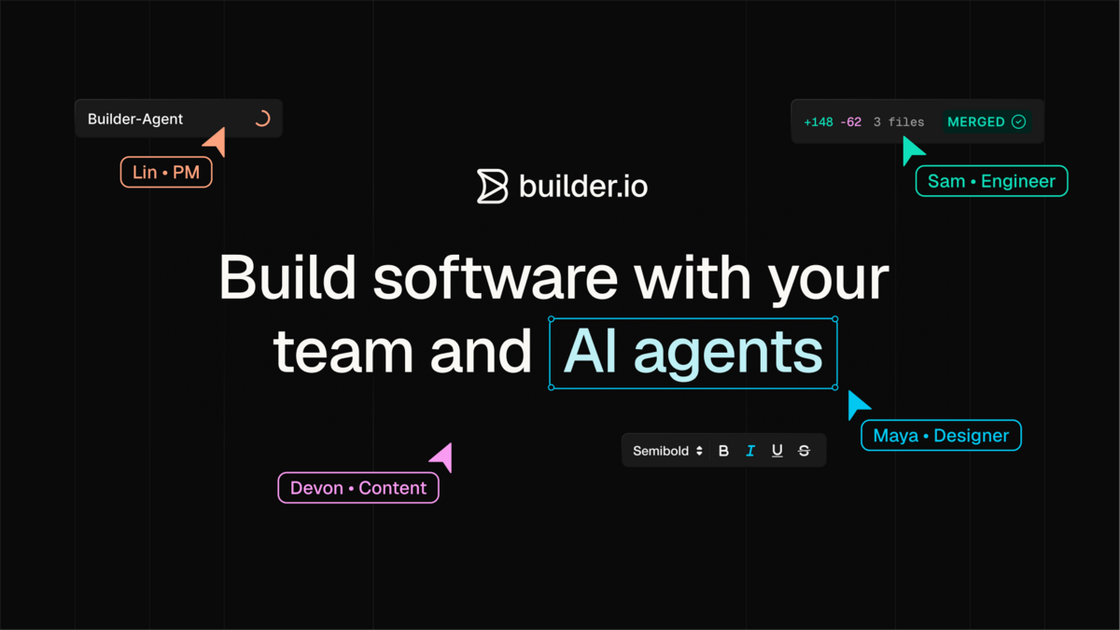
Builder.io is a collaborative platform for teams building software and content with AI agents. Its homepage positions the product around one codebase and one source of truth so engineers, designers, product managers, and marketers can work in the same system without separate handoffs.
The platform is organized around two main products: Fusion for building apps and user interfaces, and Publish for creating and managing on-brand content and experiences. Builder also emphasizes workflows that connect visual editing, code review, approvals, and publishing so changes can move from idea to production in the team’s existing stack.
Fusion is the build side of the platform: it supports building apps and UIs from scratch, from Figma designs, or from an existing repository, with production-ready code that fits the team’s stack.
Publish is the content side of the platform: it lets teams create, optimize, and publish on-brand content and experiences, with support for headless CMS and visual page building workflows.
The visual editor is described as production code edited like design, with a canvas connected to components and design tokens so changes stay aligned with the existing system.
Agentic CMS workflows let teams use prompts to create and manage content, run A/B tests, personalize experiences, and schedule updates before previewing and publishing.
The platform supports shared workflows across roles, including approving changes, commenting, peer reviews, and turning updates into clean pull requests in git-based processes.
Builder connects to existing tools and environments, including GitHub, GitLab, Bitbucket, Figma, VS Code, Slack, Jira, MCP servers, and enterprise git providers on higher tiers.
Turn Figma designs into working interfaces or production-ready code using existing components and design tokens, then move changes through the team’s normal review process.
Build web apps, internal tools, and product features from scratch or from an existing repository while keeping the team’s framework and architecture patterns intact.
Create landing pages, campaign pages, and site content visually, then preview, approve, and publish updates without separating content work from brand standards.
Generate interactive prototypes that use real code components so designers and product teams can test ideas and validate flows before committing engineering time.
Let marketers and content teams create, optimize, localize, and schedule content changes with Publish while preserving the same codebase and workflow controls.
Builder separates Fusion and Publish. Fusion is for teams generating production-ready web apps and user interfaces from Figma designs or existing repos, while Publish is the headless CMS used to create and publish content independently of the codebase.
Builder works with modern frameworks and APIs and is designed to fit existing git-based workflows. The engineering page also notes a VS Code plugin, and the pricing page lists GitHub, GitLab, Bitbucket, and Figma plugin support on the Free plan, with Slack and Jira available on Team plans.
Builder is positioned for engineers, designers, product teams, and marketers who need to work from one source of truth. The product pages describe use cases ranging from design-to-code and web app development to landing pages, prototypes, and content publishing.
Pricing includes a Free plan for up to 5 users, plus Pro, Team, and Enterprise tiers. The pricing page says users can start with either Fusion or Publish and combine both in the same workflow.
The pricing page lists enterprise options such as custom seats, custom Agent Credits, Bitbucket Enterprise, GitLab Enterprise, Azure DevOps, SSO, RBAC, and deployed engineering support, with contact sales for Enterprise pricing.