
Configurable AI Workflow
Configurable AI-enabled workflows support literature-based evidence synthesis and can be standardized across reviews. The platform tracks every decision for audit readiness and evidence traceability.

DistillerSR AI-enabled literature review software automates screening, extraction, reporting, and evidence reuse for traceable review workflows.
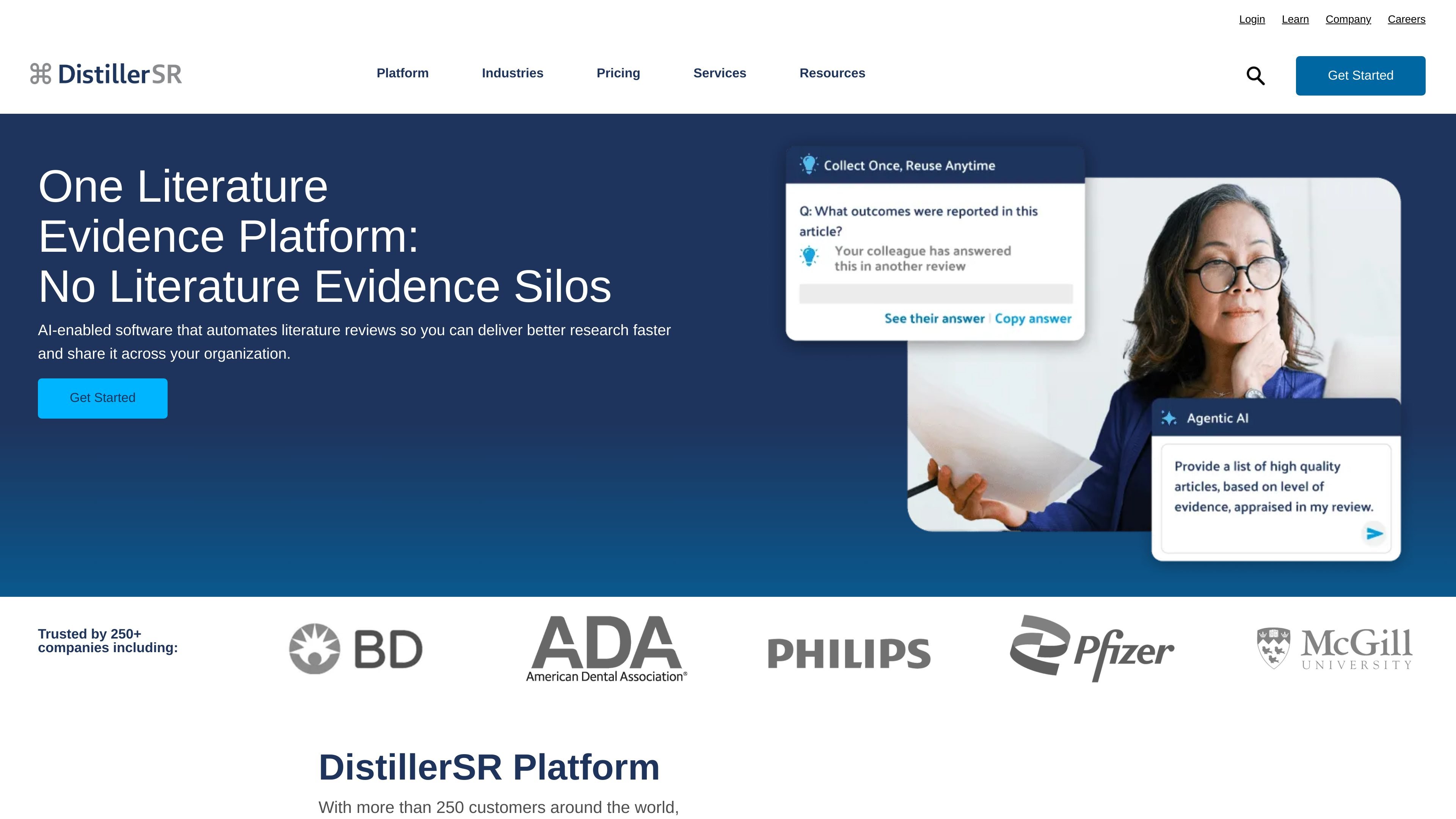
DistillerSR is AI-enabled literature review software for managing literature-based research and evidence synthesis. It is positioned as part of a broader evidence management platform that helps organizations centralize, standardize, reuse, and share literature evidence across teams.
The platform supports configurable workflows for screening, extraction, reporting, and evidence reuse. According to the site, it is used to reduce manual work, improve traceability, and speed up research while keeping an audit trail that supports regulated and organization-wide review processes.
The site also describes add-on modules and related products such as CuratorCR for centralized evidence management. Together, these offerings are aimed at teams that need to manage large bodies of literature, avoid duplicate work, and produce review outputs that can be shared internally or across external collaborators.
Managed services are also available for organizations that want help accelerating implementation and time to value. The overall focus is on making literature evidence easier to collect, validate, analyze, and reuse in a controlled workflow.
Configurable AI-enabled workflows support literature-based evidence synthesis and can be standardized across reviews. The platform tracks every decision for audit readiness and evidence traceability.
Purpose-built Gen AI extracts evidence from tables and text at scale, with options for fully automated extraction or human-in-the-loop review when compliance requires it.
AI Re-Rank, AI Classifiers, and agentic AI help prioritize relevant references, answer closed-ended questions, and reduce repetitive screening work.
The platform supports reusable forms, templates, validations, standard reporting, and customizable reports so teams can standardize extraction and produce publication-ready outputs.
DistillerSR can connect with corporate libraries, publishers, BI tools, safety databases, semantic platforms, and RWE sources through API and third-party integrations.
CuratorCR and related evidence reuse capabilities help identify previously extracted data so teams can avoid duplicate work and centralize literature evidence.
Teams running systematic or literature reviews can use DistillerSR to screen references, extract data, and standardize outputs across repeated review projects.
Medical device and pharmaceutical organizations can use the platform for regulated evidence workflows where traceability, audit logs, and standardized reporting matter.
Organizations with large internal evidence libraries can centralize previously extracted information and reuse it to reduce duplicate work across departments.
Research teams that need reportable outputs can create customizable reports, publication-ready diagrams, and exportable datasets for analysis and stakeholder sharing.
Teams that want implementation support can use managed services to accelerate time to value and reduce setup burden.
DistillerSR is literature review software that helps automate and manage literature-based research and evidence synthesis. It supports configurable workflows for evaluating, appraising, extracting, standardizing, and storing evidence that can be shared across an organization.
The source describes DistillerSR as the core literature review software within an evidence management platform. The platform is designed to centralize evidence, support governance and workflow standardization, and make literature evidence easier to reuse and share.
The source shows output such as configurable reports and publication-ready artifacts like PRISMA flow diagrams. It also supports activity reports and data export for analysis and sharing.
The product pages describe a configurable workflow with AI-enabled screening, extraction, reporting, and evidence reuse. They also describe managed services for teams that want help accelerating implementation and time to value.
The pricing page does not publish prices in the provided content. It does show DistillerSR, CuratorCR, DistillerSR Modules, and DistillerSR AI Solutions as platform offerings, so pricing appears to require a sales or contact flow rather than self-serve pricing details.