
Multi-model API access
Use one API layer to access models for chat, image generation, video generation, and music generation without switching between separate providers.

Kie.ai is a developer-focused AI API platform for chat, image, video, and music models in one interface, with pricing, billing, keys, and usage logs.
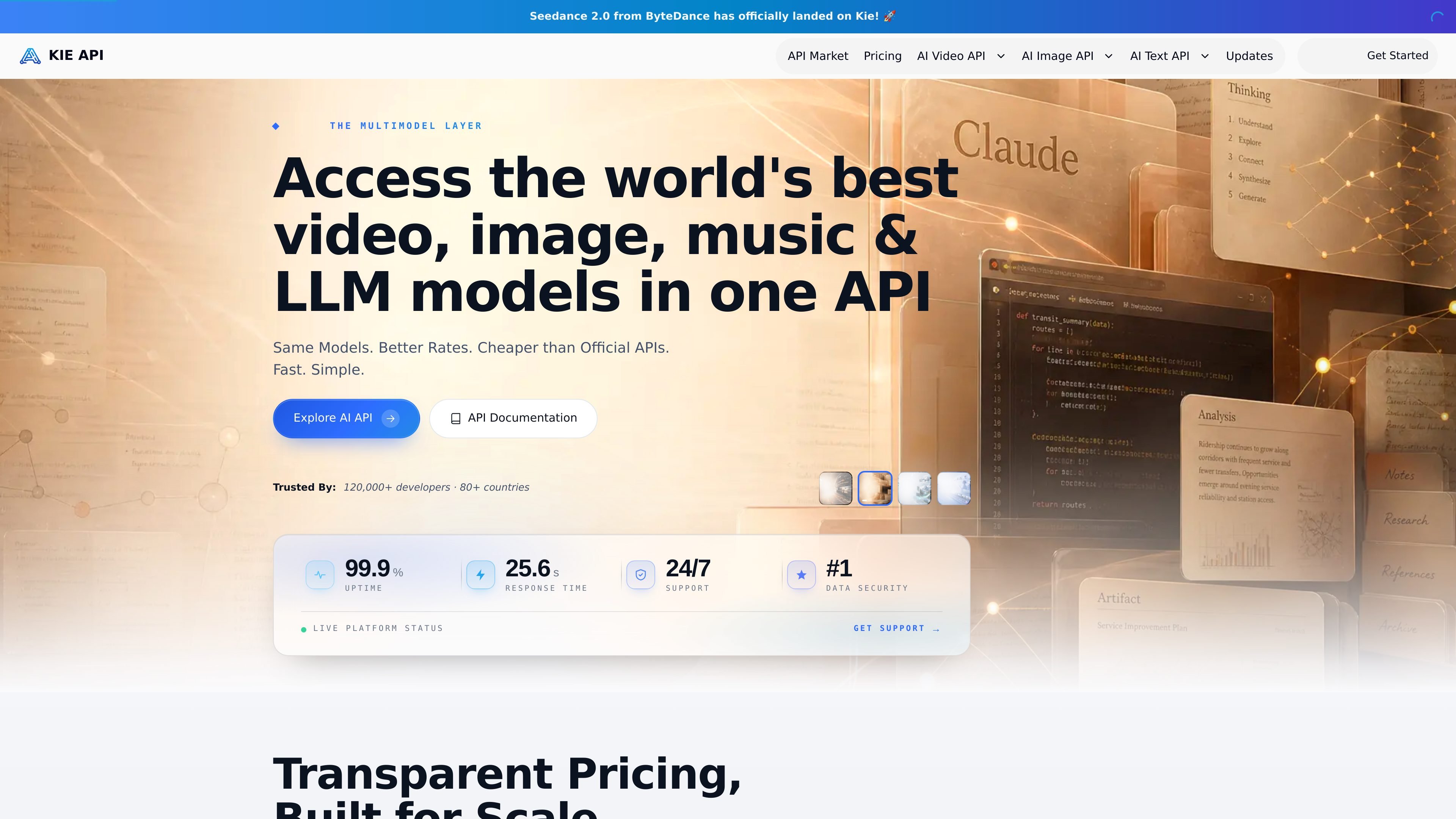
Kie.ai is an AI API platform that exposes a broad catalog of models through a single developer-facing interface. The site positions it as a way to access chat, image, video, and music generation models from providers such as OpenAI, Google, ByteDance, Anthropic, Kling, and Suno.
The product is built for developers who want to integrate multiple model types without managing separate provider relationships. Its public pages emphasize transparent model-by-model pricing, API keys, billing, usage logs, and documentation, along with claims of stable performance, high concurrency support, and real-time streaming output.
Use one API layer to access models for chat, image generation, video generation, and music generation without switching between separate providers.
Browse a models market with provider and task filters to compare models by modality and workflow, including text-to-image, image-to-video, lip sync, and text-to-music.
Review transparent per-model pricing in credits, dollars, and official or Fal comparison columns, with pricing shown for many models across multiple output types.
Manage API keys, billing, and API usage logs from the account area so teams can track access and spending in one place.
Support for high concurrency and real-time streaming output is highlighted on the pricing page, which is useful for production integrations that need responsive results.
The site emphasizes that failed generations are not billed and describes a zero-risk billing policy on the homepage.
Build applications that need text chat, image generation, video generation, or music generation from a single backend instead of stitching together separate provider APIs.
Compare model options and pricing before selecting a workflow, especially when cost, modality, and output quality tradeoffs matter for a project.
Set up production apps that need streaming responses and concurrency support for responsive user experiences and higher request volume.
Centralize key management, billing review, and usage monitoring when multiple projects or teammates rely on the same Kie.ai account.
Experiment with different providers and task types through the models gallery when a team wants to test image, video, or music generation options in one place.
Kie.ai provides API access through its models marketplace and documentation pages, with API keys available from the account area. The site also shows API usage logs and billing pages, which suggests a standard developer workflow of creating a key, reviewing usage, and managing payment details.
The site presents Kie.ai as a single API layer for chat, image, video, and music models. Its models gallery includes providers such as OpenAI, Google, ByteDance, Anthropic, Kling, Suno, and others, depending on the model catalog shown on the site.
The pricing page states that Kie.ai supports high concurrency and real-time streaming output. It also shows pricing for many models in different modalities, including per-image, per-second, and per-million-token billing depending on the model.
The site does not provide detailed information about SDKs, authentication methods beyond API keys, or output formats in the text that was collected. Those details appear to be available only in the documentation or product pages not included here.
The account area includes API keys, billing, API usage logs, and affiliate program links, which indicates the product is aimed at individual developers and teams managing usage centrally, but the source text does not spell out team roles or permissions.