fast.ai logo

fast.ai

Reclamar

fast.ai for practical AI, coding, and Solveit—learn to build software step by step in private cloud instances with an incremental workflow.

fast.ai preview

Overview

fast.ai is an education and software project centered on practical AI, coding, and the solveit method. The site highlights its courses, including "How to Solve it With Code" and "Practical Deep Learning for Coders," along with the Solveit platform and related research and writing.

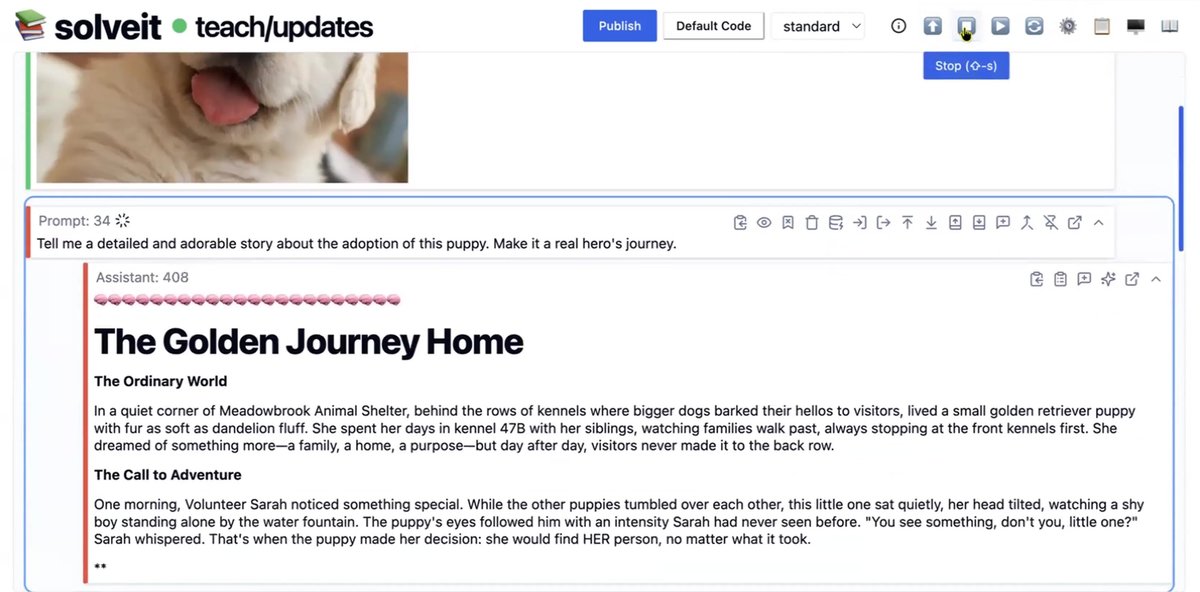
Solveit is presented as a platform for interactive, incremental development. Instead of asking an AI to generate a large codebase in one pass, it is designed to help users build solutions step by step in a private cloud instance, keeping the work understandable, editable, and tied to the user’s own environment.

Features

Personal cloud instances

Each user gets a personal cloud instance described as a full virtual private server with its own file system, installed software, secrets, and hosting capability. You can keep separate environments for different projects or courses.

Dashboard-based session management

The dashboard lets you create instances, connect to them, and track running kernels and active sessions. That makes it easier to move between environments without rebuilding setup each time.

Private and public sharing model

Solveit uses a private URL for the instance interface and a public URL for sharing apps you host. The source says the public URL exposes only what you serve on port 8000, while files and dialogs remain private.

Persistent dialogs and files

The platform centers on dialogs, which are saved workspaces for notes, code, and AI chat. You can keep work in place until you delete it, and switch between files and dialogs inside the instance.

Incremental, understandable coding workflow

The product is built around an interactive method where you write one or two lines at a time and review what they do before moving on. The source contrasts this with generating large blocks of code that are harder to understand and maintain.

Support for coding, writing, and app building

The source says you can use Solveit to build web apps, dashboards, APIs, and other services, and that the platform supports ongoing development inside a working environment. The course material also references writing prose and using AI models as part of the workflow.

Use Cases

  • Interactive coding and problem solving

    Work through coding problems in small steps, checking each change before moving on. The platform is designed for people who want AI assistance without losing sight of what the code is doing.

  • Project-specific development environments

    Use a personal cloud instance to install packages, clone repositories, store files, and keep a project environment isolated from others. The source frames each instance as a full Unix box for remote work.

  • Sharing runnable applications

    Build a web app, dashboard, or API and expose it through a public URL without sharing your code or dialogs. This is useful when you want others to use a working app rather than inspect your workspace.

  • Long-running technical workspaces

    Create a saved dialog for notes, code, and AI conversation, then return to it later as a persistent workspace. This supports longer projects where context matters.

  • Course-led skill development

    Use the course plus platform together to learn the solveit method while working in the same environment where the method is applied. The site positions the course and software as complementary parts of the same workflow.

Pros and Cons

Pros

  • Supports an incremental workflow that emphasizes understanding the code as you build it.
  • Provides private cloud instances with their own file system and installed software.
  • Includes a public URL path for sharing applications while keeping the working environment private.
  • Covers both learning content and a working platform around the same solveit method.

Cons

  • The source does not provide confirmed pricing or plan details.
  • Some platform capabilities are described at a high level without a full product documentation set in the provided sources.
  • The site does not clearly list integrations or deployment targets beyond hosting apps from an instance.

FAQ

What is Solveit?

The source describes Solveit as a software platform and course environment used for interactive, incremental development. It is presented alongside the course "How to Solve it With Code" and the solveit method.

Who is Solveit for?

The features article says Solveit is designed for experienced coders, AI practitioners, and data scientists, though people from many technical fields may find it helpful.

How does the workflow start?

The source says you can log in to the dashboard, create or connect to an instance, and work inside a private URL. It also mentions public URLs for sharing apps you run on port 8000.

What can you build with it?

The source supports building web apps, dashboards, APIs, and other services inside an instance. It also mentions note-taking, code, chat, file work, and hosting applications.

Does the source show pricing?

No valid pricing page was available in the provided sources. The pricing URL returned a 404, so pricing details are not available here.

Quick Facts

Category
AI education and development platform
Primary product
Solveit
Associated courses
How to Solve it With Code; Practical Deep Learning for Coders
Platform model
Cloud instances with private URLs and optional public app URLs
Primary users
Experienced coders, AI practitioners, and data scientists
Domain
fast.ai