
Data Mart creation and reuse
Create governed Data Marts from SQL, existing tables, views, connectors, and patterns so analysts can define metric logic once and reuse it across reports.

OWOX is a self-service analytics platform for governed metric logic, reusable Data Marts, and trusted answers in spreadsheets, dashboards, chat, email, and AI assistants.
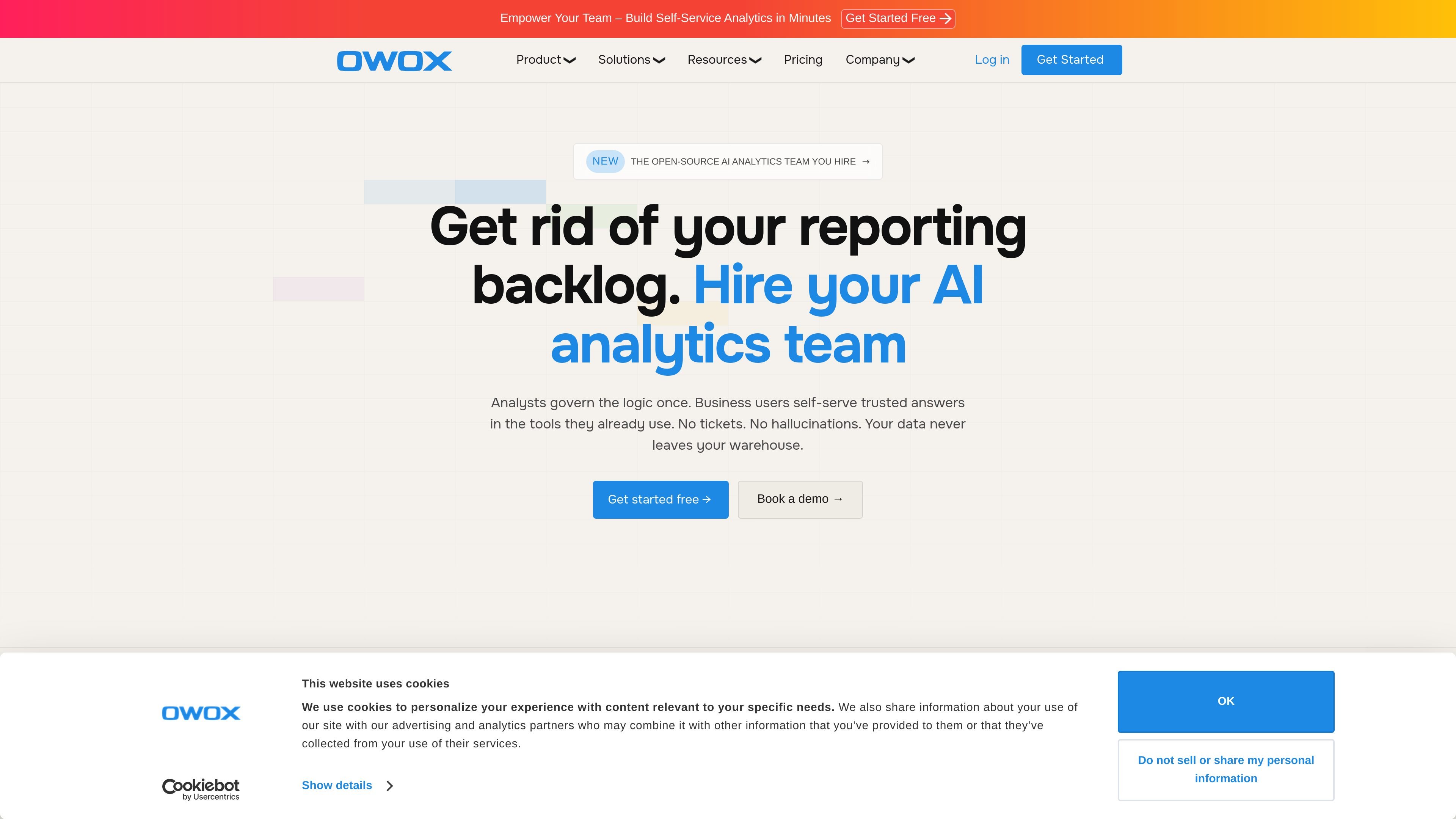
OWOX is a self-service analytics platform built around Data Marts. It is designed so analysts define trusted logic once, and business users can reuse that logic across reports, spreadsheets, messengers, email, and supported AI assistants.
The product emphasizes a warehouse-native workflow: data stays in the customer’s warehouse, metrics are defined centrally, and reporting is delivered from approved marts instead of duplicated queries or one-off exports. The result is a controlled analytics system for teams that want self-service without losing governance.
Create governed Data Marts from SQL, existing tables, views, connectors, and patterns so analysts can define metric logic once and reuse it across reports.
Publish a single Data Mart to multiple outputs, including Google Sheets, Looker Studio, Slack, Teams, and email, without rebuilding the underlying logic.
Let business users browse approved marts, select columns, and self-serve reports in familiar tools without writing SQL or opening tickets.
Keep answers grounded in analyst-defined logic so every cell traces back to SQL and AI responses come from trusted marts rather than raw-data guesses.
Run reporting refreshes and scheduled deliveries through OWOX credits, including report updates, exports, AI assistant responses, and AI Insights delivery.
Connect warehouse-native data workflows without moving data out of the customer warehouse, with support for BigQuery, Snowflake, Databricks, Athena, and Redshift.
Use OWOX when analysts need to define trusted metrics once and reuse them across many reports, channels, and teams without rewriting SQL in every tool.
Use it to replace ad hoc reporting queues with governed self-service in spreadsheets and dashboards, where stakeholders can pick approved columns and refresh data on demand.
Use it when teams want reporting updates and AI-style answers delivered into Slack, Teams, email, or chat assistants while keeping results grounded in approved marts.
Use it when the team wants warehouse-native analytics that keeps data in the existing warehouse while connecting sources, building marts, and sharing outputs downstream.
Use it when governance matters: role-based access, context-based access, ownership, and centralized definitions help control who sees which data and how it is used.
OWOX is a self-service analytics platform built around Data Marts. Analysts define metrics, access, and output once, then business users consume the approved data in tools like Google Sheets, Looker Studio, Slack, Teams, email, and supported AI assistants.
The source shows OWOX running on top of a customer’s warehouse and supporting BigQuery, Snowflake, Databricks, Athena, and Redshift. It also emphasizes that data stays in the warehouse rather than being moved elsewhere.
The platform includes open-source community/community edition options, paid plans for individual roles and teams, and an Enterprise path with custom contracts, governance, support, and sales contact.
Analysts create Data Marts from SQL, tables, views, connectors, or patterns, then publish them for downstream reporting and delivery. Business users can self-serve from those marts without touching raw tables or waiting in a ticket queue.
The site positions OWOX for analysts, reporting teams, founders, operations leaders, CDOs, and business users who need governed self-service analytics. It is built for teams that want one controlled reporting system instead of separate reports scattered across tools.