
System of record for product delivery
Knapsack provides a shared source of truth for design, code, and documentation so teams can work from the same current system rather than separate artifacts.

Knapsack is a digital production platform for enterprise teams that connects design, code, and documentation in a shared system of record. It supports design token management, live prototyping, governance, and multi-framework code rendering.
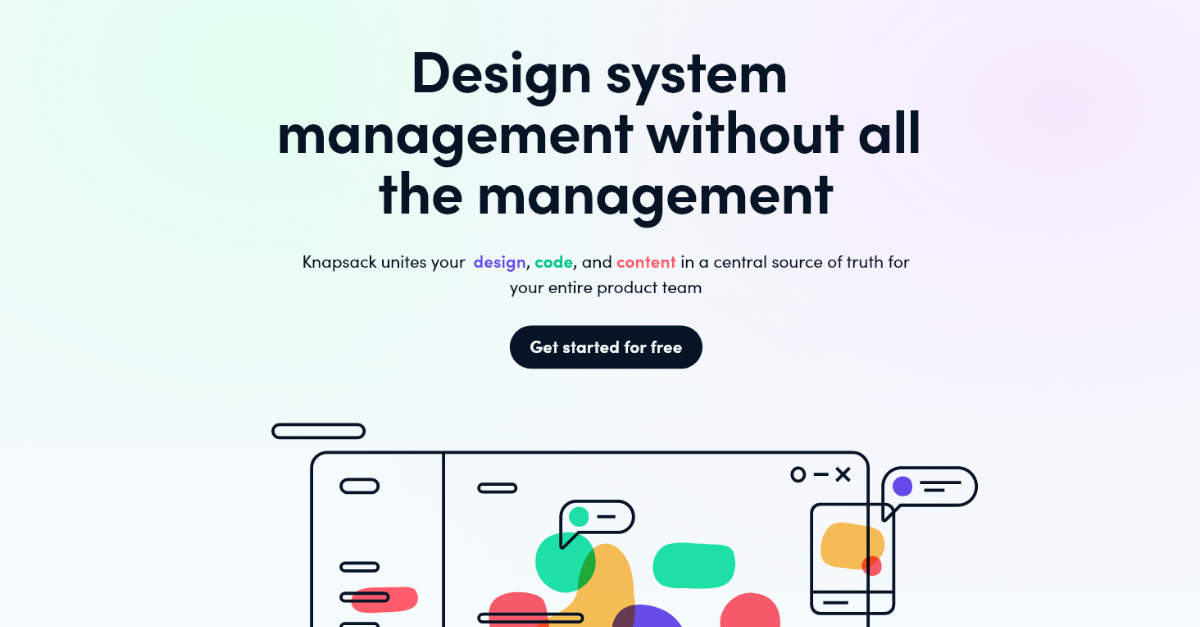
Knapsack is a digital production platform for enterprise teams. Its core role is to connect design and code into a shared system of record so teams can build, govern, and deliver digital products from one place.
The site positions Knapsack around reusable components, automated workflows, design tokens, and AI-native structure. It supports live prototyping, documentation, permissions, version control, and code rendering so product, design, and engineering teams can work from the same up-to-date source of truth.
Pricing information on the site shows annual plans with user minimums, viewer access, and contact-sales options for larger needs. The platform is offered with enterprise-oriented support and governance features rather than a self-serve trial model.
Knapsack provides a shared source of truth for design, code, and documentation so teams can work from the same current system rather than separate artifacts.
The platform renders multiple code frameworks in one workspace, with support listed for React, Vue, Web Components, Angular, Twig, and Handlebars renderers.
Design tokens can be imported, edited, managed, and transformed so teams can maintain token-based styling for web and mobile experiences.
Teams can assemble and share interfaces using production-coded components, configure properties and themes, and inspect source code to understand implementation details.
User permissions, approvals, Git-backed version control, SSO, and CI/CD integration help teams manage access and control publishing workflows.
Knapsack includes dynamic documentation, analytics, public workspaces on eligible plans, and workspace hosting to support collaboration and distribution.
Use Knapsack to keep design, code, and documentation synchronized so teams work from the same current reference instead of maintaining separate files and handoffs.
Use production-coded components to assemble interfaces, test themes and properties, and validate ideas before engineering commits to implementation.
Use permissions, approvals, Git-backed version control, and SSO to control who can edit, review, and publish workspace changes in larger organizations.
Use the platform to import, edit, manage, and transform design tokens for production-ready styling across web and mobile implementations.
Use multi-framework rendering and CI/CD-connected workflows to support teams working across different codebases and release processes.
Knapsack is presented as a digital production platform for enterprise teams. It connects design, code, and documentation in a shared system of record, and its pricing page shows plans for different team sizes and security needs.
Yes. The pricing page shows annual paid plans with seat minimums, viewer allowances, and a contact-sales flow. It also states that Knapsack does not currently offer a free trial period.
Knapsack supports a mix of workflows including design system documentation, design token management, code rendering, prototyping and composition, governance, approvals, and CI/CD-connected publication workflows.
The source pages show support for SSO, Git-backed version control, user permissions, approvals and change management, and framework rendering across React, Vue, Web Components, Angular, Twig, and Handlebars.
The public sources describe live, production-component-based prototyping and composition, but they do not provide a complete implementation checklist or a detailed setup guide for each plan.