
Text-to-video generation
Mochi 1 is Genmo’s open-source text-to-video model for turning written prompts into generated videos.

Genmo builds open-source video generation models like Mochi 1, with a browser playground and local customization options.
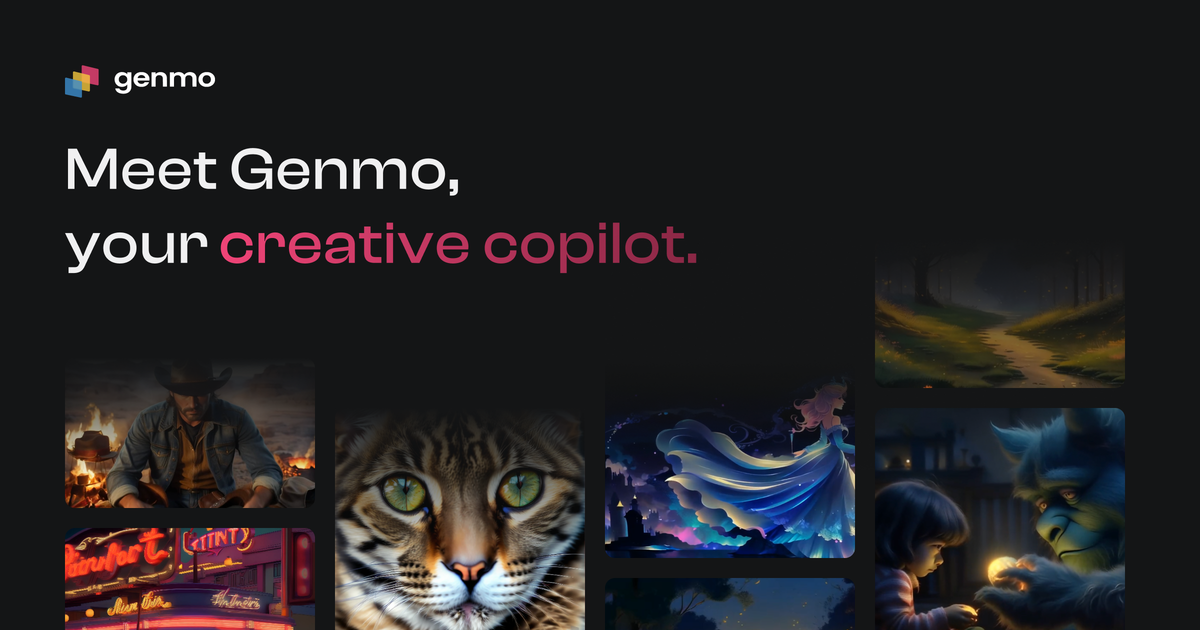
Genmo is a research lab focused on open video generation models. Its main public product is Mochi 1, an open-source text-to-video model available through a hosted playground and an open repository.
The site positions Mochi 1 as a model for generating short videos from written prompts, with emphasis on motion quality and prompt adherence. Genmo also says users can run it locally, customize it for their needs, or use ComfyUI, while the preview release is available under the Apache 2.0 license for personal and commercial use.
Mochi 1 is Genmo’s open-source text-to-video model for turning written prompts into generated videos.
The model is designed to follow detailed prompts closely, with the blog describing strong prompt adherence for characters, settings, and actions.
Genmo says the preview generates smooth video at 30 frames per second for clips up to 5.4 seconds, with a focus on coherent motion.
The open-source repository can be run locally, and Genmo also says Mochi can be used through ComfyUI.
The product includes a hosted playground where users can test Mochi 1 directly in the browser.
The release is open under Apache 2.0, with open weights and source code available for developers.
Create short prompt-driven videos from text when you want a browser-based starting point in the playground before moving to local runs or customization.
Run the open repository locally to adapt the model for your own workflow, experiments, or research work.
Use ComfyUI support if you prefer a node-based creative workflow for testing Mochi 1 output.
Evaluate model fit for applications that care about motion quality and prompt adherence, such as research previews or product experiments.
Generate personal or commercial video clips under the preview’s Apache 2.0 license, while accounting for the current 480p and short-duration limits.
Genmo’s playground is the easiest way to try Mochi 1 without setting up the open-source repository. The site also points to an open-source release for users who want to run it locally or customize it.
The blog post states that the initial research preview of Mochi 1 is available for personal and commercial use under the Apache 2.0 license.
The first release is a 480p base model. The blog says Mochi 1 HD is planned for later, but it is not part of the initial release.
Genmo says Mochi 1 can be run locally from the open-source repository and also used through ComfyUI. The blog additionally mentions open weights on HuggingFace and API partners.