
Visual page builder
Build pages in a self-designed canvas with responsive layout support and more than 150 animation effects. The homepage says designs can be restored pixel-by-pixel from mockups.

Functor Z / Zion is a no-code cloud platform for building pages, logic, and data models visually, with web, H5, and mini program publishing.
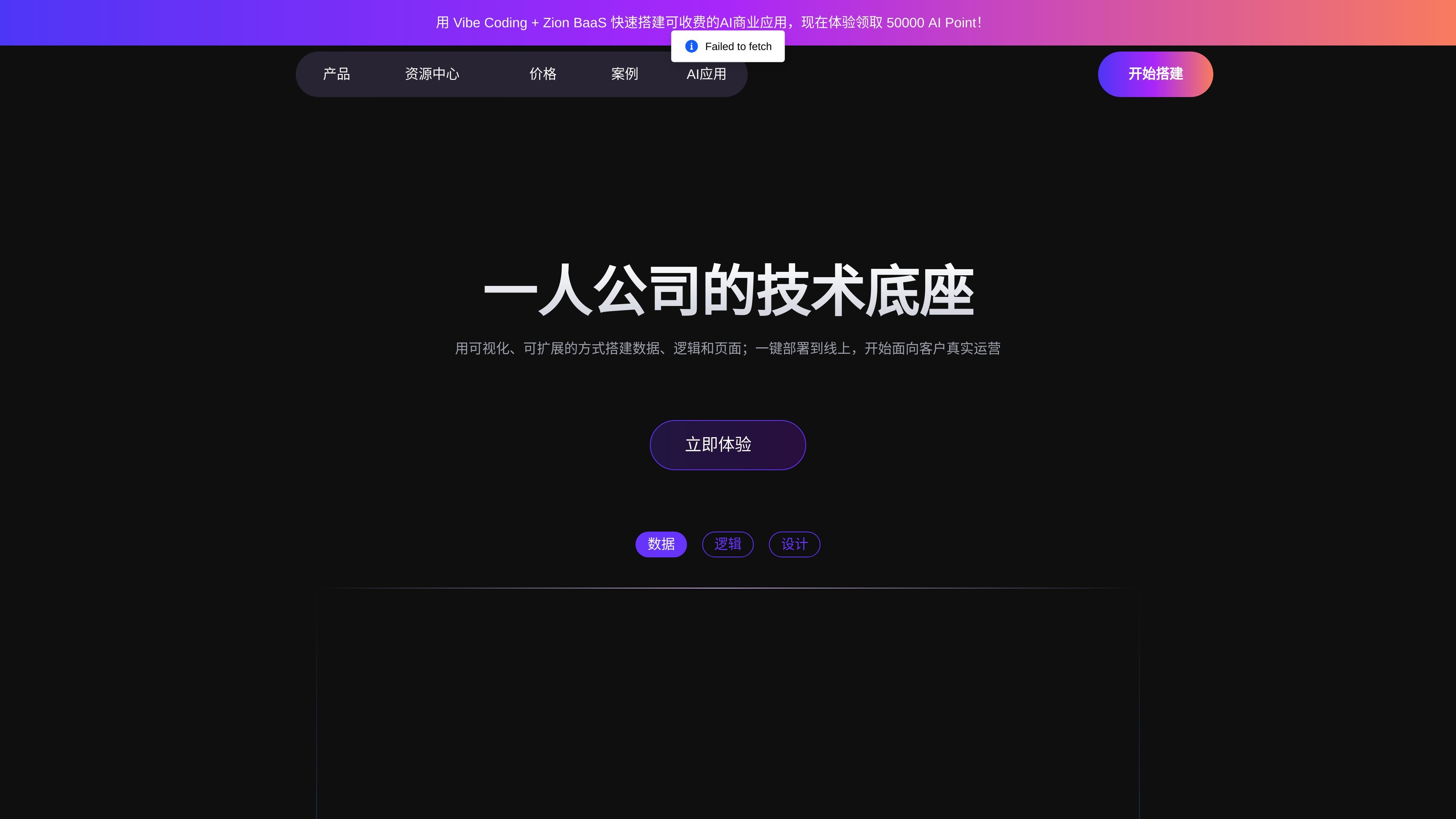
Zion is a no-code cloud development platform from Functor Z that helps users design pages, business logic, and data models visually, then deploy the result online. The site positions it as a full-stack building environment for applications rather than a single-purpose site builder.
Across the homepage and pricing page, the product is presented as a way to build AI apps, SaaS apps, consumer-facing interactive products, and data-driven projects with one project that can publish to multiple channels. The workflow includes visual design, backend setup, preview, pre-release testing, and formal release.
The platform also exposes operational features for shipping and running applications, including data management, SEO settings, payment support on higher tiers, collaboration controls, and API connectivity. Pricing is tiered from a free basic plan to paid plans for advanced, professional, and enterprise usage, with private deployment options listed separately.
Build pages in a self-designed canvas with responsive layout support and more than 150 animation effects. The homepage says designs can be restored pixel-by-pixel from mockups.
Create data models visually and generate an admin back office automatically, with fine-grained permission settings and support for large data volumes.
Connect prebuilt large models and external APIs, and use behavior flows for custom AI or application logic. The pricing page says each project can configure third-party APIs and behavior flows, with higher tiers removing the single-flow limit.
Publish to web, H5, and mini program formats from one project, with preview, pre-release, and formal release paths shown in the pricing page.
Configure SEO fields such as title, description, keywords, Alt text, and heading tags for web projects, which helps site owners manage search visibility from the platform.
Build payment-enabled commercial apps, including WeChat Pay and Alipay support, and use project roles plus collaborator settings for team work. The pricing page also lists multi-client support on the professional tier.
Use Zion to assemble an AI product with a prebuilt model, data preprocessing, and API connections, then deploy it as a web or mini program experience.
Build a SaaS tool with structured data, role-based access, and payment support so the product can handle subscription or paid access flows.
Create a consumer-facing interactive site or app with responsive layouts, animation effects, and multi-channel publishing for web and H5.
Use the platform to create an internal or customer-facing admin system backed by a visual data model and automatically generated management interface.
Set up a project that needs publication controls, custom domain support, and SEO fields for web growth and deployment management.
Zion is built as a no-code cloud development environment for designing pages, business logic, and data models, then deploying the result online. The site also describes code generation as part of the design-to-delivery workflow.
The pricing page shows support for team collaboration, with higher tiers allowing 1, 3, or 30 collaborators depending on plan, and an enterprise offering with customizable team size. The product materials also mention project sharing and collaborative editing.
The site says projects can be published as web apps, H5 pages, and mini programs, with pre-release preview and formal launch options on higher tiers. It also supports custom domains for web apps on paid plans.
The source mentions built-in SEO settings, such as title, description, keywords, Alt text, and H tags, plus support for custom domains on paid plans. These capabilities are described for web publishing rather than every output type.
The pricing page states that professional plans add payment support, multi-client support, role permissions, and WeChat mini program subscription messages. The source does not provide a complete list of third-party integrations beyond API connectivity and these specific payment or platform features.