
Service-ended notice
The homepage and pricing page both display the same shutdown notice, so visitors immediately understand that the service is no longer operating.
Crypko is a website that now displays a service-ended notice instead of an active product. The current pages state that the service has concluded and present the message in English, Japanese, and Chinese.
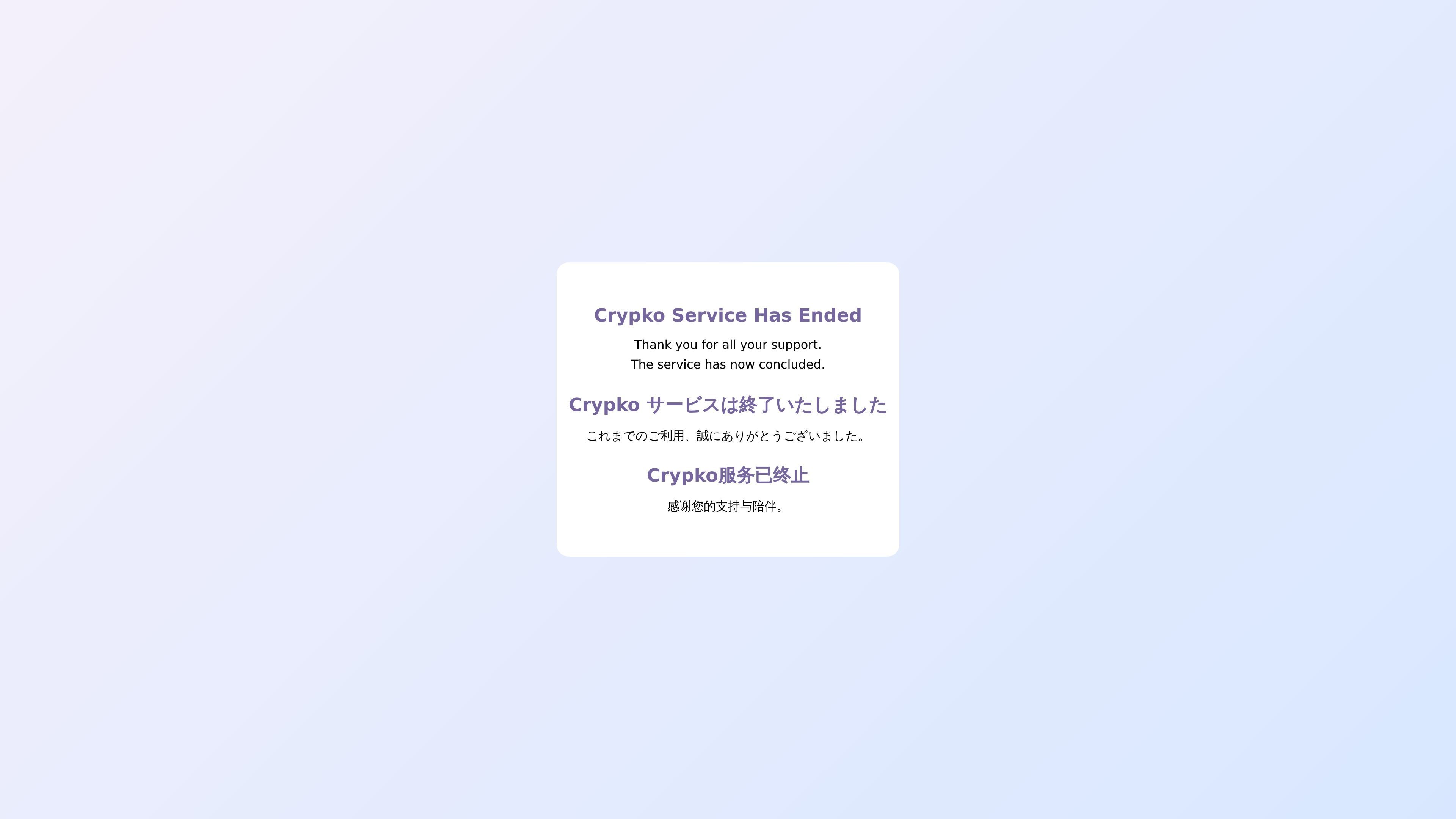
Crypko is a product website that now serves a service-ended notice rather than an active product experience. Both the home page and the pricing page state that the service has concluded and thank users for their support.
Based on the rendered page text, the site’s current purpose is to communicate that Crypko is no longer available. The message is presented in English, Japanese, and Chinese, which helps visitors understand the shutdown regardless of language preference.
The homepage and pricing page both display the same shutdown notice, so visitors immediately understand that the service is no longer operating.
The page communicates the end of service in English, Japanese, and Chinese, which makes the status clear to a multilingual audience.
The site provides a direct conclusion rather than a marketing landing page, reducing ambiguity about whether the product is still active.
The pricing route resolves to the same end-of-service message, so pricing information is no longer offered on-site.
The content is minimal and focused on a single update, which makes the current status easy to verify at a glance.
A returning visitor can confirm that Crypko is no longer operating before spending time looking for access or signup options.
Someone who followed an old link to the pricing page can quickly see that there are no current plans to compare.
A multilingual audience can read the shutdown message in the language that is easiest for them to understand.
No. The page states that the Crypko service has ended.
The source text does not describe any active plans, pricing, or sign-up flow. The pricing page carries the same service-ended notice as the home page.
The site’s rendered text is presented in English, Japanese, and Chinese, which suggests the service message was localized for those audiences.