
Multi-source data intake
Bring in data from files or system sources such as SFTP, API, S3, email, and native API connectors, then route it into downstream systems.

OneSchema is an AI-powered data operations platform for file-based intake, cleanup, validation, and reconciliation into downstream systems.
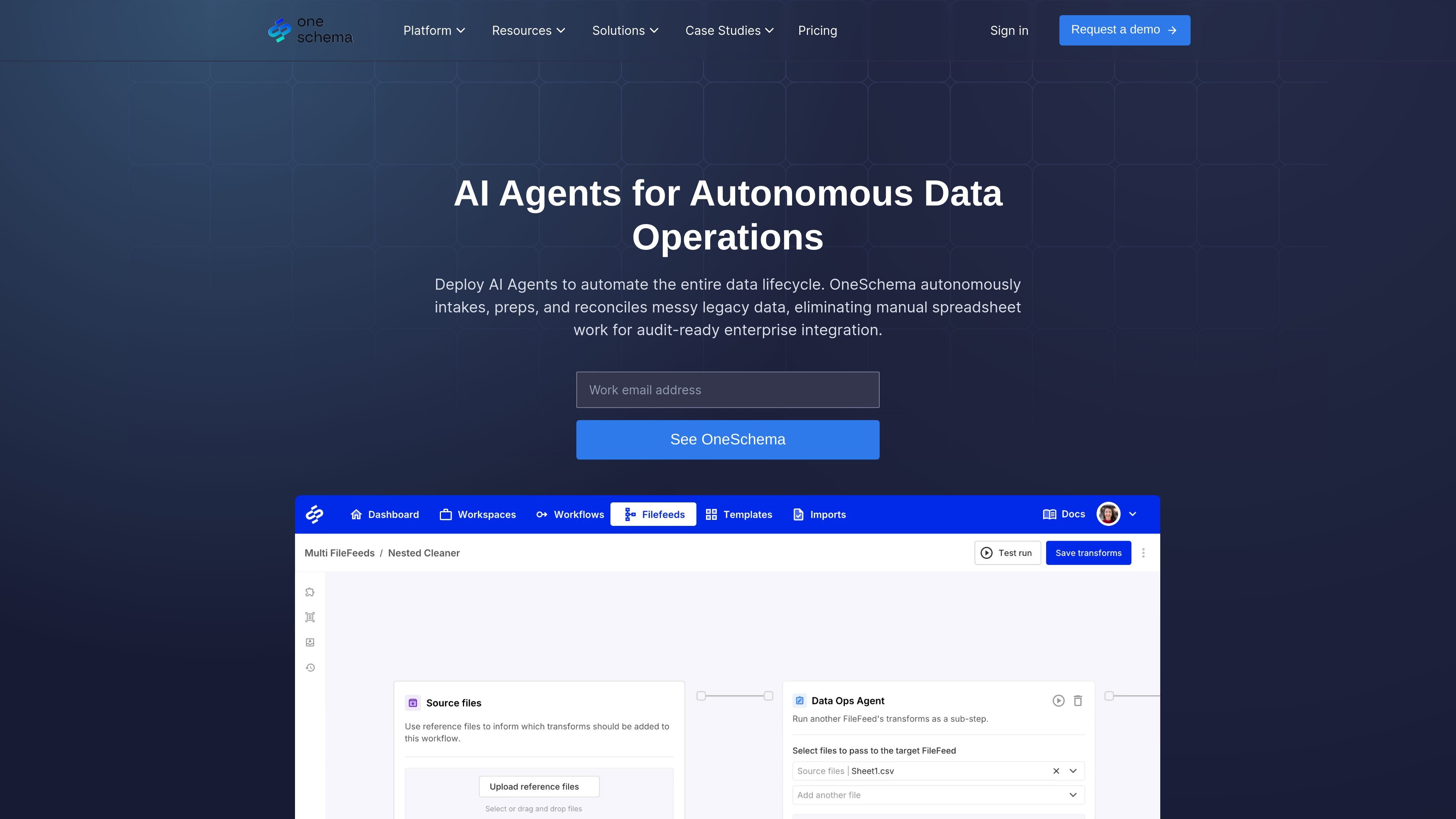
OneSchema is an AI-powered data operations platform for automating intake, cleanup, transformation, validation, and reconciliation across files, spreadsheets, and legacy systems. The product is positioned for teams that spend significant time moving messy operational data into downstream systems and want to reduce manual spreadsheet work.
Its platform combines AI agents, validation templates, connectors, and FileFeeds AI to turn uploaded files or inbound data from sources such as SFTP, API, S3, and email into structured, auditable outputs. The site emphasizes workflows for importing data, enforcing schema rules, and pushing cleaned records into business systems without relying on brittle scripts or heavy services work.
Bring in data from files or system sources such as SFTP, API, S3, email, and native API connectors, then route it into downstream systems.
Use LLM vision and AI coding agents to extract, map, format, and transform spreadsheets and documents into the required API or spreadsheet shape.
Validate incoming data with 50+ included validation types, custom code validations, and configurable templates to catch bad records early.
Build recurring file integrations with FileFeeds AI for CSV, Excel, and PDF workflows, including mappings, joins, and transformations.
Monitor imports with dashboards, audit logs, funnel analysis, and observability integrations so teams can see where data flows break down.
Control access and deployment with role-based permissions, region hosting, and self-hosted options for organizations with stricter requirements.
Automate accounts payable, accounts receivable, credit checks, or lending-risk workflows that rely on structured data moving between spreadsheets and enterprise systems.
Validate and transform patient, encounter, billing, claims, denials, and remittance files before sending them into healthcare systems.
Onboard employees and payroll information while handling tax filings and benefits-related workflows with fewer manual file steps.
Move customers from legacy CRM systems or other systems with custom fields and objects while preserving the structure needed by downstream tools.
Build recurring file integrations for business systems when the source data arrives as CSV, Excel, or PDF files and needs repeatable cleaning and mapping.
OneSchema is designed for teams that need to automate data intake, cleanup, and reconciliation across spreadsheets, files, and legacy systems. The source highlights use cases such as importing files, transforming messy CSV, Excel, and PDF data, and pushing structured data into downstream systems.
The source shows workflows that start with uploading files or bringing data in through sources such as SFTP, API, S3, or email, then extracting, mapping, validating, cleaning, and importing the data into a target system. FileFeeds AI also supports recurring file transformations and auditable pipeline creation.
OneSchema’s pricing page shows a Starter plan and higher-tier Pro and Enterprise options, with a request-a-demo flow and contact-us flows for several plans. The pricing page also mentions add-ons such as file consumption tiers, AI FileFeeds, and self-hosting.
The source describes support for CSV, Excel, XML, and PDF workflows, with FileFeeds AI focused on recurring file imports and transformations. It also mentions connectors and native API connectors, but does not provide a full published integration list on the pages provided.
The security page states that OneSchema is SOC 2 Type II compliant and also references SOC 3, HIPAA, GDPR, and CCPA support, along with role-based access controls and encrypted data in transit and at rest. It also mentions self-hosted deployment options on AWS, Azure, and GCP.