
Multi-modality analysis
Analyze X-ray, CT, MRI, ultrasound, and related imaging in one interface instead of switching between separate tools.

CT Read is an AI medical imaging analysis tool that helps non-medical users interpret X-ray, CT, MRI, and ultrasound images in plain language. It supports common image formats and DICOM files, with a credit-based model for full report access.
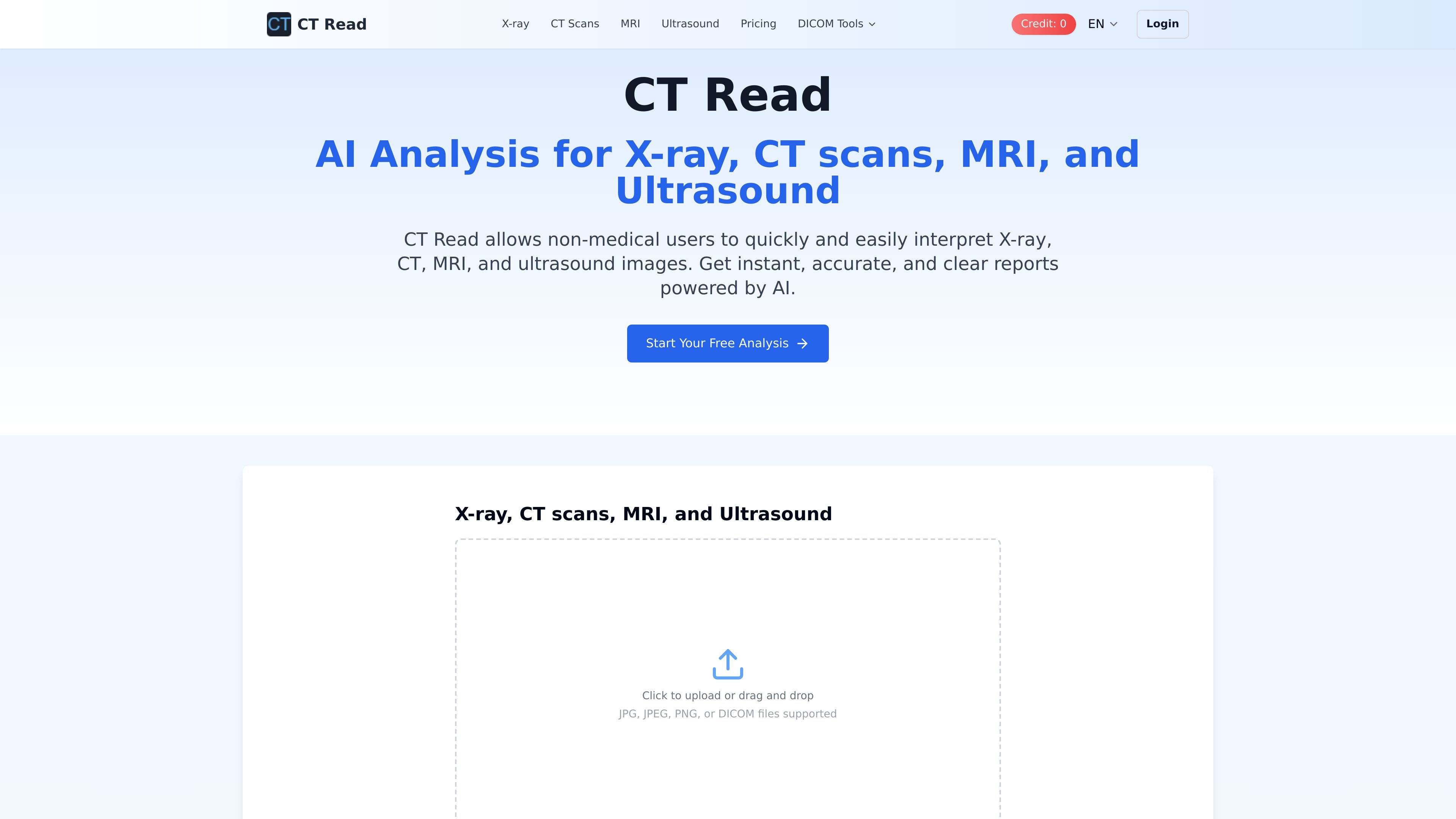
CT Read is an AI-powered medical imaging analysis tool for X-ray, CT scan, MRI, ultrasound, and related study types. The site positions it for non-medical users who want a clearer explanation of imaging results in plain language.
Users upload supported image files, then receive an AI-generated report that highlights key findings and summarizes the scan in a more accessible format. The pricing page shows a credit-based model for full access, while a partial report preview is available without credits.
Analyze X-ray, CT, MRI, ultrasound, and related imaging in one interface instead of switching between separate tools.
Upload common image files or DICOM studies to start an AI review without converting formats first.
Receive a report that the site describes as clear, detailed, and easy to understand, with key findings and recommendations.
Use the same tool for different body areas, including brain, chest, abdomen, and bones, according to the homepage.
Preview part of the report for free before using credits on a full analysis.
Unlock faster processing and comparative analysis when using credits on premium features.
A user reviewing a routine chest X-ray can upload the image and get a plain-language explanation of what the scan shows.
Someone who received MRI results can use CT Read to translate scan terminology into a clearer summary.
Parents expecting a child can review ultrasound images in a more accessible format and understand the scan more easily.
A patient monitoring bone density scans can compare current and previous studies when premium features are available.
A person with a sports injury or dental X-ray can use the tool to get a simpler explanation of the image findings.
CT Read is an AI-powered medical imaging analysis tool that can interpret uploaded X-ray, CT, MRI, ultrasound, PET, and related image files and present the results in a clearer, more accessible format. The site presents it as a tool for non-medical users and patients, but it does not say it replaces a clinician’s diagnosis.
The pricing page shows paid credit packs. One credit can be used for one AI analysis, and you can preview part of a report for free even when you have zero credits.
The site says CT Read supports JPG, JPEG, PNG, and DICOM uploads.
The pricing page says premium features include full AI report access, priority processing, advanced anomaly detection, comparative analysis, and unlimited image resolution. The site does not provide setup details for teams or workflows beyond upload-and-analyze.
The homepage and pricing page do not provide a technical accuracy figure or a formal clinical validation statement. They describe the output as clear, accurate, and detailed, so users should treat the result as an aid for interpretation rather than a replacement for medical advice.