
Site and behavior analysis
Analyzes sessions, funnels, forms, heatmaps, recordings, and on-site behavior to surface pages or steps that may be hurting conversion.

Splitsense is an agentic conversion optimization platform that connects to your website and analytics stack, uses AI to find friction, generates experiment ideas, and runs A/B tests for SaaS, ecommerce, startup, and CRO teams.
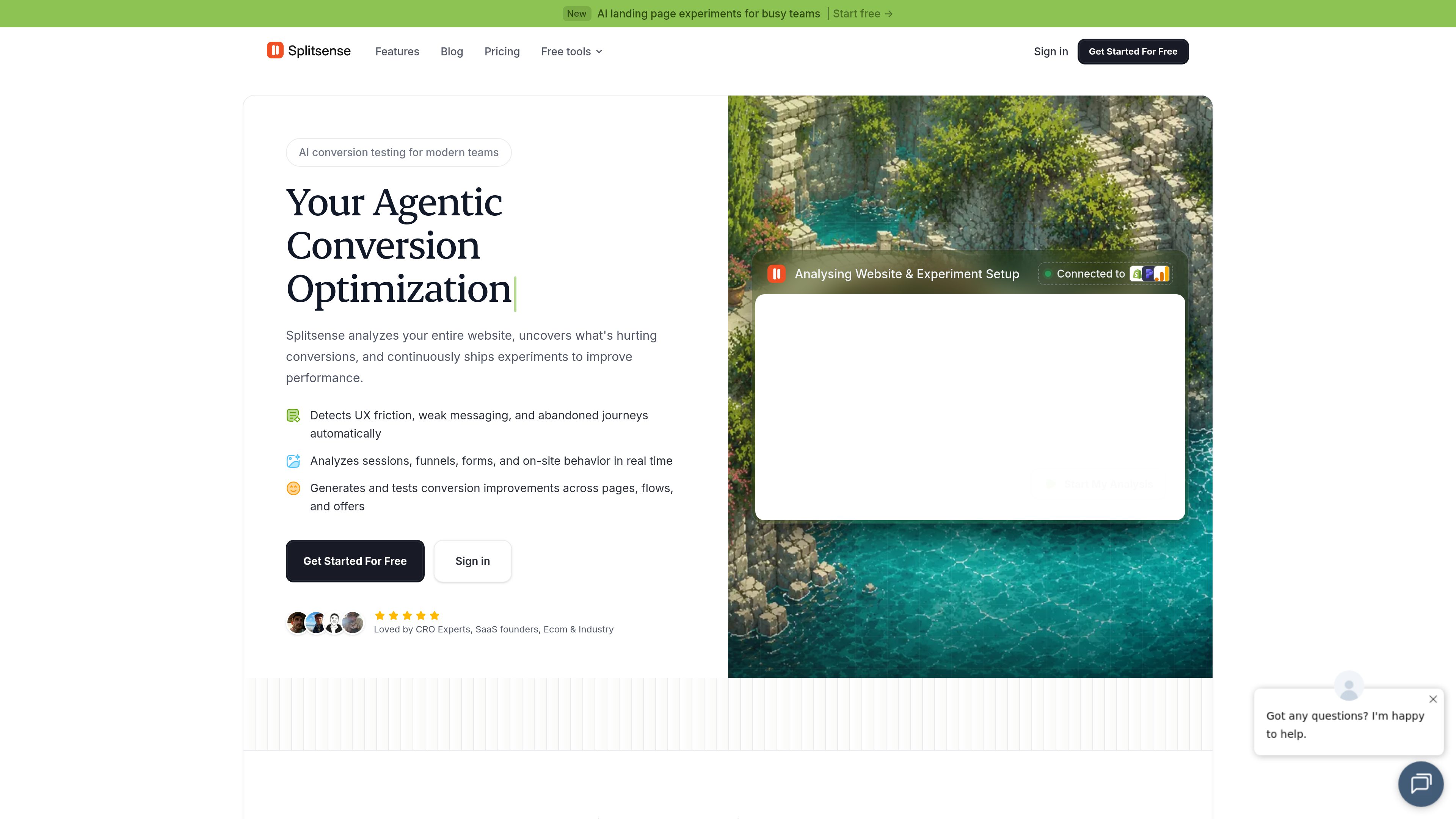
Splitsense is an agentic conversion optimization tool for websites. According to the site, it connects to your analytics and storefront data, scans pages and user behavior, identifies friction points, and then generates and runs experiments to improve conversion performance.
The product is positioned for teams that want to capture more revenue from existing traffic without relying entirely on manual audits or a dedicated CRO hire. The homepage describes three main stages in the workflow: analysis of sessions and funnels, generation of test ideas, and automated experimentation with ongoing monitoring after launch.
Analyzes sessions, funnels, forms, heatmaps, recordings, and on-site behavior to surface pages or steps that may be hurting conversion.
Flags UX friction, weak messaging, abandoned journeys, and pages that appear to leak revenue based on the connected data.
Creates experiment ideas and draft variants across headlines, CTAs, pricing pages, checkout, and other conversion points.
Lets users edit AI-generated copy and test variants before launching experiments.
Runs split tests, updates traffic allocation, surfaces the winning variant, and keeps monitoring for regressions after launch.
Produces optimization reports that rank opportunities by impact and summarize the data behind each recommendation.
Teams can use the platform to inspect signup and onboarding steps, identify drop-off points, and test message or layout changes on pages such as /signup, /pricing, or /onboarding.
Ecommerce teams can connect Shopify data, review product and checkout sessions, and test changes such as CTA copy, trust signals, or mobile layout on PDP and checkout flows.
Agencies and consultants can monitor several client sites, review flagged issues, and keep a set of experiments running without handling every audit and test manually.
Teams can use the free tools to generate website copy ideas or get a visual landing page critique before moving into a full experiment workflow.
Splitsense connects to a website and analytics stack, analyzes sessions and conversion behavior, and generates experiments to improve conversion performance.
The homepage mentions Google Analytics, Shopify, and Plausible. No broader integrations list was provided on the pages reviewed.
Yes. The homepage says variants are editable in the variant editor before launch.
The site says the experiment agent can run traffic splits, pick winners, and keep monitoring for regressions after launch.
Yes. The site includes a free copy generator and a free landing page review tool, both described as no-account-required tools with results that expire after 7 days.
Traffic data is for reference only.

vwo.com
VWO is a digital experience optimization platform for experimentation, behavior analytics, personalization, and conversion rate optimization across websites, mobile apps, and server-side setups.

zuko.io
Form analytics and optimization to reduce checkout abandonment

diib.com
diib is an SEO and website growth tool that scans your site, syncs with Google Analytics, and turns performance data into actionable recommendations.

tiun.io
tiun is a backend platform for SaaS and AI companies that combines authentication, payments, customer data, and analytics in one system. It also acts as Merchant of Record for software sales, handling tax compliance, invoices, chargebacks, and payouts.

clicks.page
clicks.page is cookieless website analytics for founders and indie hackers. Track visitors, traffic sources, conversions, and revenue attribution with setup and querying workflows built for AI agents.

wisry.ai
An AI advertising studio for ecommerce brands that researches competitor ads, develops evidence-backed campaign angles, creates static and video ads, and connects campaigns to Meta and Google—so growth teams can move from market research to launched, monitored campaigns in one workflow.