
Image creation and editing
Create images with natural-language input, then refine them through an image editor rather than restarting the workflow from scratch.

Reve is an AI image creation and editing tool for generating, editing, and remixing images with natural-language edits, drag-and-drop controls, and native 4K x 4K output.
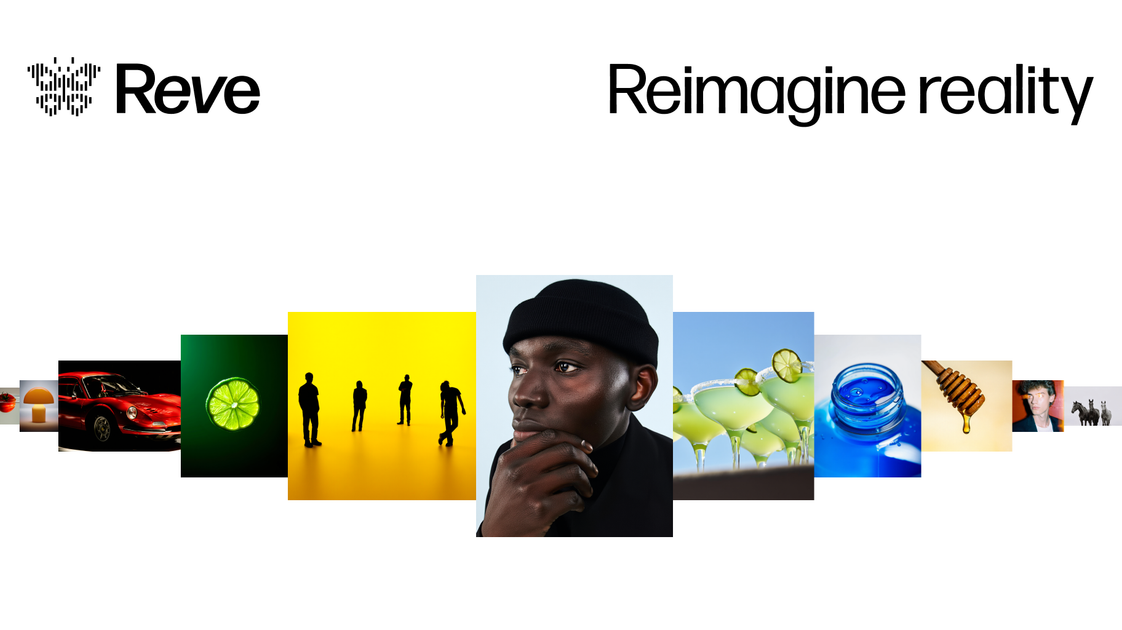
Reve is an AI image generation and editing product built around creating, editing, and remixing images in a single workflow. The site positions it as a tool for combining natural-language edits with a drag-and-drop image editor, so users can move between prompting and direct manipulation.
The product’s underlying approach separates planning from rendering. According to the site, images are laid out before they are rendered, which is intended to improve detail, coherence, and control. Reve also emphasizes high-resolution generation at native 4K x 4K output, which it presents as suitable for print-oriented work and for iterative editing without a separate upscaling step.
The site frames Reve 2.0 as code-based image generation, meaning the image structure can be inspected and edited more directly than with a purely text-to-image workflow. That design is presented as useful for both human creators and agent-assisted workflows, especially when users need to refine composition, text placement, or relationships between elements.
Create images with natural-language input, then refine them through an image editor rather than restarting the workflow from scratch.
Combine prompt-based changes with drag-and-drop manipulation so layout and visual elements can be adjusted more directly.
Use a planning-and-rendering approach that separates image layout from final rendering, which the site says improves coherence and makes the structure more editable.
Generate images at native 4K x 4K resolution, described on the site as true 16 megapixels, instead of relying on a separate upscale step.
Work iteratively without the site’s described artifact buildup when reusing generated images as references, with the model positioned for longer edit chains.
Render text and composition with more explicit control because images are represented as code, giving structure to spacing, placement, and relationships.
Draft an image with a prompt, then fine-tune visual elements in the editor when the first output is close but not exact.
Adjust composition, spacing, and element placement when text-only prompting is too imprecise for the result you want.
Create high-resolution images for print-oriented work where native output matters more than a later upscale pass.
Reuse a generated image as the starting point for further edits while trying to keep details more stable across iterations.
Work with an agent or assistant that can reason about the image structure because the product represents images as code.
Reve is an AI image creation and editing product. It combines natural-language edits with a drag-and-drop image editor, so users can generate, adjust, and remix images in one workflow.
The source describes Reve 2.0 as generating images at native 4K x 4K resolution, which the site refers to as true 16 megapixels. It also says the renderer is designed to support high-resolution iteration and print-ready workflows.
Yes. The site says Reve images are code-based, which allows both human editing and agent-native workflows. It also says users can inspect and participate in the planning process and edit the layout to change the image.
The pricing page is present, so the product appears to have a pricing section, but the provided text does not include specific plan names, prices, or limits.
The source does not name a specific platform or export format list, so only the documented capabilities can be stated: image creation, editing, remixing, and high-resolution output.