
Compare rates and book freight
Quote, book and track ocean, air and ground freight. View negotiated rates, allocations and spot pricing, then book against an accepted rate or assign the booking to a shipper.

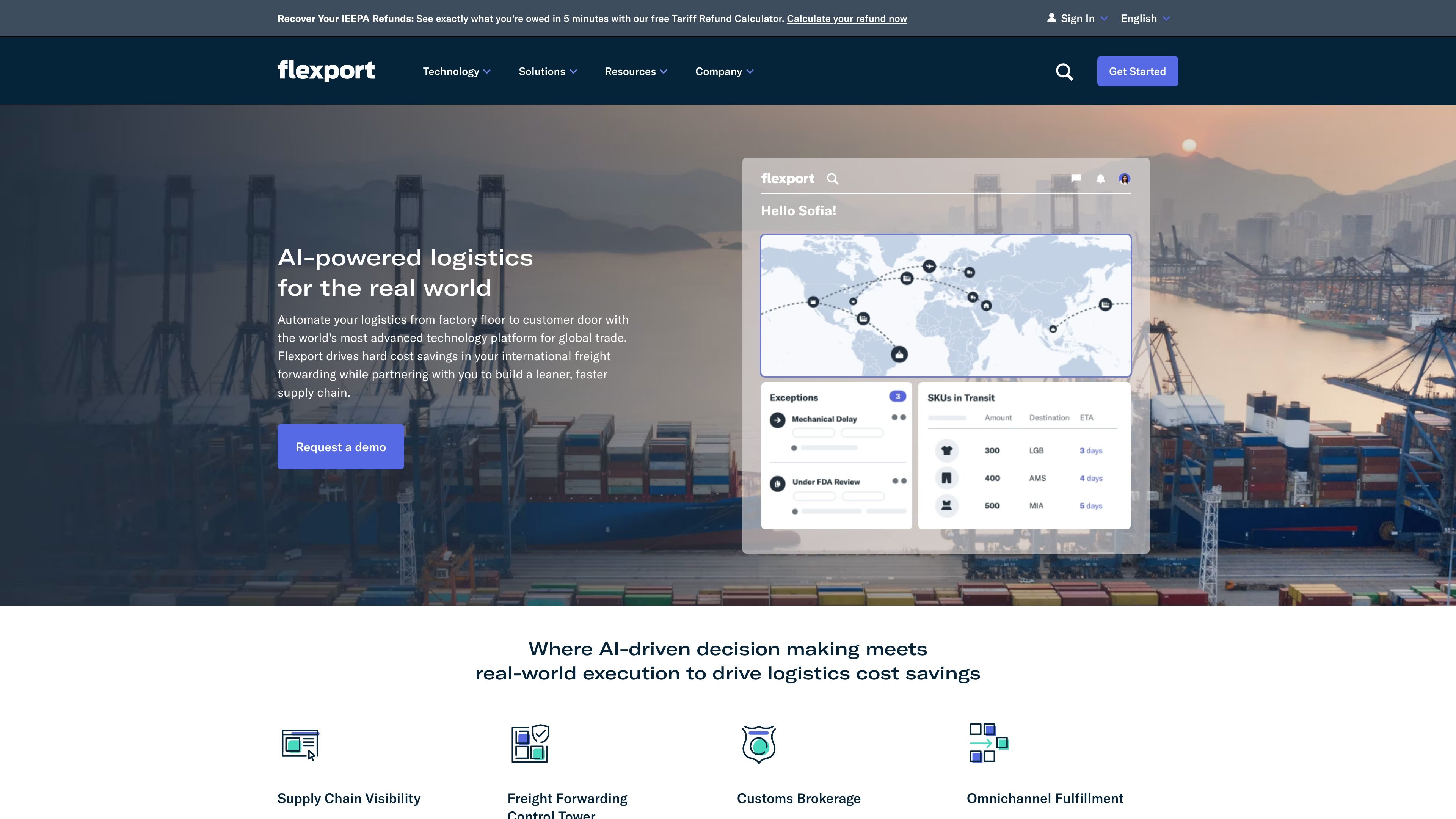
Coordinate freight, purchase orders, inventory and customs data in one cloud workspace. Flexport combines logistics services with rate comparison, shipment tracking, supplier collaboration and AI search and reporting.
Flexport combines freight forwarding, customs brokerage and fulfillment services with a cloud-based logistics platform. Importers, exporters and supply-chain teams use the workspace to manage shipments, purchase orders and inventory from ordering through delivery.
Teams can compare freight rates, book transportation, follow shipment progress and coordinate supplier tasks. AI search helps locate operational information, while reporting tools organize shipment, purchase-order and customs data into dashboards.
Quote, book and track ocean, air and ground freight. View negotiated rates, allocations and spot pricing, then book against an accepted rate or assign the booking to a shipper.
Invite suppliers individually or in bulk, follow onboarding status and let them complete setup and bookings. A shipment inbox brings together tasks that need customer action.
AI search finds relevant shipment information, opens the appropriate views, applies filters and summarizes results in response to a question.
Create reports and dashboards from supply-chain questions. Customizable views cover shipments, purchase orders, exceptions, customs declarations and container utilization.
AI evaluates full-container, less-than-container and buyer-consolidation data, including pricing, capacity, timing and utilization, to suggest container-use options.
Follow orders and freight through shipment milestones, organize receiving appointments and review the tasks needed to move a delivery forward.
Ask about arrivals or shipment groups, then use filtered views and reports to investigate the relevant records.
Use reporting that includes freight handled by other forwarders or moved on your own carrier contracts, alongside Flexport shipments.
The platform is free for Flexport customers. Flexport earns revenue from logistics services such as moving shipments, clearing customs and fulfilling orders; those services have their own charges.
Flexport has a native NetSuite integration. SAP, Oracle and Microsoft Dynamics can connect through its public API and standard EDI specifications. Connections can carry shipment milestones, invoices and purchase orders.
Search uses plain-language questions to locate information, navigate to views and apply filters. Reporting uses supply-chain questions to create reports and dashboards for examining operational data.
It is designed for importers, exporters and supply-chain teams coordinating partners, shipments and inventory across countries. Teams can request a demonstration from Flexport to discuss their workflows.
Traffic data is for reference only.

deepnote.com
Deepnote is a collaborative cloud notebook for Python and SQL that helps data teams explore data, build dashboards, and share work in one workspace.

42signals.com
Digital shelf monitoring for brands tracking pricing, availability, sellers and search across retail channels.

tableau.com
Tableau is a business intelligence and visual analytics platform that helps people explore data, create visualizations, and share insights. It offers hosted, self-managed, and desktop options for teams that need analytics, governance, and collaboration.

tiun.io
tiun is a backend platform for SaaS and AI companies that combines authentication, payments, customer data, and analytics in one system. It also acts as Merchant of Record for software sales, handling tax compliance, invoices, chargebacks, and payouts.

statable.com
Statable is a privacy-focused web analytics platform for measuring visitors, traffic sources, website behavior, goals, and funnels without cookies. It supports one-line installation, GA4 history import, Google Search Console, and EU-hosted data processing.