
Multiple input types
Generate podcasts from documents, research papers, meeting notes, webpages, YouTube videos, and plain text so a single source can become a narrated audio asset.

Turn documents, web pages, videos, notes, and social content into AI podcasts and more with a public REST API.
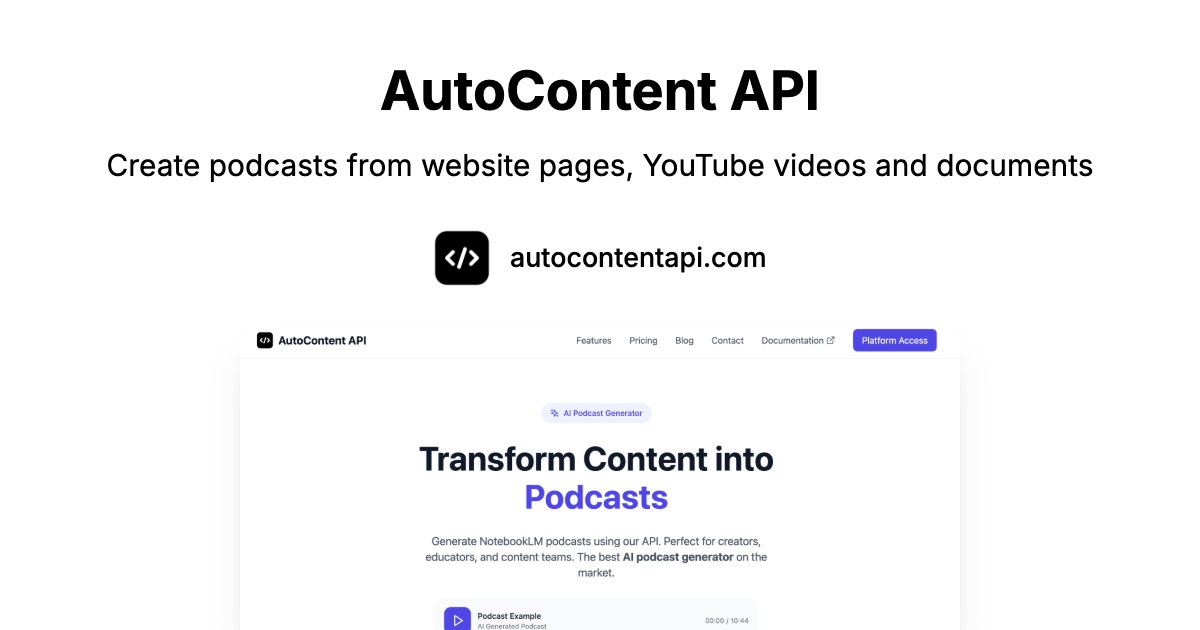
AutoContent API is a product for turning source material into AI-generated podcasts and related content formats. The site positions it as a NotebookLM alternative for teams that want a public REST API, automated content processing, and a workflow built for podcast generation rather than manual editing.
The source describes a broad content pipeline: you can feed in documents, research papers, meeting notes, web pages, YouTube videos, plain text, and social content, then generate podcasts, shorts, slide decks, infographics, quizzes, and explainer videos. It also emphasizes distribution, including instant publishing to major podcast platforms and automated handling of metadata and artwork.
In addition to text and audio workflows, the site highlights custom voices, AI avatars for video shorts, and scheduled content generation. The overall purpose is to help creators and teams convert source content into publishable audio and video assets with less manual production work.
Generate podcasts from documents, research papers, meeting notes, webpages, YouTube videos, and plain text so a single source can become a narrated audio asset.
Produce podcasts in 50+ languages and apply custom voices, with source copy also referencing voice cloning and adjustable intonation, pacing, and energy.
Use the public REST API for notebook-style podcast generation and batch processing, with the site positioning the product for developer workflows.
Set daily or weekly publishing cadences and let the system prepare scripts, schedules, and distribution-ready files automatically.
Create outputs beyond audio, including explainer videos, infographics, slide decks, quizzes, and shorts, depending on the selected workflow.
Route finished podcasts to major platforms such as Spotify, Apple Podcasts, and YouTube Music, with metadata and artwork handling described in the source.
Turn PDFs, articles, research papers, or meeting notes into narrated audio summaries when the goal is faster review and easier sharing across a team.
Convert YouTube videos, newsletters, and web pages into audio digests for audiences that prefer listening over reading.
Use the API and automation features to produce recurring podcast episodes with scripted content, scheduled output, and distribution-ready files.
Transform X or Reddit activity into current audio briefings when you need content based on live conversations and trending topics.
Create shorts, slides, or visual explainers from the same source material when the team needs content for more than one channel.
The site describes AutoContent API as a public REST API for podcast automation and document analysis. It also points to documentation, tutorials, and a Chrome extension for capturing web content, but it does not publish a detailed setup checklist in the provided text.
The tutorials page shows a workflow for creating an AI podcast in under a minute, and the platform copy mentions batch processing, scheduling, and guided workflows. The source does not show a formal step-by-step team workflow beyond those examples.
The site states that you can generate podcasts from documents, research papers, meeting notes, webpages, YouTube videos, social feeds, and other inputs, then distribute the results as podcasts and related content formats such as shorts, slide decks, infographics, and explainer videos.
The source emphasizes podcasts, video shorts, slide decks, quizzes, infographics, and explainer videos. It does not list a complete export format matrix or technical output specifications in the provided text.
The homepage says the product includes a production-ready REST API, batch processing, and developer-friendly integration, while the tutorials page mentions API integration best practices. The provided sources do not list SDK names, endpoints, or webhook details.
Traffic data is for reference only.

echo-pod.ai
AI platform that turns articles, newsletters, and blog posts into podcasts

listenhub.ai
ListenHub turns source material into explainer videos, slides, podcasts, and text-to-speech audio for creators, educators, and teams.

vois.so
Vois is a desktop AI voice production studio for creating audiobooks, podcasts, voiceovers, and other narrated audio. It combines local text-to-speech, voice cloning, script editing, multitrack arrangement, mastering, and audio export in one app.

jellypod.ai
AI podcast studio turning topics, documents, and web sources into publishable episodes.

aideaflowpodcast.com
Turns notes, text, files, or URLs into multilingual podcast audio

ebookmaker.ai
EbookMaker, presented as Ebook GPT, creates e-books and audiobooks with AI.