
Patient-started visit recording
Kin records only when the user chooses to start a session, so the patient controls when audio is captured.

Kin Health records doctor visits, turns them into clear summaries and next steps, and helps patients and care circles stay aligned. It is built for patients and caregivers who want a simple record of what was said and what to do after an appointment.
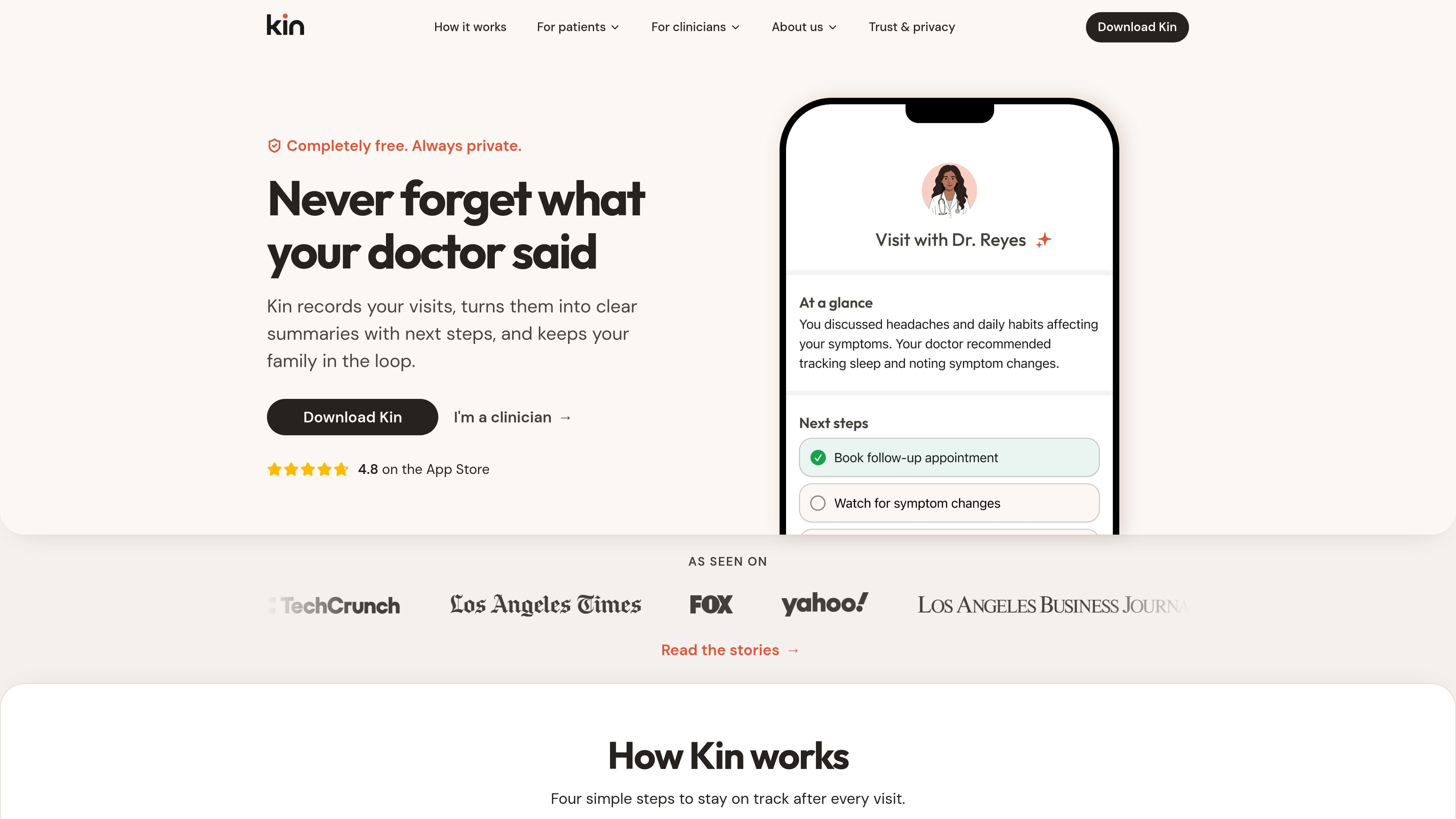
Kin Health is a patient-side health app that records doctor visits when the user starts the session, then turns the conversation into a summary with next steps. It is aimed at people who want a clearer record of what was discussed and what to do after leaving an appointment.
The product is also positioned for caregivers and people helping manage someone else’s care. It supports sharing visit summaries with a care circle, writing down questions for the next visit, and keeping track of action items without changing how the clinician practices.
Kin records only when the user chooses to start a session, so the patient controls when audio is captured.
After the visit, Kin produces a summary that highlights what mattered and the follow-up actions the user should take.
Users can share visit summaries with family members or caregivers so others stay informed about the plan.
Kin lets users write down questions for a future appointment and sends reminders before the visit so they do not forget them.
The clinician pages say Kin does not require IT integration and does not change how clinicians practice.
Kin says summaries stay private unless the user chooses to share them, and users can delete summaries at any time.
A patient can record the appointment, review a concise summary afterward, and use the action items to remember medications, follow-ups, or other instructions.
A caregiver can share visit details with children or other relatives so the care group stays aligned on what the clinician recommended.
Someone with an ongoing condition can keep a record of repeated visits, compare what was said across appointments, and bring better questions to the next one.
Kin is listed for these care contexts, where visits often involve multiple instructions and follow-up tasks that are easy to miss later.
Clinicians can point patients to Kin as a patient-side tool even when there is no IT integration or special workflow change on the practice side.
Kin is aimed at patients, caregivers, and people managing their own or someone else’s care. The site also mentions use across chronic care, pregnancy, child health, and pet care.
The site frames Kin as a patient-side tool that the user starts themselves. The trust page says nothing is captured without the user’s action, and the clinician page says it does not require IT integration.
Kin generates a clear summary of the visit with next steps and action items pulled from what was said.
Yes. The homepage says users can share summaries with their care circle, and the trust page says summaries remain private unless the user chooses to share them.
Kin says data is encrypted and secure, summaries are private by default, users control sharing, and visit summaries can be deleted at any time. The trust page also says Kin does not share or sell user data without the user’s knowledge.
I dati sul traffico sono solo a scopo di riferimento.
| mag | 3990 |
|---|---|
| giu | 9646 |
| lug | 8074 |
Le analisi del traffico non sono ancora disponibili.
Le analisi del traffico non sono ancora disponibili.