
Image-to-video generation
Generate videos from uploaded images, which is the product's primary consumer-facing workflow on the homepage.

Vidgo AI is an AI image and video generation platform for turning photos into videos, text-to-video, image editing, and developer API workflows.
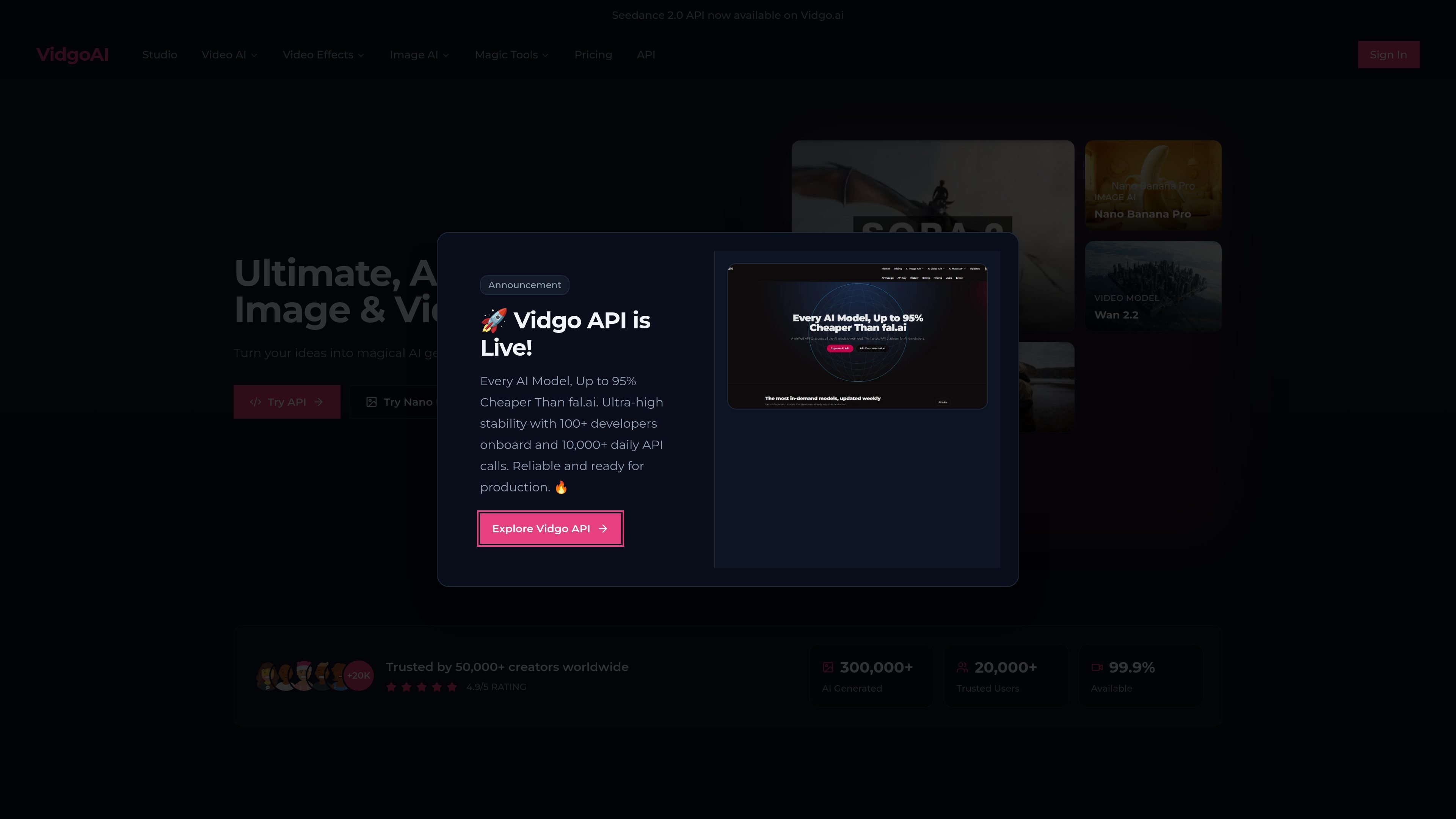
Vidgo AI is an AI generation platform focused on image and video creation. Its homepage centers on an image-to-video generator for turning photos into videos, while the broader site presents additional tools for text-to-video, image editing, AI effects, and music generation.
The product is built for both creative users and developers. Consumer pages emphasize social content, marketing, education, product demos, and personal memories, while the API pages describe a unified developer workflow for submitting jobs, checking status, and integrating models through a single endpoint and billing flow.
Generate videos from uploaded images, which is the product's primary consumer-facing workflow on the homepage.
Create videos from text prompts, with separate tooling for different video styles and effects shown in the tools directory.
Use image generation and editing tools alongside video tools in the same platform, including Flux and GPT-4o image options listed on the tools page.
Access the platform through a unified API that supports image, video, and music models with task submission, status polling, and webhook callbacks.
Choose from multiple model families and tool variants surfaced on the site, including Sora, Wan, Nano Banana Pro, Flux, and video upscaling.
Turn still photos into short videos for posts, reels, or other social content where motion helps the asset stand out.
Create promotional visuals and motion assets for product launches, ads, and marketing campaigns.
Use image-to-video and text-to-video tools for tutorials, explainers, and classroom-ready learning materials.
Animate product photos or concept images into short demonstrations that show a product in a more dynamic format.
Generate personal or stylized clips from existing images, including memories and creative art experiments.
Vidgo AI offers an image-to-video generator that turns photos into videos. The homepage also groups this with text-to-video, AI image generation, and several specialized video effects.
The pricing page shows monthly plans with a free trial for all plans. It also lists a one-time option on the page, but the detailed plan cards shown are monthly subscription tiers.
The site highlights workflow options for creators, marketers, educators, product demos, personal memories, and creative art. Its API page also positions the platform for developers who want programmatic access to image, video, and music models.
The API page describes a unified API with task submission, status polling, and optional webhook callbacks. It also shows example requests to api.vidgo.ai and documentation-driven integration.
The source pages do not clearly document file-format limits, exact output lengths for the consumer tools, or full model-by-model capability constraints. Those details appear to vary by tool and should be checked in the relevant product or API documentation.