
PPE monitoring
Detects PPE non-compliance or improper PPE use from camera feeds, including hard hats, gloves, reflective vests, helmets, safety boots, and other protective gear depending on the module.

viAct is a workplace safety platform using computer vision and video analytics to monitor sites from existing cameras, detect PPE non-compliance and danger zones, and send alerts.
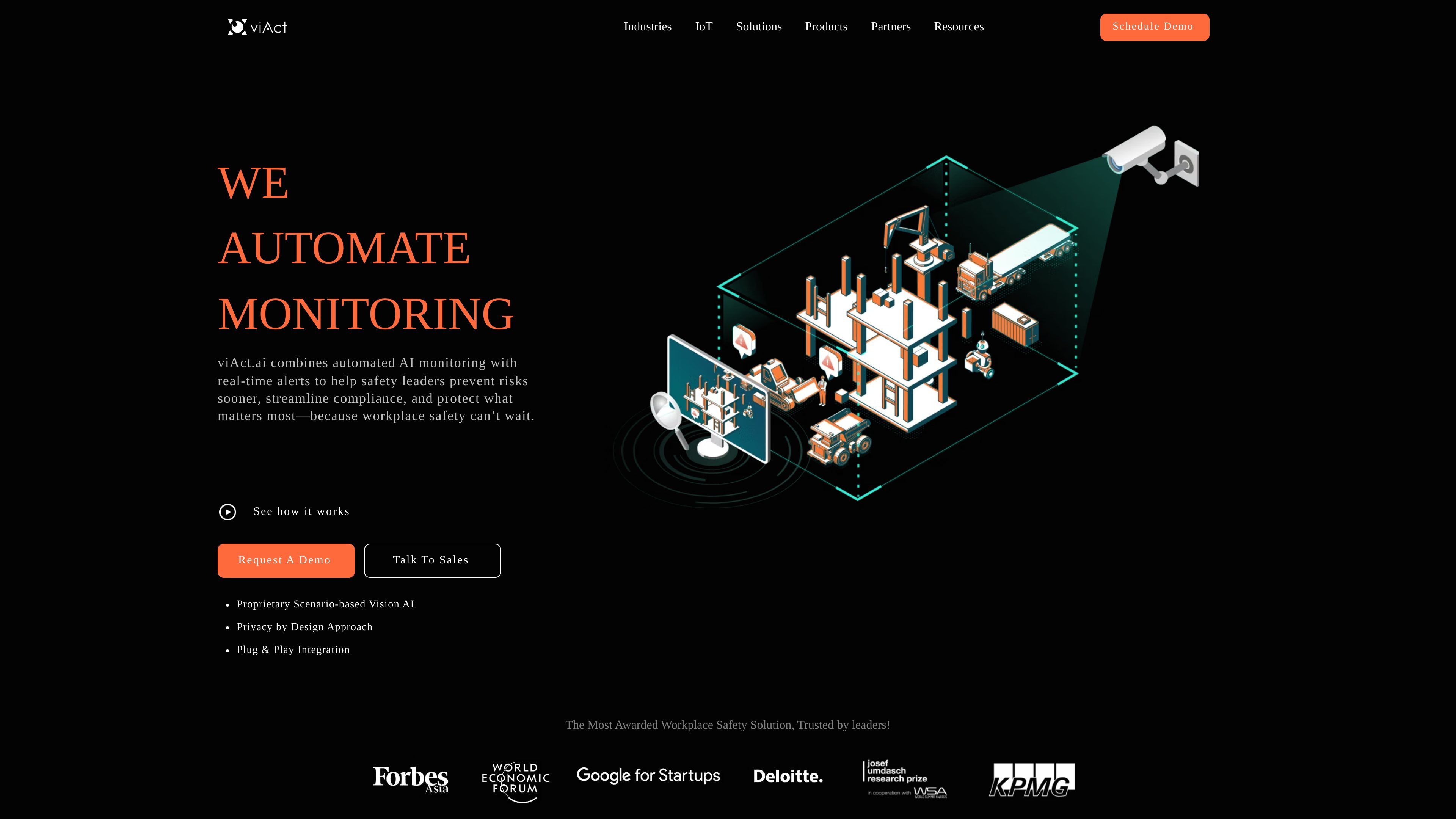
viAct is a workplace safety platform that uses computer vision and video analytics to monitor sites from existing cameras. Its public pages focus on automated detection of PPE non-compliance, danger zone intrusion, and other high-risk conditions that can affect construction and industrial operations.
The product is positioned for safety leaders who want continuous visual monitoring, instant alerts, and records that support compliance reviews and incident investigation. The site also references modules for environmental monitoring, work-at-height safety, confined space safety, and fleet management, indicating a broader camera-based safety workflow rather than a single-purpose detector.
Detects PPE non-compliance or improper PPE use from camera feeds, including hard hats, gloves, reflective vests, helmets, safety boots, and other protective gear depending on the module.
Monitors predefined danger zones and alerts when workers, vehicles, or equipment enter restricted areas, including machine exclusion zones, excavations, crane swing radii, and perimeter boundaries.
Sends instant alerts through dashboard, mobile, and site alarms so safety teams can respond more quickly to an unsafe condition or incident.
Supports continuous visual monitoring with reports and saved historical records, helping teams review non-compliance and investigate events after they occur.
Works with existing cameras through RTSP according to the PPE page, and the danger zone page says deployment can use available cameras with cloud or edge monitoring.
Covers several safety modules referenced on the site, including environmental monitoring, fleet management, work-at-height safety, and confined space safety.
Monitor whether hard hats, reflective vests, gloves, safety boots, and other PPE are being worn correctly across active worksites so supervisors can intervene before a safety breach escalates.
Define machine exclusion zones, excavations, crane swing radii, and other restricted areas, then trigger alerts when workers or equipment enter those spaces.
Use live camera feeds to watch for unsafe conditions around specific tasks or areas such as work at height, confined space entry, or vehicle operating zones.
Track jobsite conditions and records related to environmental monitoring and waste handling where the site needs continuous visual oversight and documentation.
Apply camera-based monitoring to logistics, fleet, and heavy-equipment areas where pedestrian separation and vehicle movement control are important.
viAct uses AI video analytics on live camera feeds to detect unsafe conditions and trigger alerts. On the danger zone page, it describes autonomous analysis of camera feeds to identify when workers, vehicles, or equipment enter pre-defined high-risk areas, while the PPE page describes detection of missing or improper PPE use.
viAct says it can connect to existing CCTV, AI camera, or IP camera setups via RTSP for PPE monitoring, and the danger zone page says deployment can be done in three steps: capture with available cameras, process with AI, and monitor via cloud or edge.
The source pages show use cases such as PPE detection, danger zone intrusion alerts, environmental monitoring, work-at-height safety, confined space safety, and fleet management. The product is aimed at EHS and site safety teams that need camera-based monitoring and alerts.
The platform outputs instant alerts, dashboard monitoring, and saved video clips and reports for reviewing incidents and non-compliance. The danger zone page also says historical records are saved to the AI cloud for analysis and reporting.
The source does not show detailed public pricing on the pages provided. It presents request-demo and talk-to-sales calls to action instead.