
Cross-domain data unification
Unify cross-domain machine data at petabyte scale and turn it into contextualized, trusted intelligence for security and observability workflows.
Splunk is a unified security and observability platform for analyzing machine data, investigating threats, monitoring performance, and automating responses.
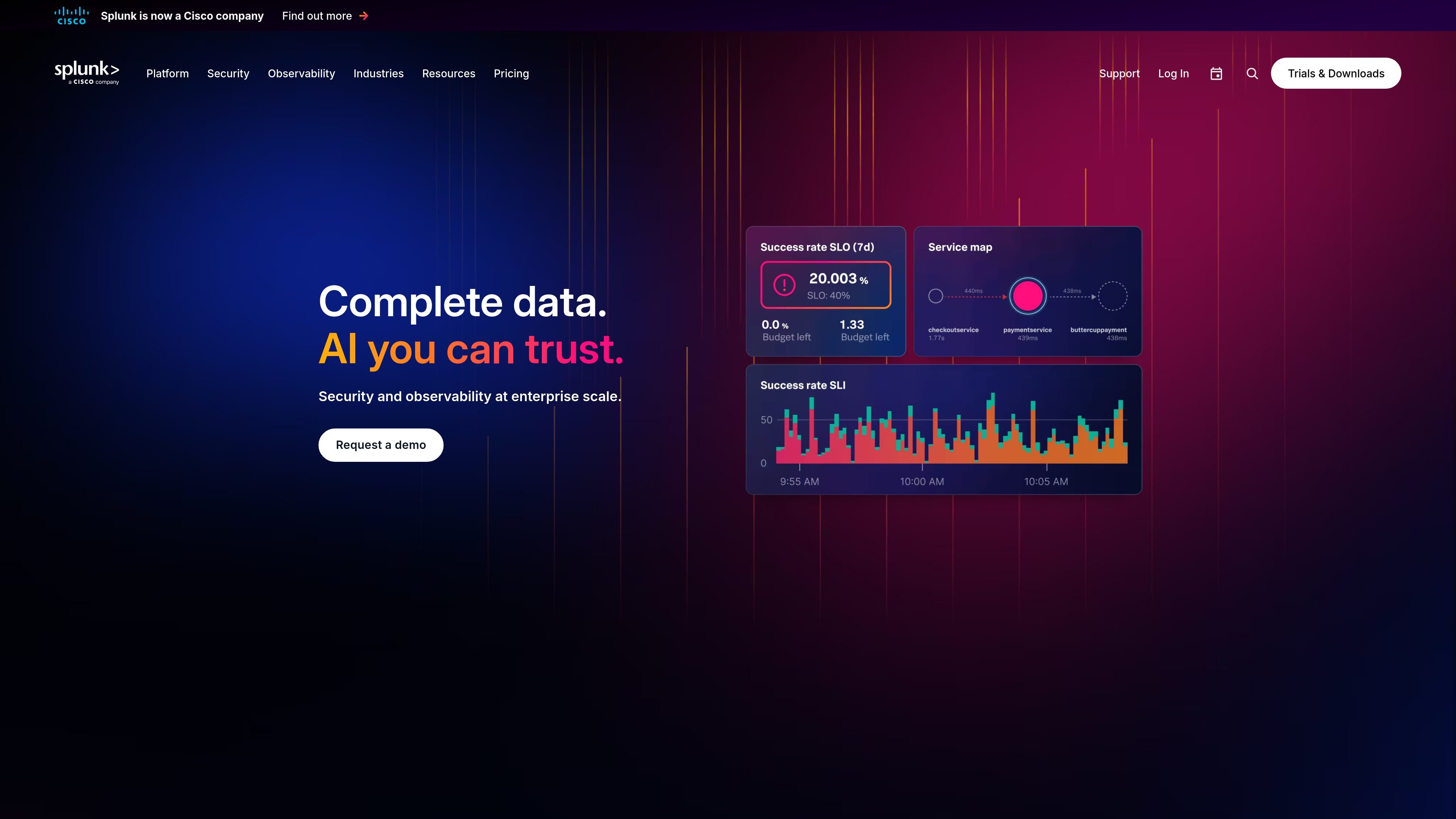
Splunk is a unified security and observability platform for digital resilience. The site positions it as a system for turning machine data into contextualized intelligence that helps teams prevent issues, absorb disruption, and keep operations moving.
The product family spans the Splunk Platform, Splunk Security, and Splunk Observability. Across those areas, Splunk focuses on collecting and correlating data at scale, supporting AI-assisted workflows, and helping organizations investigate threats, monitor performance, and automate repeatable responses.
Unify cross-domain machine data at petabyte scale and turn it into contextualized, trusted intelligence for security and observability workflows.
Use the Splunk Platform as a system of record and intelligence layer to correlate raw telemetry across SecOps, ITOps, Engineering, and NetOps.
Support agentic operations with AI assistants and agents that can predict issues and automate repeatable responses with safety and compliance guardrails.
Connect to data through 2,000+ integrations and apps on Splunkbase, plus native open telemetry support, SDKs, and agents.
Explore security operations with threat detection, investigation, and response powered by AI and Cisco Talos threat intelligence.
Track and investigate performance issues across stacks, networks, and AI workloads with observability products built to show business impact.
Security teams can use Splunk to unify threat detection, investigation, and response with AI and built-in threat intelligence.
Observability teams can trace performance issues across apps, networks, and AI workloads, then connect incidents to business impact.
IT operations teams can correlate telemetry from multiple monitoring sources, reduce alert noise, and proactively prevent outages.
Compliance teams can automate compliance monitoring, streamline audits, and generate real-time visibility for reporting against standards such as PCI, HIPAA, and GDPR.
Analysts can investigate fraud activities with reporting and visualizations that support faster, more consistent response.
Splunk offers pricing options for its platform, security, and observability products. The pricing page describes workload pricing, ingest pricing, entity pricing, and activity-based pricing, with options for predictability or flexibility.
Yes. The pricing page says you can contact a Splunk pricing expert, and the home page also offers a request-a-demo flow and free trial entry points on product pages.
The Splunk Platform page says you can try it free for 14 days with no credit card required.
The sources show Splunk as a platform for security, observability, and machine-data analytics. The site presents separate product areas for platform, security, and observability rather than a single narrow-use product.