
Layout-first document parsing
Parse 2.0 is described as a layout-first parsing API that identifies meaningful regions on a page and preserves reading order for downstream use.

Extend is a document processing platform that turns PDFs into structured data with parsing, extraction, splitting, classification, OCR, and workflow tools.
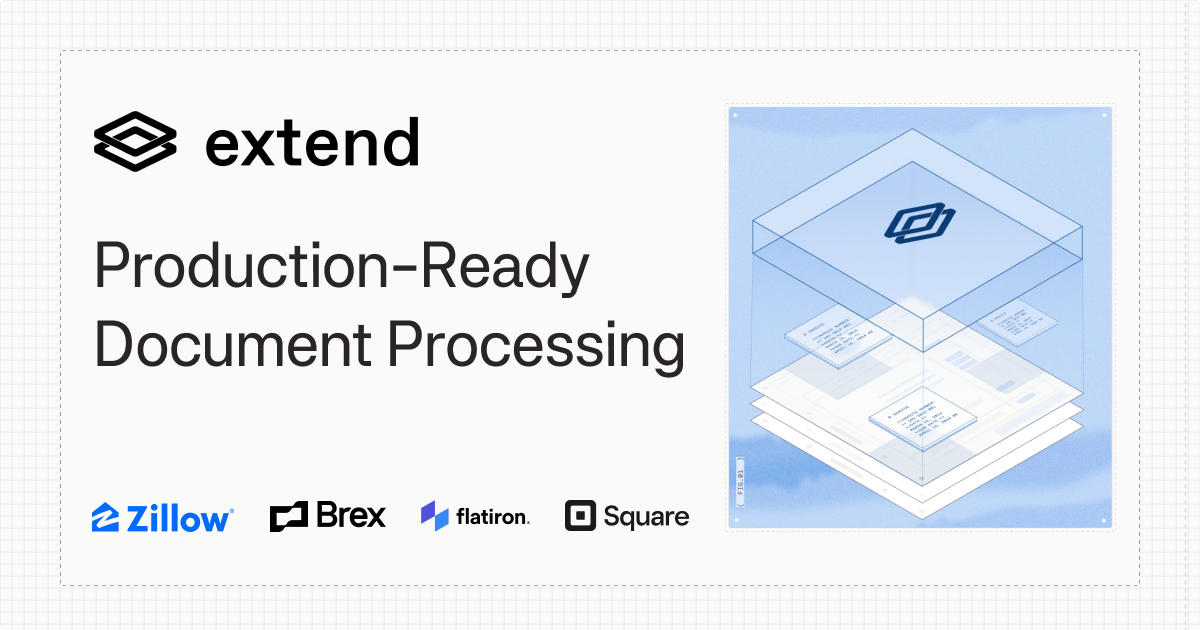
Extend is a document processing platform for turning PDFs and other source documents into structured data. Its core job is to parse, extract, split, classify, and edit documents so teams can build reliable downstream pipelines and agents.
The product site positions Parse 2.0 as a layout-first parsing API built for production use cases where reading order, layout, and field relationships matter. Extend also offers OCR, evaluation tools, workflow orchestration, and a studio interface so teams can iterate on schemas and review outputs before shipping.
The pricing page shows Pay As You Go, Scale, and Enterprise tiers, with enterprise-oriented options such as self-hosted deployment, custom agreements, SSO/SAML, advanced RBAC, multiple workspaces, custom models, and custom rate limits. The site also references support for 25+ file types and document processing at large scale.
Parse 2.0 is described as a layout-first parsing API that identifies meaningful regions on a page and preserves reading order for downstream use.
The product pages list Extract, Split, Classify, and Edit APIs, covering extraction, classification, splitting, and form-filling workflows.
Pricing materials describe Agentic OCR, advanced table parsing, signature detection, checkbox detection, bounding boxes, multiple chunking strategies, and support for 25+ file types.
Extend includes Fast mode, low-latency mode, and accuracy-oriented processing so teams can choose the right tradeoff for different workloads.
Studio, Evals, Composer, and Review Agent support schema iteration, evaluation, prompt refinement, and review before production.
Workflows and human-in-the-loop support are listed as part of the platform for multi-step document pipelines with validation and routing.
Use Parse 2.0 when you need to convert messy PDFs, scans, or forms into LLM-ready context that preserves layout and reading order for an agent.
Use Extract, Classify, and Split when building pipelines that need to route documents, isolate sections, and turn content into structured fields at scale.
Use the review, confidence scoring, Studio, and Evals tools when domain experts need to refine schemas, inspect outputs, and catch regressions before release.
Use the enterprise deployment and admin features when documents must stay in-house or when your organization needs SSO, RBAC, or custom agreements.
Use the OCR and table-handling features when documents contain handwriting, checkboxes, signatures, tables, or other complex page elements.
Extend provides Parse, Extract, Split, Classify, and Edit APIs, plus Studio, Evals, Composer, Review Agent, Agentic OCR, and Workflows on the platform. The pricing page shows these capabilities are available across the product tiers.
The source materials describe Extend as document processing infrastructure for teams that need to turn PDFs and other documents into structured data, with focus on parsing, extraction, splitting, classification, and OCR.
The platform returns LLM-ready markdown and structured outputs from documents. The launch material says Parse 2.0 localizes meaningful regions, routes them to specialized models, and reconstructs reading order before returning clean output.
Yes. The pricing page offers Pay As You Go, Scale, and Enterprise options. Enterprise adds self-hosted deployments, custom MSA/DPA/SLAs, SSO and SAML, advanced RBAC, multiple workspaces, custom models, and custom rate limits.
The get-started page offers a demo flow where teams can share company details, monthly document volume, and optionally upload a document for review before booking a demo.