
No-registration inbox access
Create and use a temporary inbox without signing up first, which keeps the workflow quick for one-time registrations and other short tasks.

TempMail100 is a web-based temporary email service for disposable inboxes without registration. It helps users handle short-term signups while keeping a personal email address private and reducing spam.
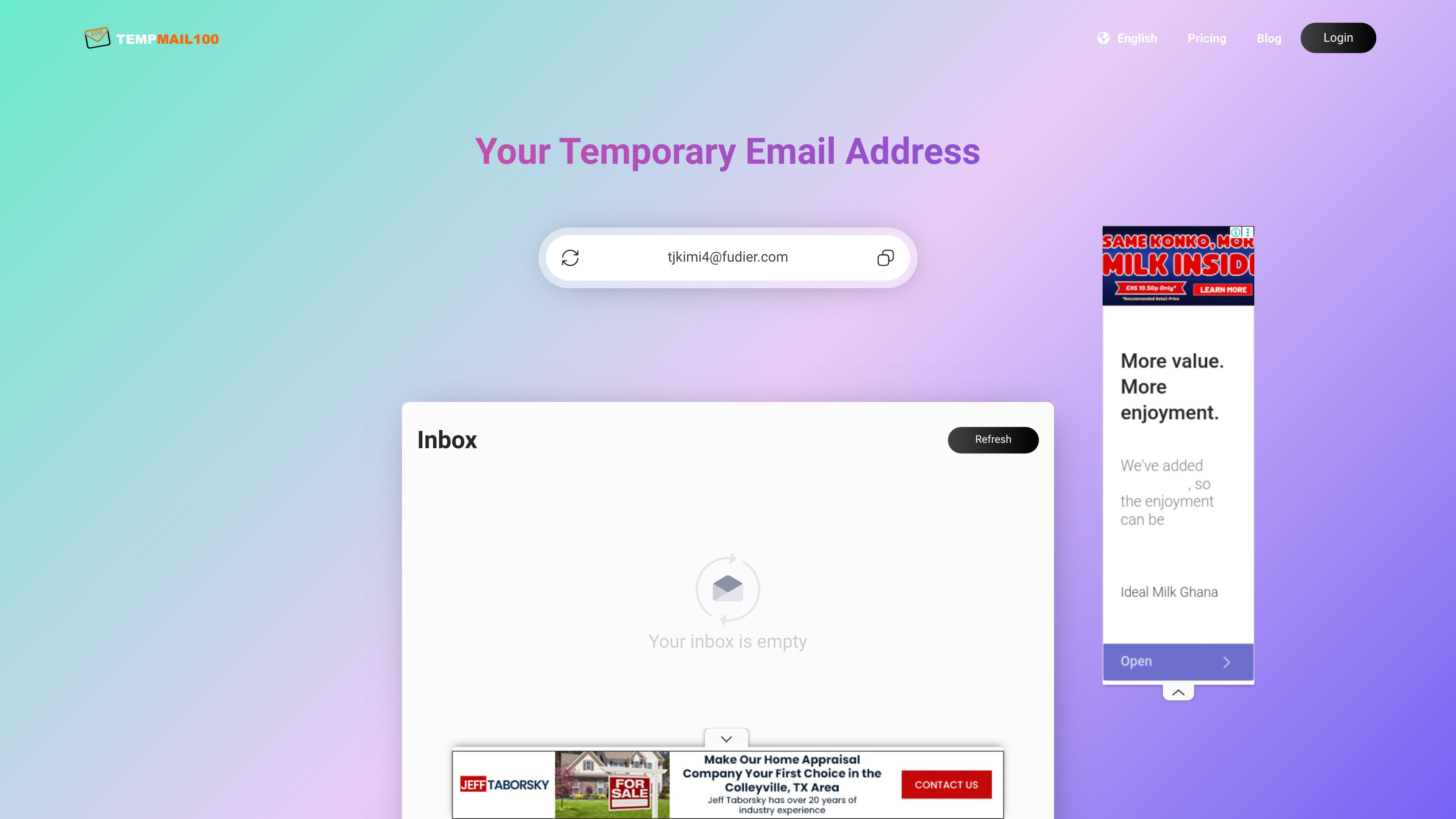
TempMail100 is a temporary email service that lets users create a disposable inbox without registration. The site positions it as a way to receive short-term email access while keeping a personal address private and reducing spam.
The product is aimed at quick signups, service trials, and other short-lived online tasks where users do not want to expose a permanent email account. The interface also exposes inbox and refresh controls, while the pricing area shows both a free option and a paid premium plan.
Create and use a temporary inbox without signing up first, which keeps the workflow quick for one-time registrations and other short tasks.
The service presents the address as private and anonymous, with messaging aimed at reducing spam exposure and limiting personal email use.
A refresh control is shown on the site, indicating that users can update the inbox view to check for new messages.
The pricing section lists a free tier and a premium tier, so users can choose between basic access and a paid plan with added capabilities.
Premium is described as including unlimited address switching every day, dedicated premium domains, a favorite address option, and no ads.
Use a temporary inbox when a website requires an email address but you do not want to share your personal account.
Open a throwaway mailbox for trials or one-off interactions where follow-up email is unlikely or unnecessary.
Use TempMail100 to keep your real address out of forms, downloads, or sign-up flows that could generate spam later.
Create a separate address for short-term activities such as promotions, events, or other limited-duration signups.
Switch to a premium address workflow if you need to change addresses repeatedly and want premium domains with no ads.
TempMail100 provides a temporary email inbox you can use without registration. The site describes it as safe and anonymous, with the goal of helping users avoid spam and protect privacy.
The source says temporary email is suitable for website signups, trying services, protecting privacy, avoiding spam, and participating in short-term activities.
The site says used addresses will not be assigned to others because it has tens of billions of built-in email addresses.
Yes. The home page states that TempMail100 provides free temporary mailboxes forever, and the pricing section shows a free plan alongside a paid premium plan.
The site says there is a 3-day cooling-off period for refunds. If you change your mind within 3 days, you can request a full refund; after 3 days, refunds are not offered.