
Automated HARA, TARA, and FMEA generation
Generates hazard, threat, and failure analyses from system design documentation so teams can move from source material to structured compliance work faster.

Saphira AI is an AI-powered product compliance platform for safety and cybersecurity certification workflows. It helps enterprise teams generate analyses, track gaps, and maintain traceability for regulated products.
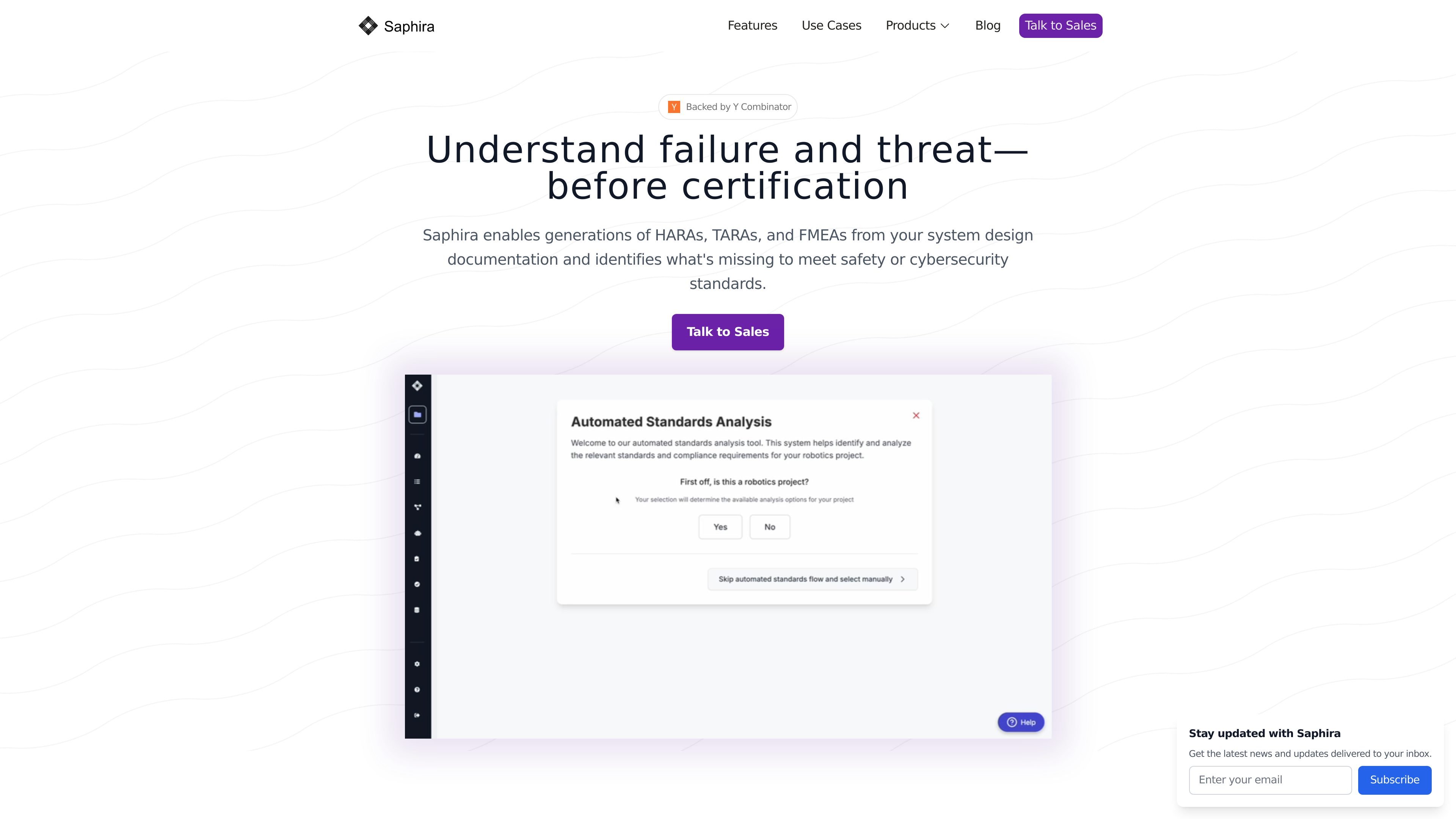
Saphira AI is an AI-powered product compliance platform focused on safety and cybersecurity certification work. The site says it helps teams generate HARAs, TARAs, and FMEAs from system design documentation and identify what is missing to meet standards before certification reviews.
It is positioned for enterprise teams working on regulated products such as robots, vehicles, chips, and sensors. The product centers on continuous gap analysis, traceability, risk assessment, and evidence-ready reporting so compliance issues surface earlier in the development cycle.
Generates hazard, threat, and failure analyses from system design documentation so teams can move from source material to structured compliance work faster.
Tracks standards coverage continuously and shows where requirements, tests, or evidence are missing before final review.
Connects requirements, design artifacts, tests, and evidence with traceability links so compliance work stays synchronized as products change.
Builds structured risk assessments and keeps them aligned with incremental product and design updates.
Supports verification and validation work with evidence-ready outputs that can be used in audit and certification review.
Surfaces incidents, failure patterns, and threat findings and links them back to requirements and mitigation work.
Shows what is missing against standards such as ISO 26262, IEC 61508, ISO 13849, ISO 10218, ISO 21434, and UN R155 as described on the site.
Use Saphira to turn design documentation into structured hazard, threat, and failure analyses when preparing for standards-based certification.
Use the platform to monitor what is still missing across requirements, tests, and evidence so reviewers do not surface surprises late in the process.
Use Saphira to link requirements, design changes, tests, and supporting artifacts so traceability stays intact as the product evolves.
Use the product to organize verification and validation evidence into outputs that support audits and certification reviews.
Use Saphira to analyze incidents and connect findings back to requirements, mitigations, and future prevention work.
Saphira AI appears to be a sales-led product rather than a self-serve tool. The site uses a "Talk to Sales" call to action and the pricing page is unavailable, so the available evidence does not show public pricing or signup details.
The site describes Saphira as helping product compliance, safety, and cybersecurity teams generate analyses such as HARAs, TARAs, FMEAs, risk assessments, and verification and validation outputs from system design documentation.
The source describes outputs that are ready for review and audit workflows, including traceability links, gap analysis, safety case generation, and reports for standards-based certification work.
The website does not list supported integrations, APIs, or connected tools. It does mention linking requirements, design, code, models, tests, and evidence across teams, but the exact integration methods are not specified.
The site is aimed at enterprise teams working on certification-heavy products such as robots, vehicles, chips, sensors, and other regulated systems, especially where safety and cybersecurity standards apply.