
AI scriptwriting
Develop a prompt or logline into a structured screenplay with acts, scenes, and dialogue, or edit a screenplay directly.

端對端 AI 影視製作工作室,涵蓋從劇本開發、選角、分鏡製作,到電影感影片生成、剪輯與匯出的完整流程。適合獨立電影工作者、內容創作者、行銷人員、編劇,以及希望透過統一工作流程製作結構化影片的工作室。
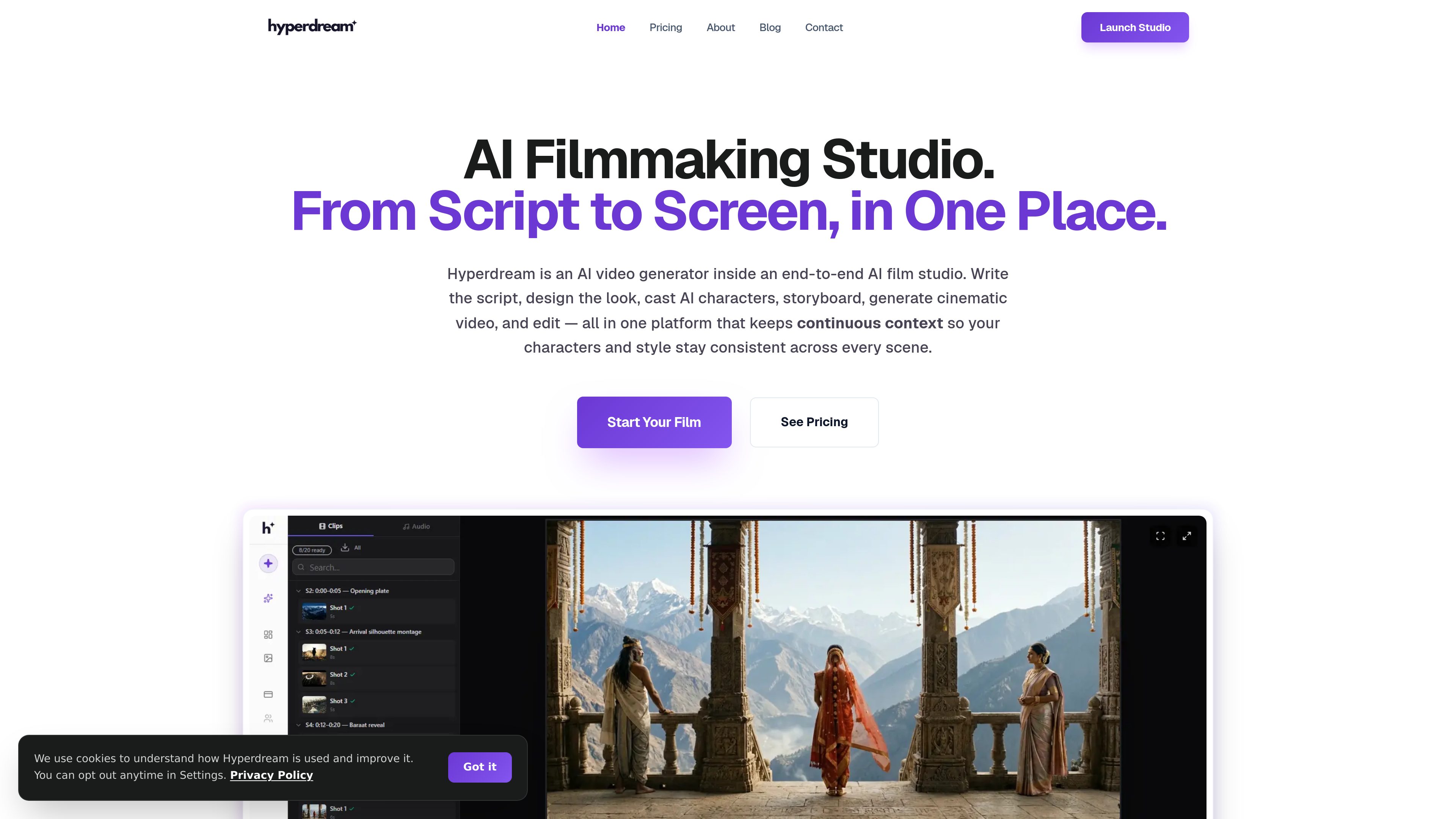
Hyperdream is an AI filmmaking studio that combines scriptwriting, visual development, AI casting, storyboarding, video generation, and editing in one browser-based workflow. Its central purpose is to preserve the relationships between a project's story, characters, visual style, and shots instead of treating each generated clip as a separate prompt.
The platform can develop a screenplay from a prompt or logline, or let users write and refine one directly. From there, users can establish a cinematic look, create recurring AI actors with cloned voices, turn scenes into shot-by-shot storyboards, generate directed footage, and assemble picture and sound in a built-in non-destructive editor before exporting the finished piece.
Develop a prompt or logline into a structured screenplay with acts, scenes, and dialogue, or edit a screenplay directly.
Define lighting, color grade, and film grain so the intended look carries across shots.
Create recurring AI actors with consistent faces and cloned voices for use across scenes.
Convert scenes into storyboards with controllable framing and composition before generating footage.
Generate shots using virtual camera control, shot blocking, and lens choices rather than relying only on isolated text prompts.
Assemble generated shots, add sound, and export a finished film in a non-destructive editor.
A solo filmmaker can develop a story, plan scenes, generate footage, and edit the result in one platform without moving between separate script, generation, and editing tools.
Screenwriters can write or paste a screenplay, cast its recurring characters, storyboard the scenes, and use the script as the source of truth for a produced video.
Agencies and marketing teams can use the script-to-video workflow to turn approved concepts into storyboards, directed shots, and edited promotional cuts.
Studios and filmmakers can use generated storyboards and cinematic shots to explore scenes before committing to physical production, talent, or equipment.
Content creators can apply the structured workflow to projects that need a coherent visual style, recurring characters, and an edited final sequence rather than disconnected clips.
Yes. Users can write or paste a screenplay, have scenes parsed into shots, cast recurring characters, generate directed video, and edit the result inside Hyperdream.
Hyperdream states that characters are created as persistent AI actors with consistent faces and cloned voices. Continuous project context links those characters across the script, storyboard, generated shots, and final edit.
The documented workflow moves through five broad stages: bring in or develop the screenplay, cast characters, lock the visual style, storyboard and generate shots, then edit picture and sound and export the finished piece.
The source site says no. The workflow follows familiar production stages—script, pre-production, production, and post-production—while offering controls intended for more experienced filmmakers as well.
Hyperdream offers credit-based subscription plans. Credits are used for images and video, while agent tokens run the AI assistant; the pricing page lists Starter, Creator, Pro, and Business plans with different credit and token allocations.
流量數據僅供參考。