Pangea logo

Pangea

Freemium
Visit

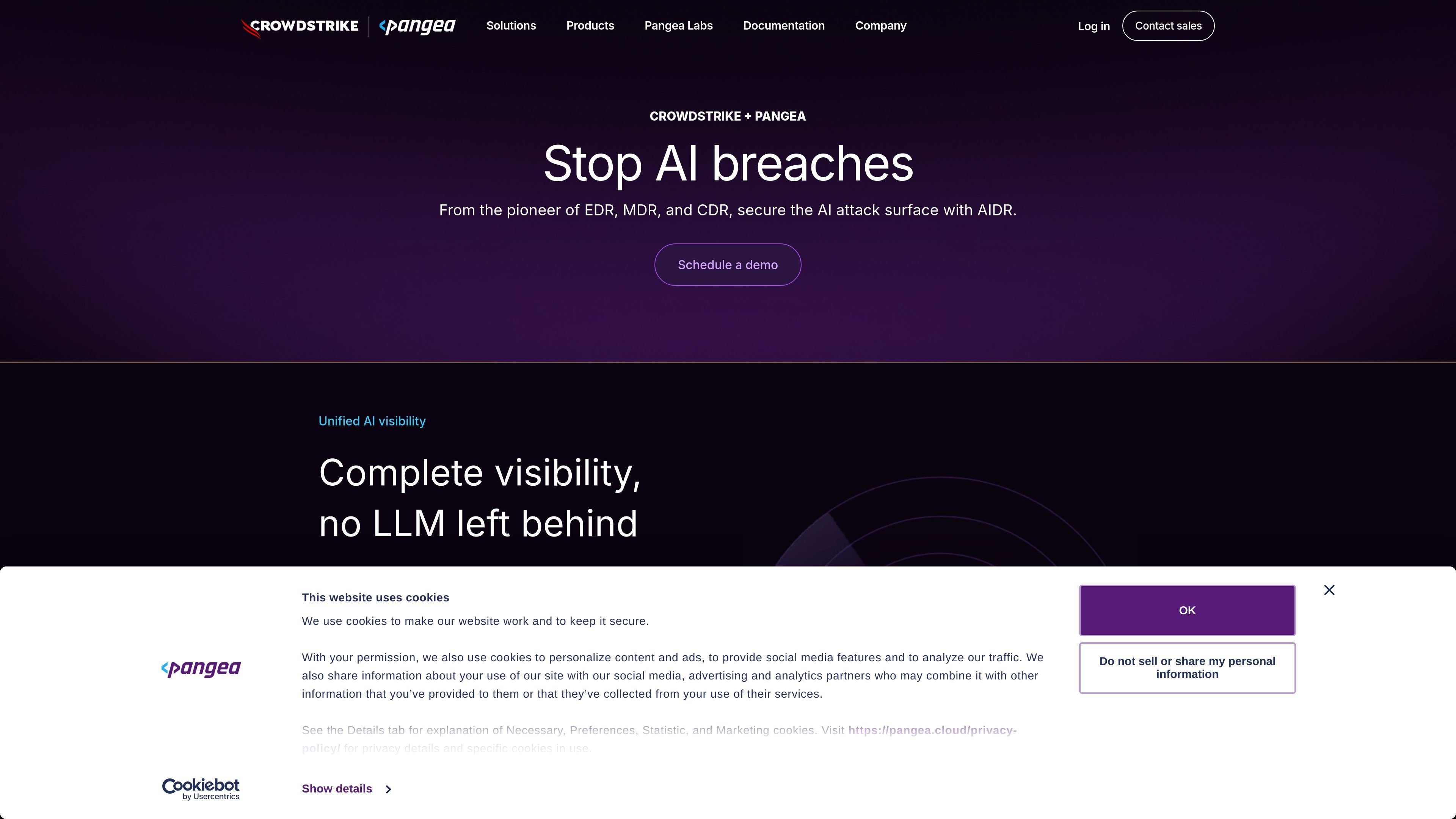
Pangea is a security platform for AI applications that adds guardrails for prompts, outputs, data access, and logging. Secure LLM workflows through APIs, SDKs, AI tools, or API gateways.

What is Pangea?

Pangea is a security platform for AI applications. Its site describes security guardrails that help organizations ship generative AI and LLM apps with protections for prompts, outputs, data access, logging, and related security workflows.

The documentation centers on composable services rather than a single monolithic product. Examples include Prompt Guard and AI Guard for content handling, Redact for sensitive data treatment, AuthN and AuthZ for identity and permissions, Secure Audit Log for tamper-resistant logging, and Vault for secret and key operations.

What can Pangea do?

Composable security services

Services mentioned across the docs include Prompt Guard, AI Guard, Redact, Threat Intel, Secure Audit Log, AuthN, AuthZ, and Vault. The site positions them as composable security services for AI applications and related access-control workflows.

Prompt and response guardrails

The AI security docs describe filtering and transforming user inputs and context data, then sanitizing outputs to reduce prompt manipulation and harmful content exposure at inference time.

Identity and access control

Documentation covers authentication and authorization for enterprise AI apps, including policies based on roles, groups, relationships, attributes, and source permissions.

Logging and auditability

The tutorials describe logging prompts, responses, and system events, including LLM details, to support attribution and accountability.

Multiple integration paths

The integration page states that Pangea can be integrated directly with APIs and SDKs, or through AI tools and API gateways. SDKs are listed for Python, JavaScript, Go, Java, and C#.

Service-level billing structure

The pricing page lists service-level billing categories for AI Guard, Prompt Guard, Secure Audit Log, Redact, Embargo, File Intel, IP Intel, Domain Intel, URL Intel, AuthN, Vault, User Intel, File Scan, Secure Share, AuthZ, and Sanitize.

Use Cases

“Secure an LLM chat or assistant”

Add controls around user prompts and model outputs to reduce exposure to prompt injection, insecure output handling, and accidental disclosure of sensitive information.

“Control access to enterprise context”

Protect enterprise AI applications that use internal documents or RAG workflows by enforcing authentication, authorization, and permission checks before data is surfaced to the model.

“Monitor AI activity and investigations”

Log prompts, responses, and system events so teams can trace outcomes, review model interactions, and keep an audit trail for AI activity.

“Embed guardrails in an application stack”

Use direct APIs, SDKs, or AI tool integrations when you want application-level controls with low-latency integration in a specific language or framework.

“Apply controls at the gateway layer”

Route traffic through an API gateway when you want centralized policy enforcement across multiple systems or applications rather than per-app controls.

Frequently Asked Questions

What is Pangea used for?

Pangea provides security guardrails for AI applications and documentation for securing LLM apps with services such as Prompt Guard, AI Guard, Redact, Threat Intel, Secure Audit Log, AuthN, and AuthZ.

How can Pangea be integrated into an application?

The integration options page says Pangea can be used in-app through APIs, SDKs, or AI tools such as LangChain integrations, or placed behind an API gateway.

What parts of an AI application does Pangea help secure?

The AI security tutorial describes securing user prompts, model inputs and outputs, access to enterprise data, and logging or monitoring for prompts, responses, and system events.

Does the site show pricing details?

The pricing page shows service-based billing details, but the rendered page text does not expose specific prices or plan limits.

Quick Facts

Category
AI security platform
Primary use
Security guardrails for AI applications and LLM workflows
Integration options
APIs, SDKs, AI tools, and API gateways
SDK languages
Python, JavaScript, Go, Java, C#
Pricing evidence
Service-based billing is documented, but no public prices are shown in the rendered text
Domain
pangea.cloud

Pangea Traffic Analysis

Traffic data is for reference only.

Domain Rating
58

Pangea Alternatives

Gemini API logo

Gemini API

ai.google.dev

Gemini API is a developer API for integrating Google’s generative AI models into applications. It supports text and image generation, multimodal analysis, conversational agents, structured outputs, tool use, and related media workflows through SDKs or REST.

LM Studio logo

LM Studio

lmstudio.ai

LM Studio runs LLMs privately on macOS, Windows, and Linux with local APIs, SDKs, and MCP workflows.

Encord logo

Encord

encord.com

Encord helps AI teams label multimodal data, find gaps in datasets, and review model failures through automated and human review workflows.

Maximem Synap logo

Maximem Synap

www.maximem.ai

Maximem Synap is an agentic memory and context-management platform for AI agents. It records conversations, builds structured and scoped memory, and retrieves concise context through SDKs, APIs, MCP, and native adapters for 23 agent frameworks.

Tako logo

Tako

trytako.com

Tako is an answer engine API grounding AI in authoritative, licensed data and the web, with cited, structured outputs for AI builders, data teams, and research workflows.

EasyRouter logo

EasyRouter

easyrouter.io

EasyRouter is an AI model gateway that unifies access to third-party model APIs through one interface, with standard formats and usage-based billing.