
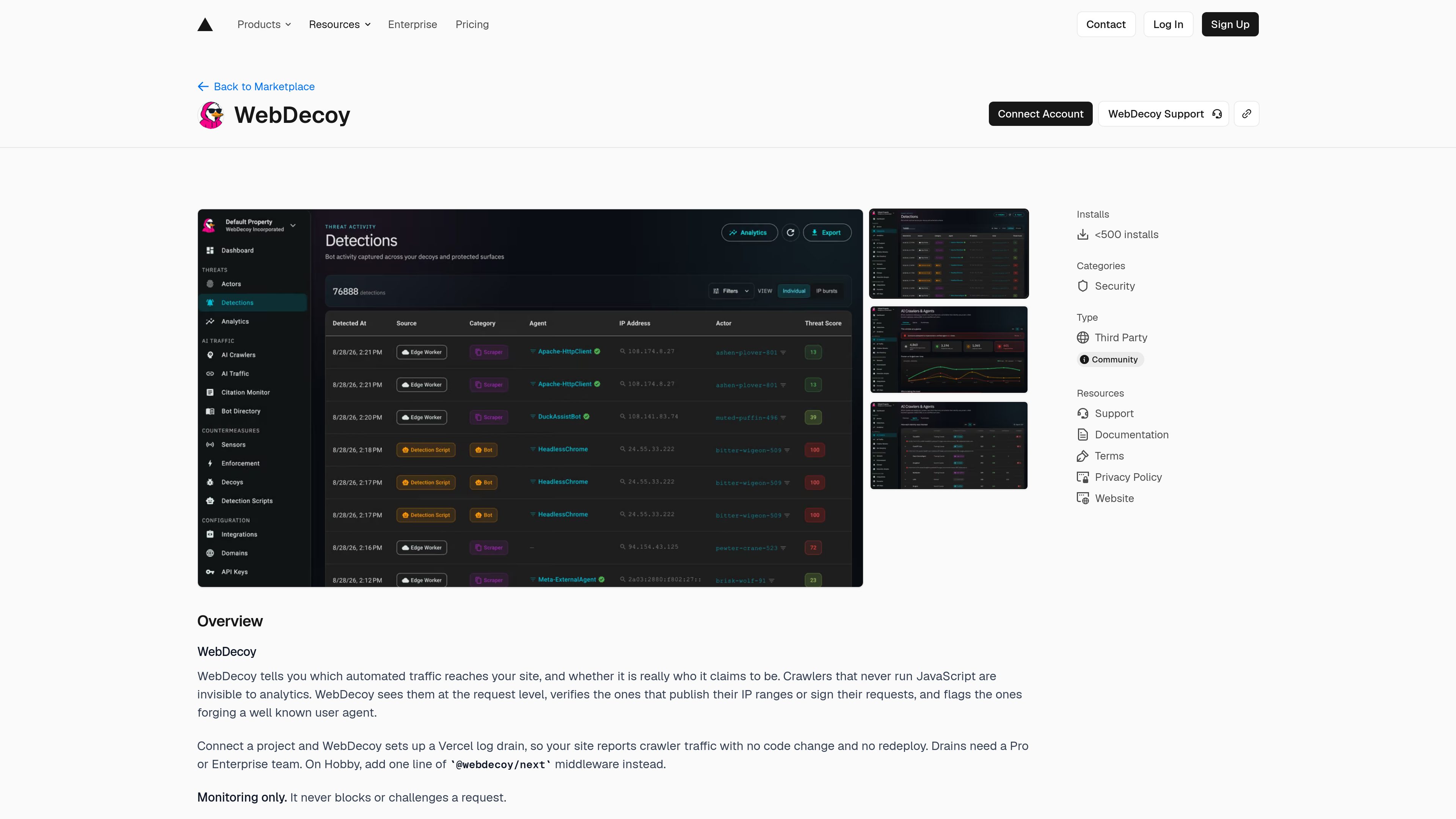
Request-level crawler visibility
Reports crawlers, tools, and requests with no user agent based on traffic received by the site, including automated visitors that browser-based analytics may not capture.

WebDecoy отслеживает автоматизированный трафик, поступающий на сайт или в приложение на Vercel, и выявляет краулеры, AI-ботов, инструменты и запросы без user agent. Сервис проверяет опубликованные диапазоны IP или подписанные запросы, помечает поддельные известные user agent и сообщает об активности без изменения кода приложения на поддерживаемых тарифах Vercel.
WebDecoy is a monitoring tool for identifying automated traffic that reaches a Vercel site or application. It observes requests that conventional analytics may miss, including crawlers that do not execute JavaScript, and distinguishes reported crawler identities from requests that may be spoofing a known user agent.
For Vercel projects, connecting WebDecoy creates a log drain so the service can analyze request-level data without a code change or redeploy. On Vercel Hobby teams, the alternative is a line of @webdecoy/next middleware. WebDecoy is monitoring-only: it does not block or challenge requests.
Reports crawlers, tools, and requests with no user agent based on traffic received by the site, including automated visitors that browser-based analytics may not capture.
Verifies crawlers that publish IP ranges or sign their requests, helping distinguish claimed identities from observed request characteristics.
Flags requests that appear to forge a well-known user agent rather than treating every matching user-agent string as verified.
Connecting a project creates a Vercel log drain and sends request data such as user agent, path, status, client IP, and TLS fingerprint to WebDecoy.
The Vercel connection does not require an application code change or redeploy. It also creates three environment variables used by the optional Next.js middleware.
Disconnecting a project removes its WebDecoy log drain and the three variables created by the integration; disconnecting the integration removes everything it set up.
Site owners can see which automated agents are reaching their Vercel site, including agents invisible to JavaScript analytics.
Teams can review verification results and spoofing flags when a request claims to be a recognized crawler or bot.
Vercel Pro or Enterprise teams can connect a project and use the log-drain workflow without modifying application code or redeploying.
Hobby users can use the documented `@webdecoy/next` middleware path when a Vercel log drain is unavailable to their team plan.
It reports crawlers, tools, and requests with no user agent. Human visitors are not reported.
It verifies crawlers that publish their IP ranges or sign their requests, and flags requests that appear to forge a well-known user agent.
For projects using the Vercel log-drain connection, WebDecoy sets up the drain without a code change or redeploy. On Hobby, the documented alternative is to add one line of `@webdecoy/next` middleware.
The listing states that drains require a Pro or Enterprise team. Vercel’s pricing page lists Hobby as a free plan, Pro at $20 per month, and Enterprise as a custom plan; these are Vercel plan prices, not stated WebDecoy prices.
No. It is for monitoring only and never blocks or challenges a request.