
User story mapping
Visualize user goals, journeys, steps, and stories in a structured map. Teams can identify needs, pain points, and the scope of a minimum viable product.

User story mapping and product planning software for agile teams.
StoriesOnBoard is a product management platform built around user story mapping. It helps business analysts, product owners, product managers, and agile teams organize user journeys, personas, stories, decisions, releases, and acceptance criteria in a shared workspace. Teams can use the map to shape requirements, prioritize work, plan releases, and communicate product context across technical and non-technical stakeholders.
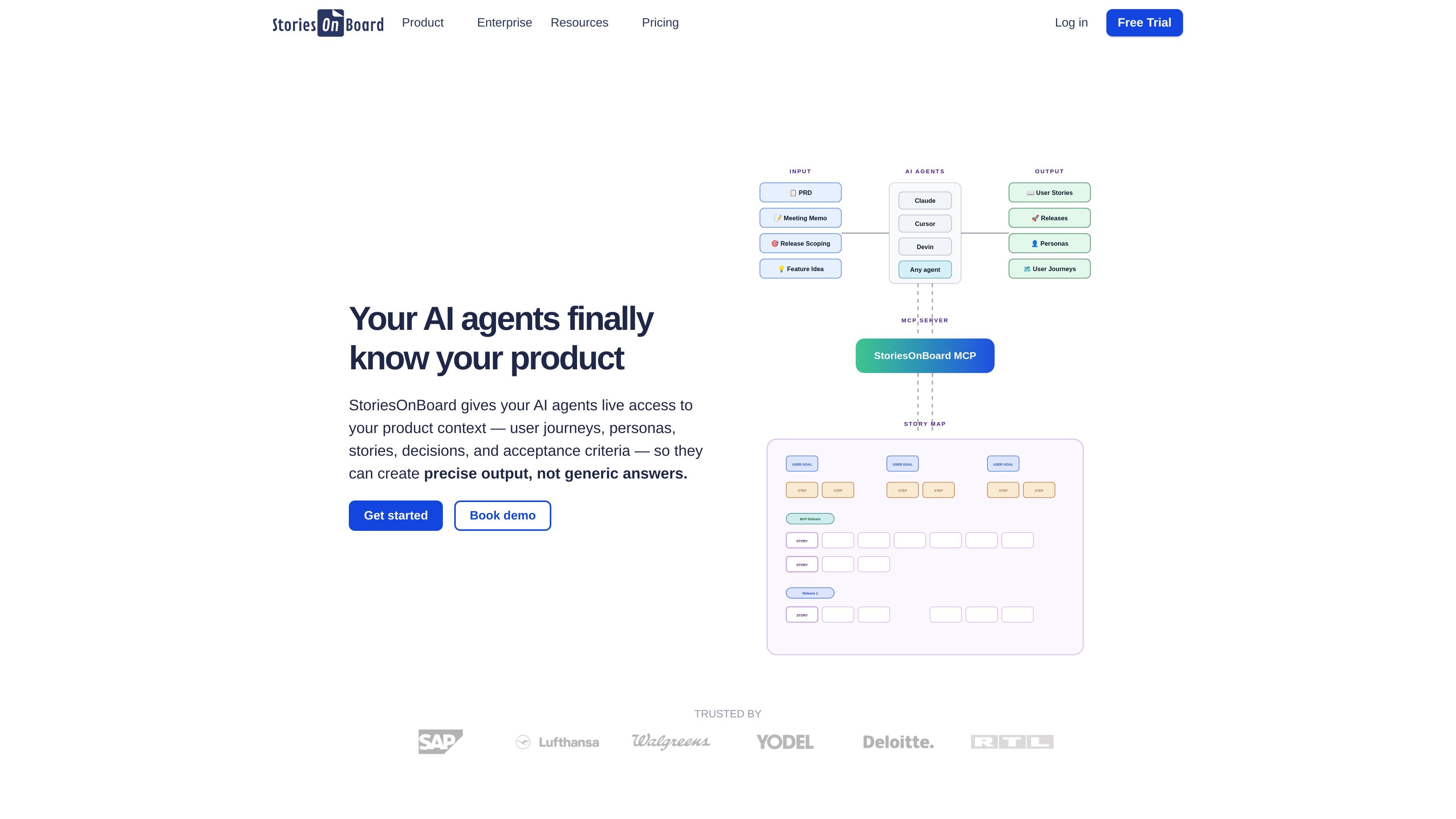
The platform also includes roadmaps, feedback and insight management, prioritization, release management, and AI-assisted product work. Its AI features can help create and refine product artifacts, while the StoriesOnBoard MCP server provides AI agents with live read and write access to product context stored in a story map.
Visualize user goals, journeys, steps, and stories in a structured map. Teams can identify needs, pain points, and the scope of a minimum viable product.
Use AI features to brainstorm backlog items, write user stories and personas, collect acceptance criteria, prepare technical requirements, and create release summaries or announcements.
Turn story maps into high-level roadmaps, group backlog items by releases or epics, track progress, and organize plans by quarters, priority groups, swimlanes, or labels.
Collect product feedback from multiple channels in a central repository, organize insights, and connect sources such as Slack, email, Intercom, Zapier, and the Chrome extension where supported by the selected plan.
Apply prioritization frameworks such as value versus effort and RICE scoring, involve stakeholders through sharing and comments, and use integrations with tools including Jira, Azure DevOps, Trello, GitHub, and Pivotal Tracker on supported plans.
Map the user journey, arrange stories by importance, and make the essential product scope visible before development begins.
Business analysts and product owners can keep personas, user stories, acceptance criteria, decisions, and release context together while specifications evolve.
Create a roadmap from backlog items and share a high-level view of objectives, milestones, progress, and planned development with stakeholders.
Use product context and AI-assisted functions to compare requirements with the story map, identify gaps, refine stories, and prepare clearer handoffs.
Bring feedback from supported channels into an idea and insight repository so teams can organize input and use it during prioritization.
The platform is intended for business analysts, product owners, product managers, and agile teams involved in product planning and software projects.
A story map can organize user journeys, personas, user steps, stories, decisions, acceptance criteria, releases, and related product context.
Yes. Teams can create roadmaps from story maps, group backlog items by releases or epics, share plans with viewers, track progress, and produce status reports.
The StoriesOnBoard MCP server gives AI agents live read and write access to story map content, including journeys, personas, stories, decisions, and acceptance criteria.
The website offers a free trial. Check the current pricing page for its duration, included capabilities and billing conditions.
Os dados de tráfego são apenas para referência.