
Keyword research and clustering
Generate or import keyword ideas and group them by search intent to organize topics into a content roadmap.

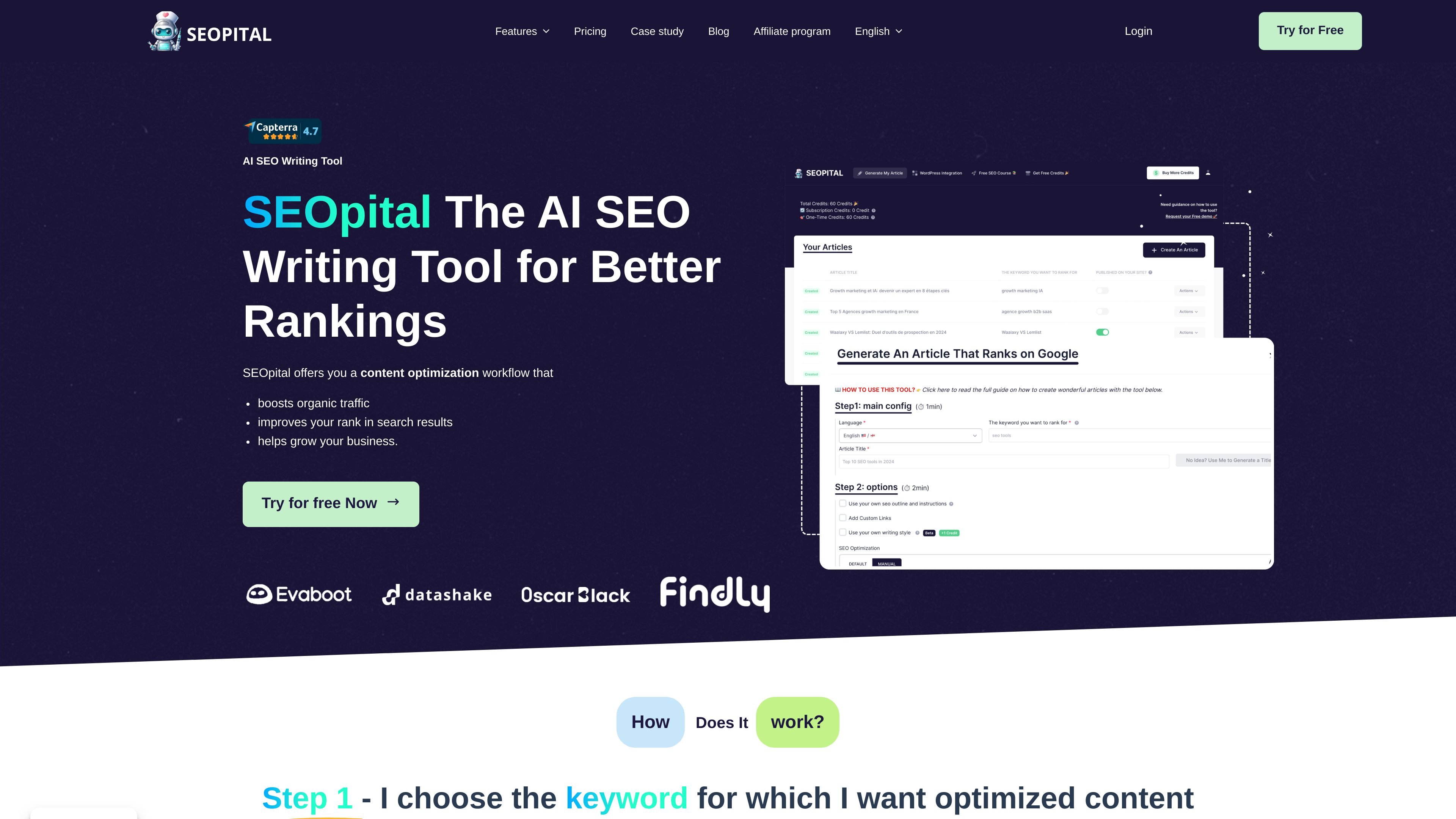
SEOpital uses keyword research and search-result analysis to help teams create and update SEO articles with AI, then monitor search performance.
SEOpital is an AI-powered SEO writing and content optimization platform for planning, creating, updating, and monitoring search-focused content. Its workflow combines keyword research and clustering with analysis of top-ranking search results, then uses those findings to guide a new article or an update to existing content.
The platform also provides search-performance tools, including keyword rank tracking through Google Search Console, keyword cannibalization analysis, duplicate-content checking, and an LLM Tracker for brand mentions in services such as ChatGPT and Perplexity. This makes SEOpital relevant to teams managing both content production and ongoing organic-search maintenance.
Generate or import keyword ideas and group them by search intent to organize topics into a content roadmap.
Compare the top 10 search results for a query across factors including length, keywords, FAQ presence, and image count.
Create content for a target keyword or improve an existing page by adding missing elements identified in the analysis, while following a supplied tone and writing style.
Generate page-title suggestions from top search results, create images for articles, and produce content in French, English, Italian, Spanish, and Portuguese. The site states article lengths of 300 to 5,000 words.
Connect Google Search Console to view keyword positions and page statistics, monitor page performance, and identify keyword overlap between pages.
Track queries people may ask language models and see whether ChatGPT, Perplexity, and other LLMs mention a brand or cite its website.
Build and cluster a keyword list by search intent, then use the groups to decide which topics and pages to create.
Choose a target query and use the top-results analysis to guide an article intended to address the query's search intent.
Analyze a page against results for its target query and use the identified content gaps to guide an update without discarding the supplied writing style.
Use Search Console-connected ranking and page statistics to spot pages losing traffic or pages competing for overlapping keywords.
Track relevant prompts and review whether language models mention the brand or use its site as a source.
Yes. The site describes separate Generate and Optimize workflows: one creates content for a keyword, while the other enriches existing content using identified missing elements.
The site lists French, English, Italian, Spanish, and Portuguese.
The ranking checker instructions say to connect Google Search Console and allow time for data to load; it then provides keyword rankings and page statistics.
Its LLM Tracker is described as checking whether ChatGPT, Perplexity, and other LLMs mention a brand and whether they use the brand's website as a source.
Os dados de tráfego são apenas para referência.