
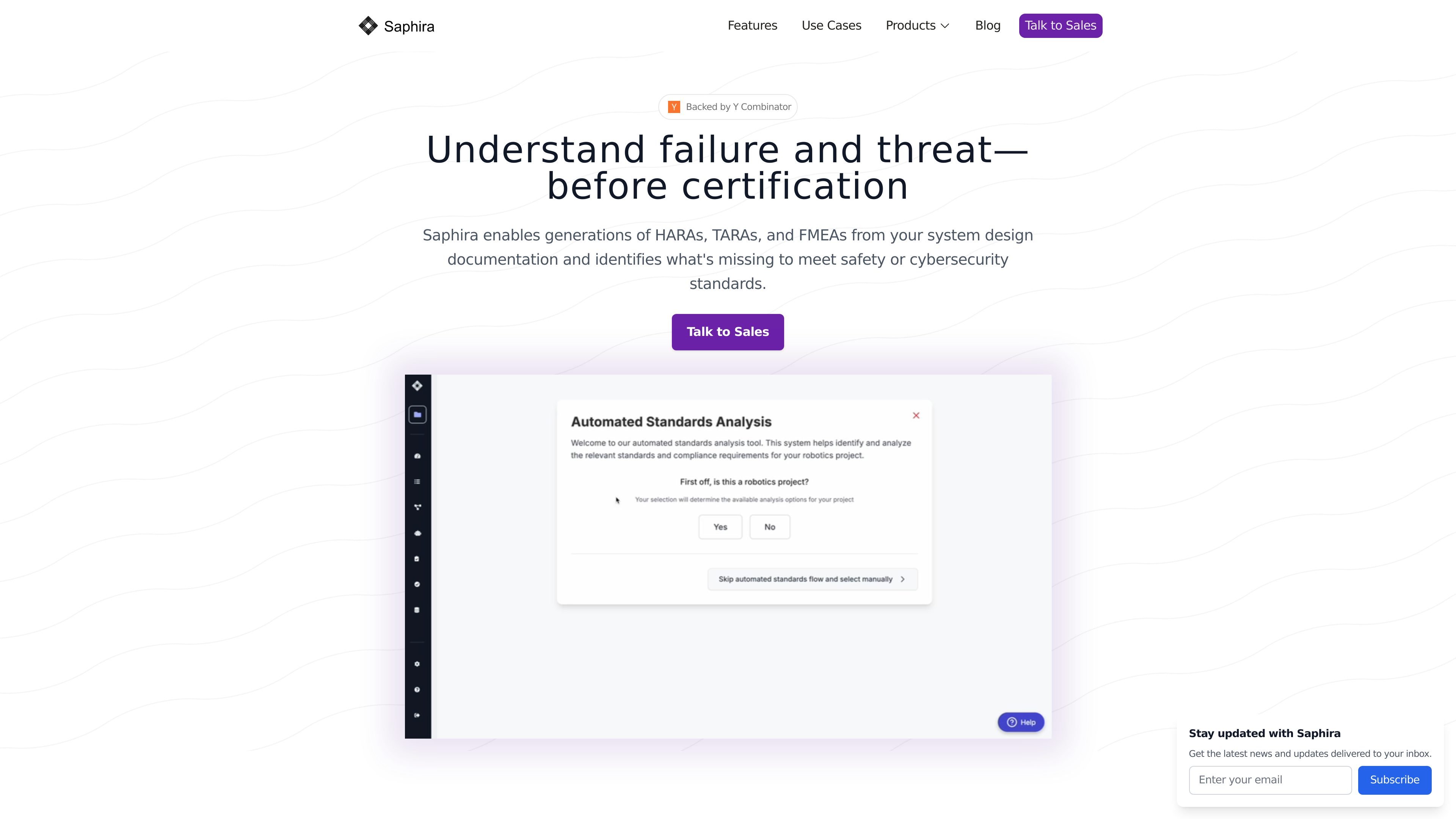
Failure analysis and FMEA
Uses system context and observed failures to generate structured failure modes, causes, effects, and mitigations across system levels.

AI agents for engineering teams analyzing and validating complex physical systems.
Saphira AI is an AI agent platform for engineering complex physical systems, including robotics and autonomous systems. It connects designs, requirements, tests, and field evidence so teams can investigate failures and turn findings into engineering decisions.
Its workflows cover failure analysis, safety and security, requirements, change impact, and validation planning. A shared assurance graph keeps system context linked, versioned, and inspectable as designs evolve. Engineers review consequential analyses, with sources and assumptions retained alongside the reasoning.
Uses system context and observed failures to generate structured failure modes, causes, effects, and mitigations across system levels.
Investigates hazards and threats against system architecture, producing attack paths, risk decisions, cybersecurity goals, and traceable requirements.
Connects findings and mitigations to requirements, then identifies affected risks, tests, and evidence when designs or models change.
Generates test and simulation plans from risks and requirements. Connects results and runtime evidence to named deployment failures to expose coverage gaps.
Groups hazards around the controls that address them, filters the evidence graph by a reviewer’s question, and exports evidence sets for expert review.
Construction robotics teams can turn standards and risk analysis into architecture, component, and certification planning decisions. Raise Robotics is a published example of this workflow.
Create reviewable safety artifacts that engineering, product, leadership, and external stakeholders can discuss together, as illustrated by Saphira’s work with 1X.
Organize requirements, analyses, and implementation evidence around the actual robot system for expert review. RobCo’s published case study focuses on ISO 10218-1 work.
Carry prior engineering decisions into a new program or system variant while identifying what changed, which reasoning still applies, and which evidence needs regeneration.
Its system context draws on designs, requirements, tests, and field data. Failure investigation can also trace symptoms through architecture, logs, and field reports.
Experts approve consequential analysis. Saphira states that its safety engineers review generated analyses before they reach an assessor.
Yes. Teams can begin with the workflow blocking their program and reuse the same system context as their work expands.
Os dados de tráfego são apenas para referência.