
AI-assisted course building
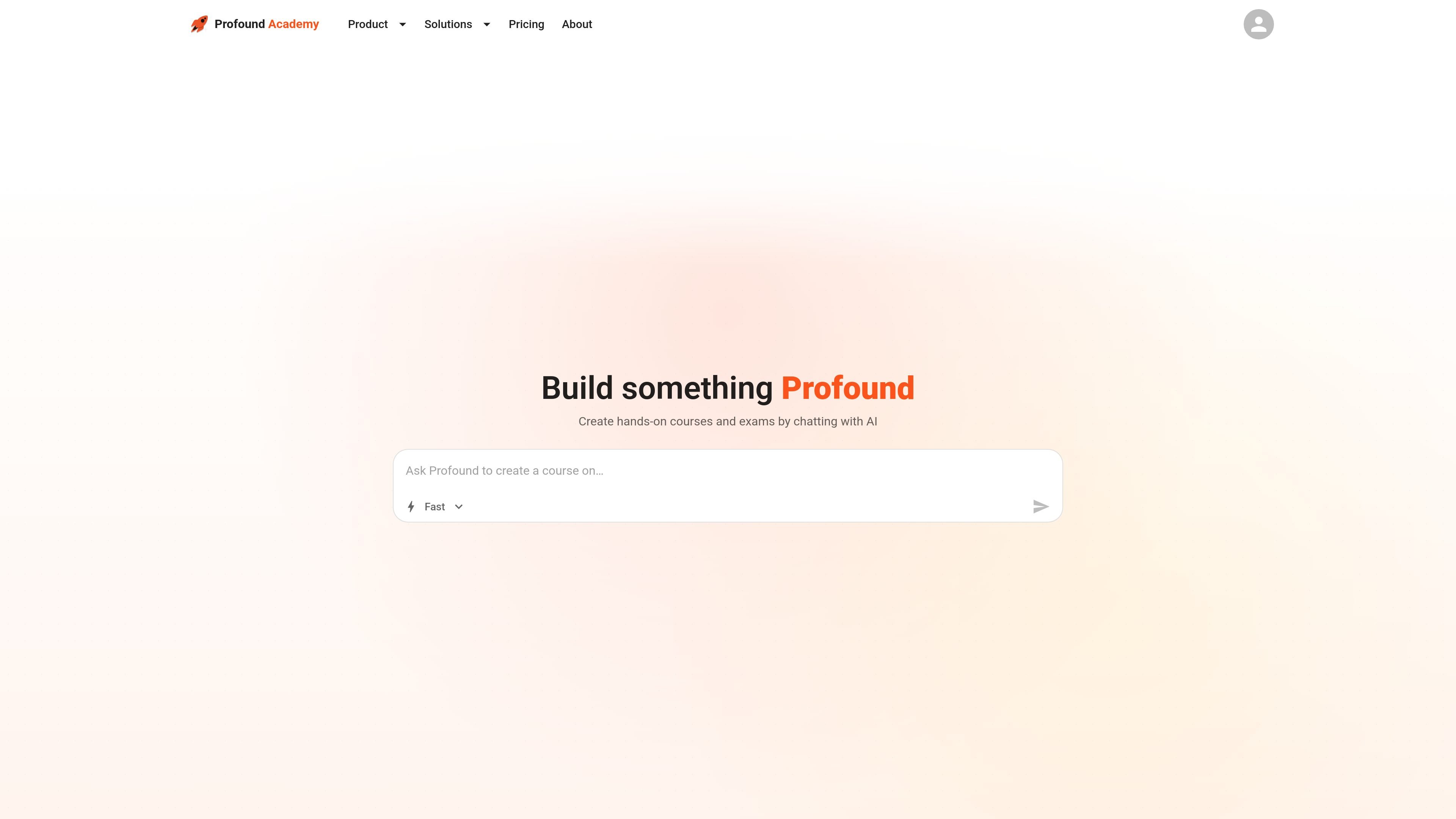
Turn a course description or existing materials into an editable course map and connected learning content. The course builder supports lessons, modules, pacing, learning outcomes, and content in multiple languages.

A course-building and teaching platform for creating, delivering, and assessing hands-on computer science courses.
Profound Academy is a browser-based platform for building and teaching hands-on computer science courses. Instructors can start with a course idea, syllabus, or existing materials, then develop an editable course with lessons, coding labs, projects, quizzes, exams, and automated grading. The platform connects course authoring with student work in a coding environment, assessment, and progress monitoring, so instructors can manage course delivery and review learning outcomes in one workspace.
Review generated explanations, solutions, tests, and grading settings before publishing. Course staff retain responsibility for final grades and academic-integrity decisions.
Turn a course description or existing materials into an editable course map and connected learning content. The course builder supports lessons, modules, pacing, learning outcomes, and content in multiple languages.
Create coding tasks with starter files, scaffolds, examples, public and hidden tests, sample solutions, grading logic, and rubrics. Students work on programming assignments in a browser-based coding workspace.
Set up question sets, timed access, exam settings, and grading. Assessment can combine tests, custom or AI checkers, rubrics, and partial scores.
Students can receive instant feedback and guided hints while working. The AI assistant can help identify mistakes and respond to common questions.
Teachers can review student progress and mastery, monitor submissions, and identify content bottlenecks. Live coding tools let teachers see student code and progress as they work.
Review submission history, similarity checks, and behavior signals in context. The platform provides evidence to support instructor decisions about academic integrity.
An instructor can use a syllabus, teaching idea, or existing materials as a starting point, organize the course into modules, and keep lessons, exercises, and assessments connected as content changes.
Teachers can assign coding labs with starter code and automated tests, letting students practice in the browser-based environment and receive feedback on their submissions.
Course staff can configure exam access and grading, then review submissions and integrity-related signals while retaining responsibility for final decisions.
During coding sessions, instructors can monitor students' code and progress in real time and use that view to help learners debug problems.
Teachers and program staff can follow student progress and mastery, spot challenging parts of a course, and provide targeted assistance.
Courses can include lessons, coding labs, multi-file projects, quizzes, exams, rubrics, and autograders. Lessons can include explanations, examples, instructor notes, and translations.
Students work in a browser-based coding workspace with a built-in IDE. Assignments can include starter files, tests, and guided feedback.
Yes. Grading can combine tests, custom and AI checkers, rubrics, and partial scores. AI checkers can assess longer text answers such as proofs and provide feedback. Instructors should review grading settings and results that need further examination.
Pro costs $20 per month with 20 monthly AI credits. Credits are used for course building, assistance, feedback, grading, and classroom workflows; choose the monthly allowance for the work you intend to run.
Yes. Review submission history, similarity checks, and behavior signals in context. These support investigation, while course staff make the final academic-integrity decision.
Os dados de tráfego são apenas para referência.

aidemia.co
AI teaching tools for creating lesson materials, assessments, and written-work feedback.

hakken.me
Hakken is an adaptive learning platform that builds courses around a learner’s goals, existing knowledge, and available time. It supports text and voice onboarding, multimedia lessons, checkpoints, review lessons, and course changes approved by the learner.