“Internal business applications”
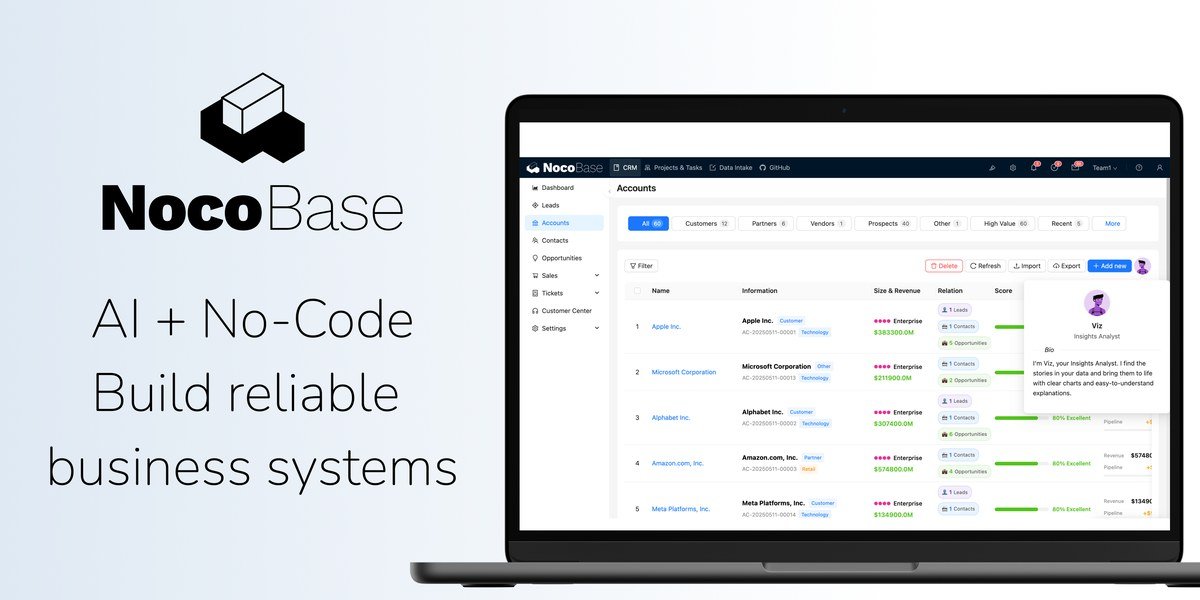
Build internal business systems such as CRM, order management, help desk, project management, IT asset management, or HR tools using built-in data models, workflows, and permissions.
“Cross-system data operations”
Connect CRM, ERP, finance, and inventory data in one interface so teams can query and act on information without switching systems. Event flows and workflows help coordinate interactions across sources.
“AI-assisted application delivery”
Use AI coding agents to create or extend a system quickly, then move into the WYSIWYG interface to refine pages, data models, workflows, and access rules.
“Workflow automation with AI Employees”
Let AI Employees handle recurring tasks such as analysis, Q&A, form filling, document recognition, risk monitoring, and task routing inside established business processes.
“Collaborative team customization”
Build and maintain applications with a mix of developer-led and non-developer-led work, allowing teams to share the same system while switching between usage mode and configuration mode.