
Historical figures with source references
The full library has 1,200+ AI historical figures. Source quotations open the originating document page so students can inspect the evidence; Explore begins with a starter selection.

Use source-grounded AI historical figures for interviews and classroom debates, with teacher-controlled assignments and rubric-based feedback.
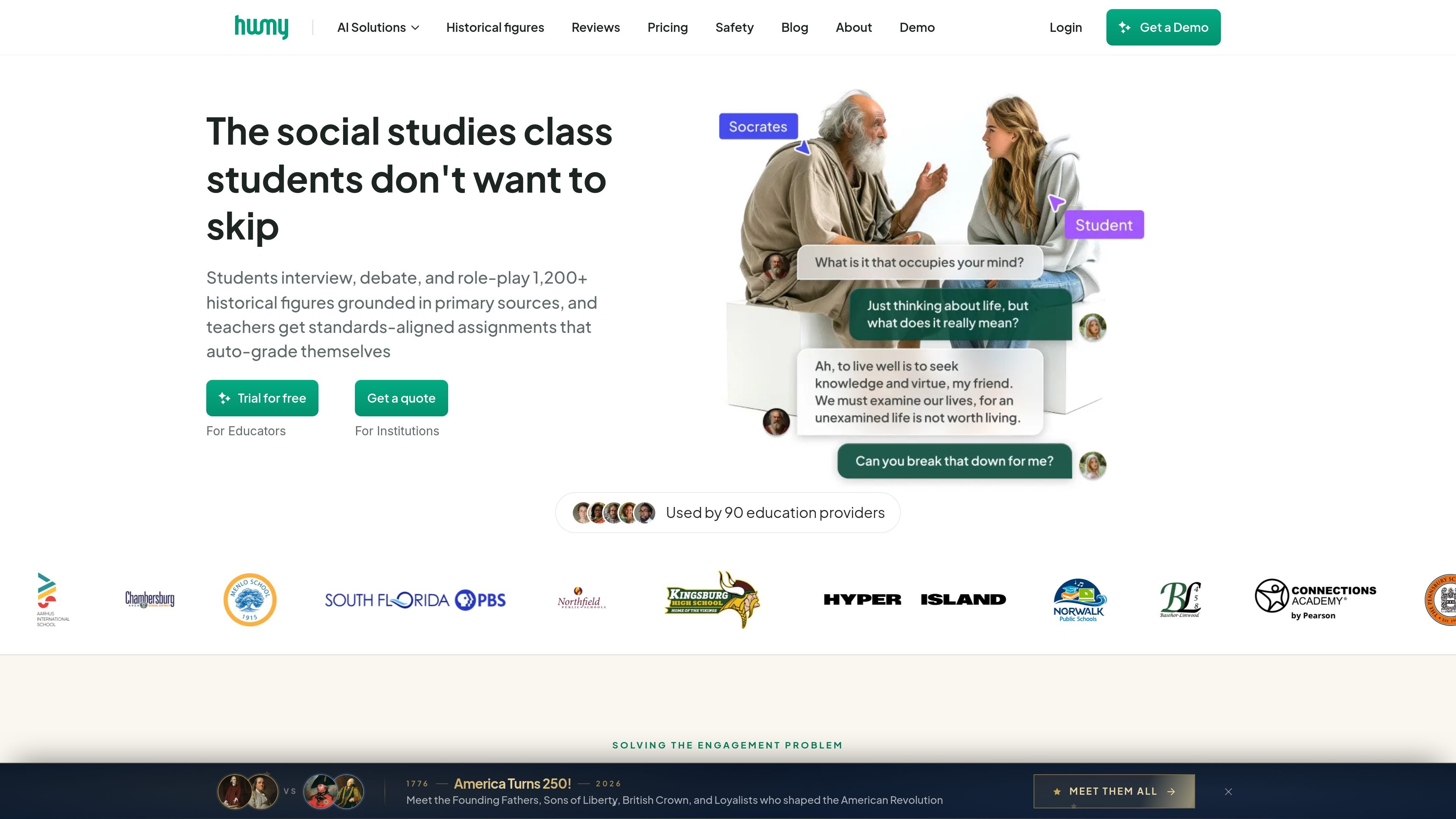
Humy is an AI teaching platform for social studies and historical inquiry. Students interview, debate, or role-play with AI historical figures built from primary sources, opening quoted documents to check the evidence. Teachers create assignments and assess work against their own rubrics, or build custom figures from uploaded documents.
Its classroom workflows extend from K-12 to university settings. Organization plans also support museum and archive experiences. Use the conversations as a starting point for inquiry, and review cited documents, automated scores and feedback before using them for assessment.
The full library has 1,200+ AI historical figures. Source quotations open the originating document page so students can inspect the evidence; Explore begins with a starter selection.
Students can moderate a group conversation with up to 10 figures to compare perspectives or debate a historical question.
Create interviews, debates, simulations, essays and short questions. Assignments support automated scores and written feedback; open questions can use teacher-defined model answers and attempt limits.
Use custom criteria and performance levels for assessment. Plus adds standards-aligned options such as AP, Common Core, IB and TEKS, or lets teachers upload their own rubrics.
Build figures from uploaded documents and set assignment reading levels for a class or group. The community library offers shared figures, sources, assignments and collections.
Figures converse in more than 50 languages. Plus adds live voice calls and conversation transcripts exportable to PDF or DOCX; voice calls draw from the plan’s message pool.
Have students interview a historical figure, ask follow-up questions and inspect the quoted documents as they investigate a topic.
Ask students to defend a position against a figure or panel, or make decisions in a historical role. Compare the resulting arguments against primary evidence.
Move from source analysis to short answers, essays or document-based arguments, using a teacher’s rubric and reviewing the automated feedback.
For organization rollouts, create AI guides from collection documents and deploy them through web pages, QR codes, kiosks, embeds or the API.
Explore is free forever for one teacher, with a starter figure library and 20 AI messages per month. It includes five assignment formats, panels and the community library, with limits of three custom figures, three assignments and three collections.
Plus is $129 per teacher per year, billed yearly. It adds the full figure library, live voice calls, PDF or DOCX transcripts, up to 50 custom figures and a yearly pool of 12,480 AI messages. Calls and heavier models draw from that pool. School and organization plans start at $600 per school per year and require a quote.
Students join Humy classroom activities without accounts. Teachers sign in with Google or Microsoft; school single sign-on is available on request for organization plans.
Yes. Teachers can create custom figures from uploaded documents, with the number of figures depending on the plan. Organization plans also support figures built from institutional archives.
Use the source links to inspect quotations and corroborate an answer. Teachers should review automated scores and written feedback against their rubric before using them for assessment.
Os dados de tráfego são apenas para referência.