Labeled image upload
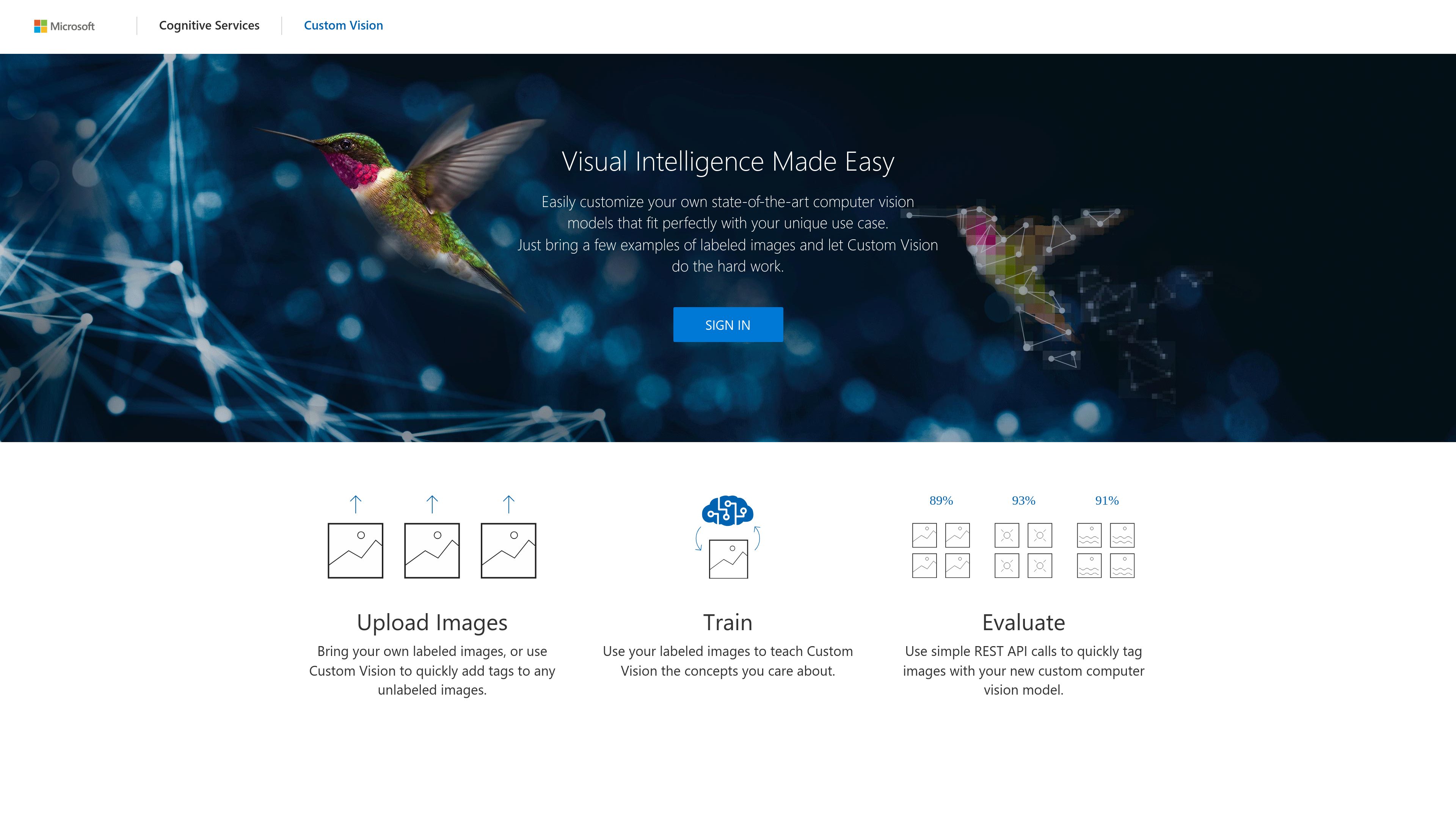
Bring labeled image examples into the service as the starting point for a custom computer vision model.

Build custom computer vision models from labeled images and use them to tag new images through a REST API.
Custom Vision is a computer vision tool for creating models tailored to a specific image-based use case. Users provide examples of labeled images, teach the model the concepts they care about, and evaluate the resulting model before applying it to new images.
The workflow combines image labeling, model training, and evaluation. Once a model is ready, simple REST API calls can be used to tag images with the custom model.
Microsoft has announced the planned retirement of Azure Custom Vision, with full support for existing customers until September 25, 2028. Existing customers should plan their migration to alternative solutions.
Bring labeled image examples into the service as the starting point for a custom computer vision model.
Add tags to unlabeled images within Custom Vision so they can be used as training examples.
Train a model on labeled images to teach it the specific visual concepts required for a use case.
Evaluate the trained model before using it to process new images.
Send images through simple REST API calls and receive tags from the trained custom model.
Create a model around visual concepts that are specific to an organization or application, using representative labeled examples.
Add tags to existing unlabeled images inside the workflow, then use those examples to train a model.
Evaluate a trained model and connect it to an application or service through REST API calls for image tagging.
It creates custom computer vision models from labeled image examples and uses those models to tag images.
The workflow supports bringing labeled images or adding tags to unlabeled images before training.
Users provide labeled images and train the model to recognize the visual concepts relevant to their use case.
After evaluation, images can be tagged with the model through simple REST API calls.
Os dados de tráfego são apenas para referência.