
Claim detection across content types
Finds checkable statements in AI outputs, text sources, broadcasts, podcasts, and online video so teams can focus on claims rather than undifferentiated content.
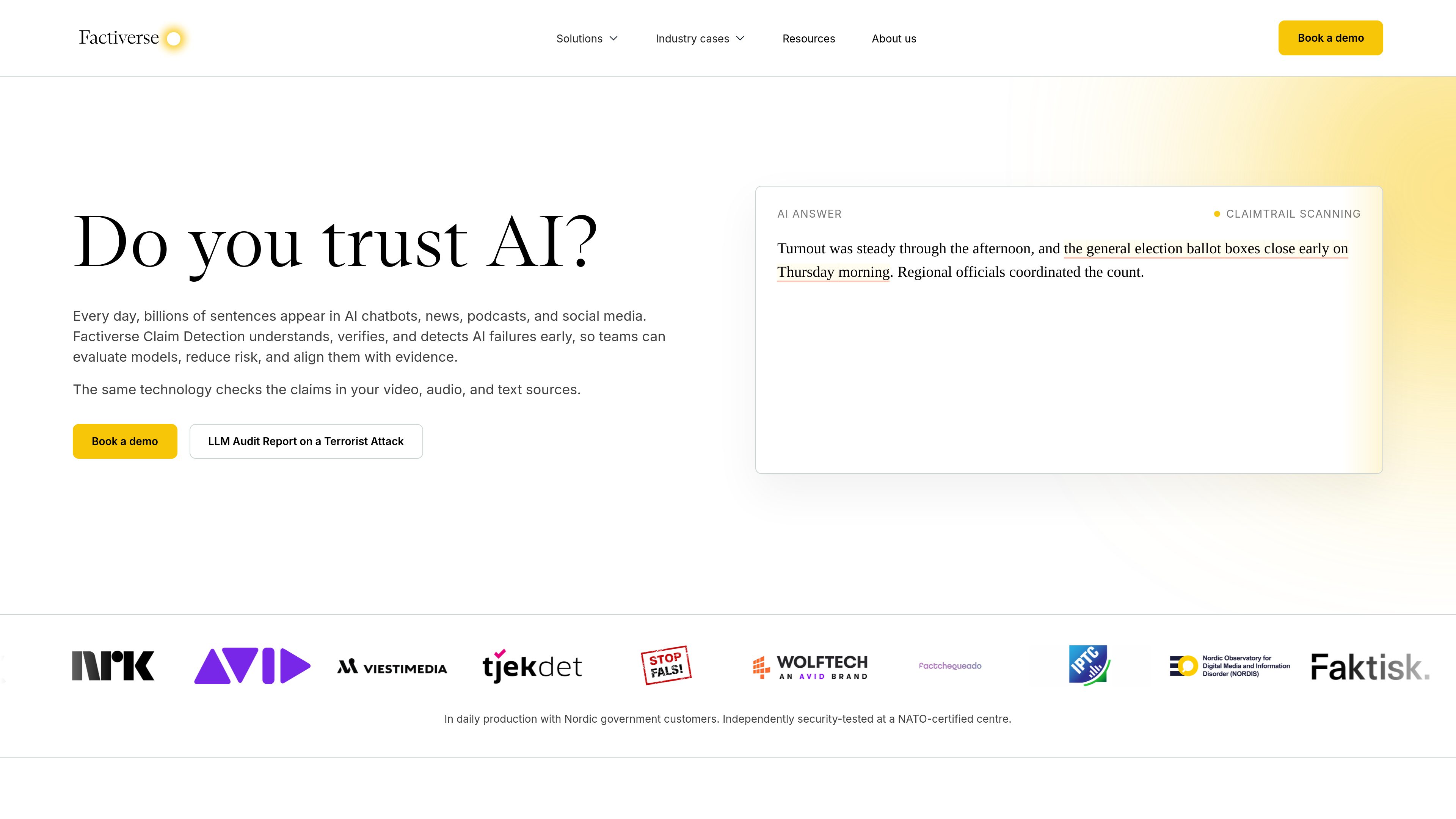
Factiverse is a claim detection and verification platform for AI-generated and media content. It helps AI builders, defence and intelligence teams, and media researchers identify checkable claims, compare them with trusted sources, and review disputed narratives across text, video, and audio.
Factiverse is a claim detection and verification platform for AI outputs and media sources. It identifies checkable statements, compares them with trusted evidence, and helps teams review supported, disputed, mixed, or potentially harmful claims across text, video, and audio.
The product is built for high-volume analysis across 114 languages. Its text workflows cover news, wire copy, social and forum posts, blogs, reports, and research papers, while its Gather workflow handles broadcasts, podcasts, and online video. For AI and language-model teams, Factiverse surfaces model failures for expert assessment and potential training-data work.
Finds checkable statements in AI outputs, text sources, broadcasts, podcasts, and online video so teams can focus on claims rather than undifferentiated content.
Returns evidence that supports or disputes each identified claim, using outlets and records selected by the customer.
Processes claims and sources across 114 languages, including foreign-language material that may be difficult for teams to assess manually.
Automatically transcribes recordings, extracts claims, identifies speakers, and links each result to the exact moment it was spoken.
Monitors channels and platforms including YouTube, TikTok, and other video websites, presents findings in a review dashboard, and can send monitoring and verification results through an API.
AI builders can evaluate chatbot and language-model outputs, locate false or harmful claims, and send surfaced failures to experts for review.
Analysts can examine large volumes of open-source text, including Telegram content, and turn relevant claims and narratives into material for reporting.
Newsrooms can track political video, broadcasts, podcasts, and other channels, then review significant claims with their source context and evidence.
Researchers can follow topics or keywords across collected sources and distinguish corroborated claims from contested narratives.
It can analyze AI outputs and collected text such as news, wire copy, social and forum posts, blogs, reports, and research papers. Its Gather workflow also handles videos, broadcasts, and podcasts.
Yes. Customers decide which outlets and records count, allowing claims to be checked against sources their teams already trust.
Gather transcribes content, extracts checkable claims, identifies the speaker, and links each claim to the precise moment it was spoken. Supporting or disputing sources are presented beside the claim for review.
The video and audio solution page states that the same monitoring and verification workflow can run through an API, allowing claims and sources to flow into existing analyst systems.

walterwrites.ai
Walter Writes AI humanizes AI text and checks for AI signals

zerogpt.cc
ZeroGPT is a web-based AI text detector and writing utility that checks whether text appears human-written or AI-generated. It also offers readability, word-count, and text-splitting tools for editors, students, teachers, publishers, and marketers.

www.senthor.io
Senthor detects AI and bot traffic, controls access to website content, and monetizes requests when appropriate while preserving legitimate search visibility.

aidetect.com
AI Detect checks for AI-generated text and humanizes content before publishing or submission.

gptinf.com
GPTinf humanizes AI text, detects AI patterns, and checks plagiarism in one workspace.

hcaptcha.com
hCaptcha is an AI security platform that stops bots, account abuse, and fraud while protecting user privacy.