
Cell design and operating model
Datagran helps teams define ownership, approvals, workflows, and which decisions should stay with humans before introducing agents into the process.

A human-led AI platform for agent-powered workflows, CRM, service, and marketing automation
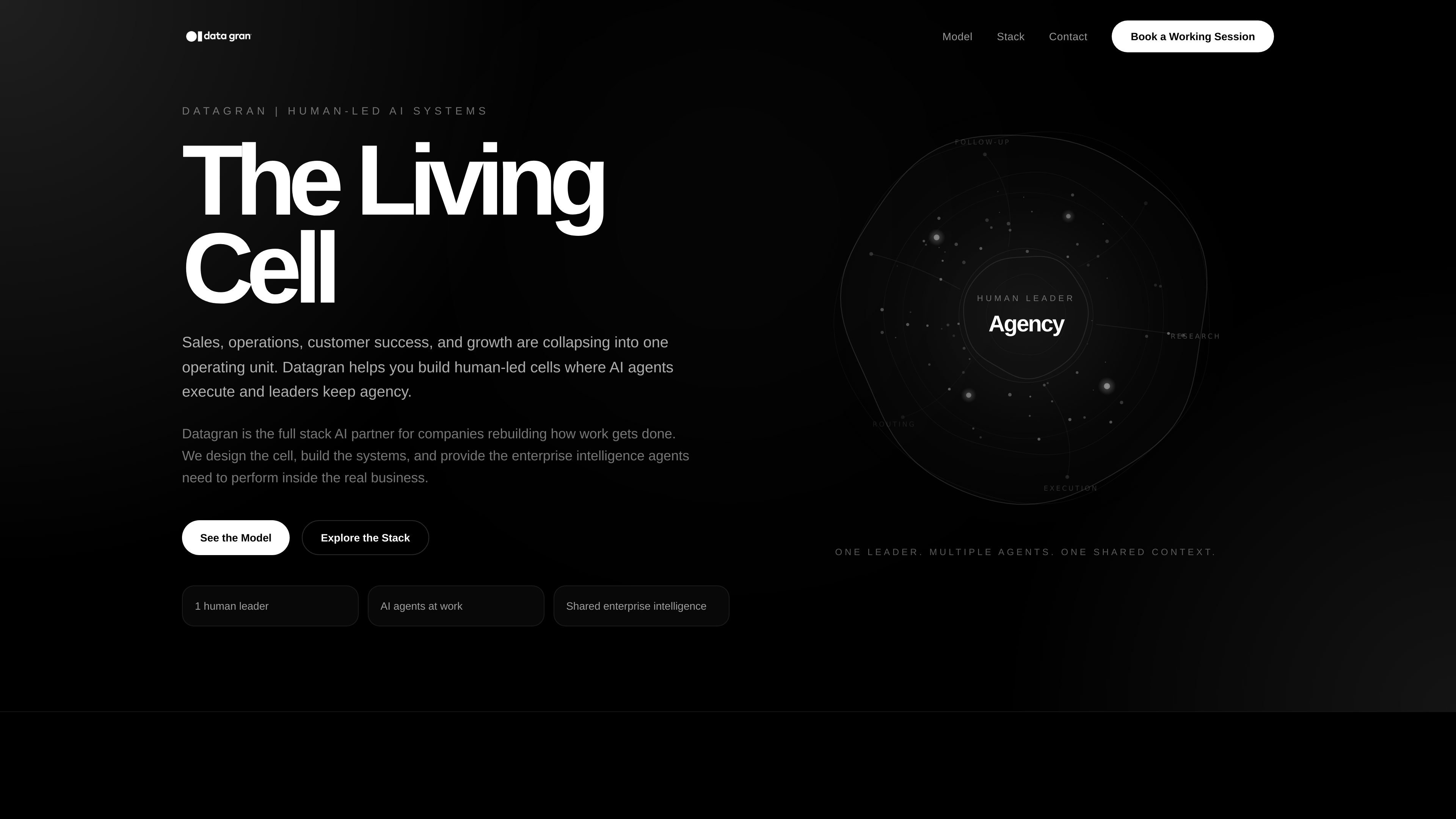
Datagran is a human-led AI systems platform for companies that want to rebuild work around smaller, faster operating units rather than traditional departments. The site positions the product around “cells” led by a human owner, with AI agents handling execution inside a shared business context.
The platform combines operating-model design, execution surfaces, shared enterprise intelligence, and application layers such as Persona360, Telerion, and marketing automation. Across the homepage, Datagran frames itself as both the team design partner and the system stack that lets human leaders keep agency while agents carry out repetitive and cross-functional work.
Datagran helps teams define ownership, approvals, workflows, and which decisions should stay with humans before introducing agents into the process.
Groovy is the shared workspace where people and agents can ask, review, approve, and execute work from a single surface.
Datagran Intelligence provides persistent memory, shared context, connected tools, permissions, policies, visibility, and orchestration for agent work.
Persona360 gives the cell a live view of customers, accounts, relationships, and suggested next actions for follow-through.
Telerion handles multimodal customer service across chat and voice channels, including email, WhatsApp, phone, and other channels mentioned on the site.
The marketing automation layer gives agents access to analytics, attribution, ad creation, and creative generation across major ad platforms.
Reorganize sales, operations, customer success, or growth around a single accountable owner while agents handle coordination and follow-up work inside the cell.
Use Groovy when people need to review, approve, and execute work in one place instead of moving tasks through disconnected tools.
Apply Persona360 when teams need a living view of accounts, contacts, relationships, and next steps for ongoing customer work.
Deploy Telerion for customer service workflows that span chat, voice, email, WhatsApp, phone, and fallback handling.
Use the marketing automation layer when AI agents need to create ads, generate creative assets, and work from analytics and attribution data.
Datagran is designed around a human-led cell: a human owner keeps direction, judgment, and accountability while AI agents handle research, follow-up, coordination, system updates, and repetitive cross-functional work.
The source presents Groovy as the execution surface where humans and agents can ask, review, approve, and execute work together from one place.
Datagran Intelligence supplies shared context, memory, tools, permissions, policy, visibility, and orchestration so agents can operate inside enterprise workflows.
The site describes Datagran as a full-stack partner that designs the cell, builds the systems, and deploys the agents. It does not publish setup steps, implementation timelines, or package details on the homepage.
No prices are shown on the homepage text provided. The site invites prospective customers to contact the team to start a conversation about building a first living cell.
Traffic data is for reference only.