
AI-assisted matchmaking
Matchmaking considers attendee interests, intent, and platform activity. Organizers can customize the interests offered to attendees and control networking access by ticket type.

An event platform for organizers to manage programs and connect attendees with relevant meetings.
Brella is an event platform for organizers running in-person, virtual, and hybrid events. It combines attendee-facing event apps with organizer and sponsor tools for schedules, sessions, event communications, ticketing, and networking. Its matchmaking workflow uses attendee interests, intent, and platform activity to help attendees and sponsors identify relevant connections and arrange meetings.
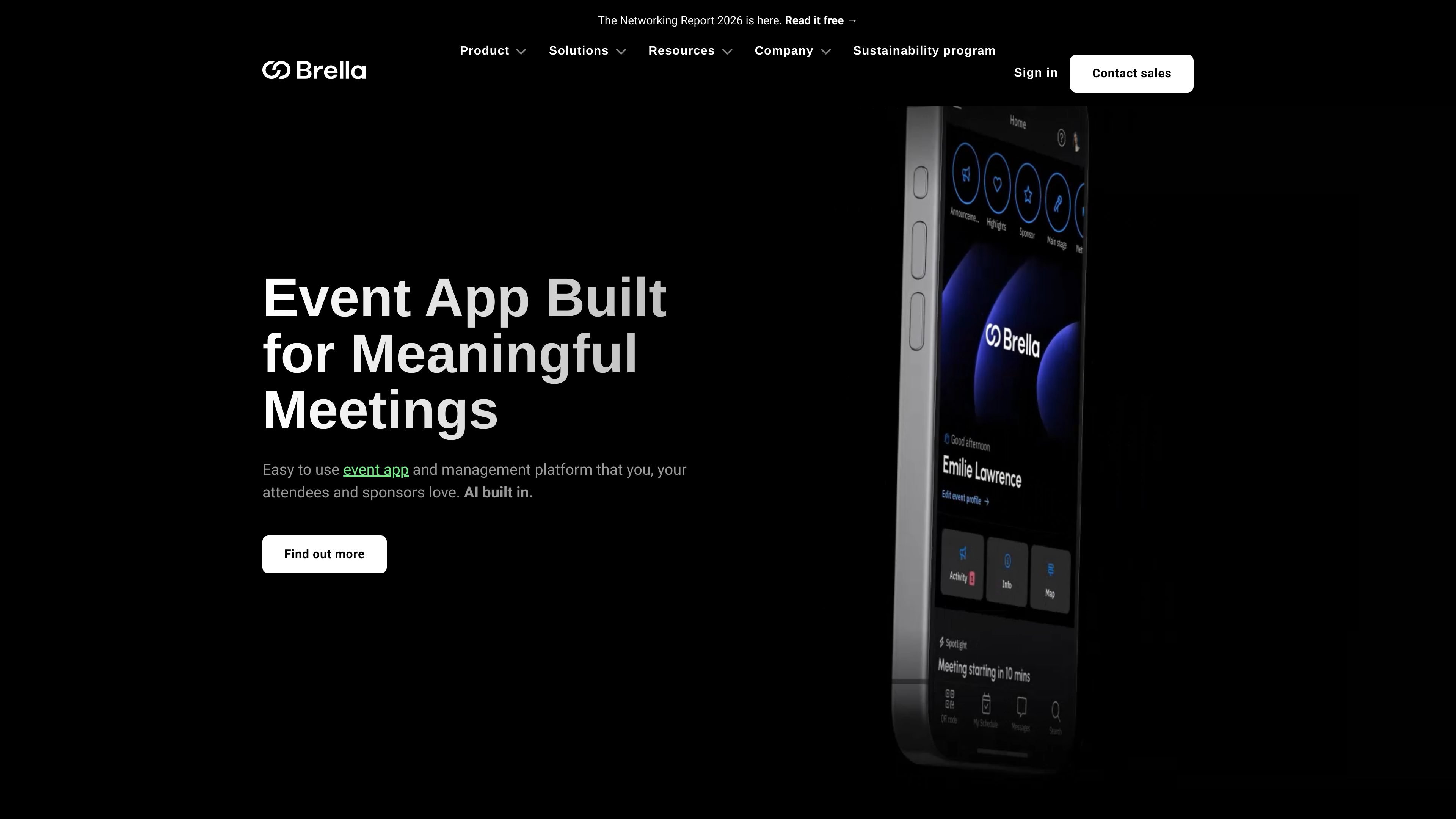
Attendees can use Brella in a browser or through native iOS and Android apps. Organizers can configure branding, access by attendee group or ticket type, and connect Brella to registration and other event systems through integrations, its REST API, or managed integration services.
Matchmaking considers attendee interests, intent, and platform activity. Organizers can customize the interests offered to attendees and control networking access by ticket type.
Attendees can schedule one-to-one meetings, use in-app video calls, and receive push or email reminders. For on-site events, automated table assignment is available when enabled.
Organizers can publish multi-track schedules, session details, speaker biographies, locations, and tags. Attendees can filter and search the schedule, view meetings alongside sessions, and sync their agenda with third-party calendars.
Brella supports built-in registration and ticketing with Stripe payments, as well as third-party registration integrations. Public events, invite-only join codes, and ticket-based access rules can be configured.
Organizers can customize the event experience with logos, colors, images, onboarding, and content. They can also send announcements and emails, and publish event updates through Stories.
The platform offers native integrations, a REST API, and managed integration support. Schedule, speaker, ticketing, and sponsor widgets can be embedded on other websites; custom pages can embed event tools and media.
Publish concurrent session tracks, locations, speaker information, and livestreams while giving remote and on-site attendees access through browser or mobile apps. Attendance-type tags can distinguish virtual and in-person participants.
Let attendees and sponsors set relevant interests, find suggested contacts, and arrange meetings. Organizers can limit networking opportunities according to ticket type.
Use scheduled meeting slots and automated table assignments to organize attendee conversations across venue meeting areas.
Use supported registration integrations, native connections, the REST API, or managed integration work to exchange event data with other systems.
Provide sponsors controlled access to customize their virtual booth, manage representatives, review analytics, and connect with attendees through matchmaking.
No. Attendees can access an event through a responsive web app in a browser. Native iOS and Android apps are also available.
The platform supports online livestreams and in-person event workflows such as meeting table assignments. Hybrid events can use attendance-type tags to identify virtual and in-person attendees.
Attendees can use matchmaking based on interests, intent, and platform activity, then schedule one-to-one meetings. Meetings can include in-app video calls, and on-site meetings can use automated table assignment when enabled.
Yes. Organizers can configure public or invite-only events and use attendee groups or ticket types to control access to content and networking features.
Brella supports third-party registration integrations, native integrations, a REST API, and managed integration services. The specific connection depends on the systems involved.
トラフィックデータは参考情報としてご利用ください。